Uncategorized

Preparations for Inman Park Festival

The annual Inman Park Festival and Tour of Homes started in 1972 as a way to attract attention to the gentrification efforts that sought to revitalize the area. Over the previous decades, Inman Park had fallen victim to neglect and disrepair and then to redlining. That’s when a small group of Inman Park homeowners came together to plan the first festival. Their goal was simple – to raise awareness of efforts to save and restore the historic homes that make up the heart of the neighborhood. Over the years, Inman Park Festival has evolved from a single afternoon with 3,000 guests to a three-day festival that attracts over 45,000 people.

The Inman Park Festival takes months of planning, over 700 volunteers, and thousands of hours of hard work. It is completely run by volunteers, making it one of the largest volunteer-run festivals in the Southeast. Proceeds from the festival fund projects like historic preservation, sidewalk restoration, neighborhood beautification, education, and other projects that benefit Inman Park and the surrounding communities.

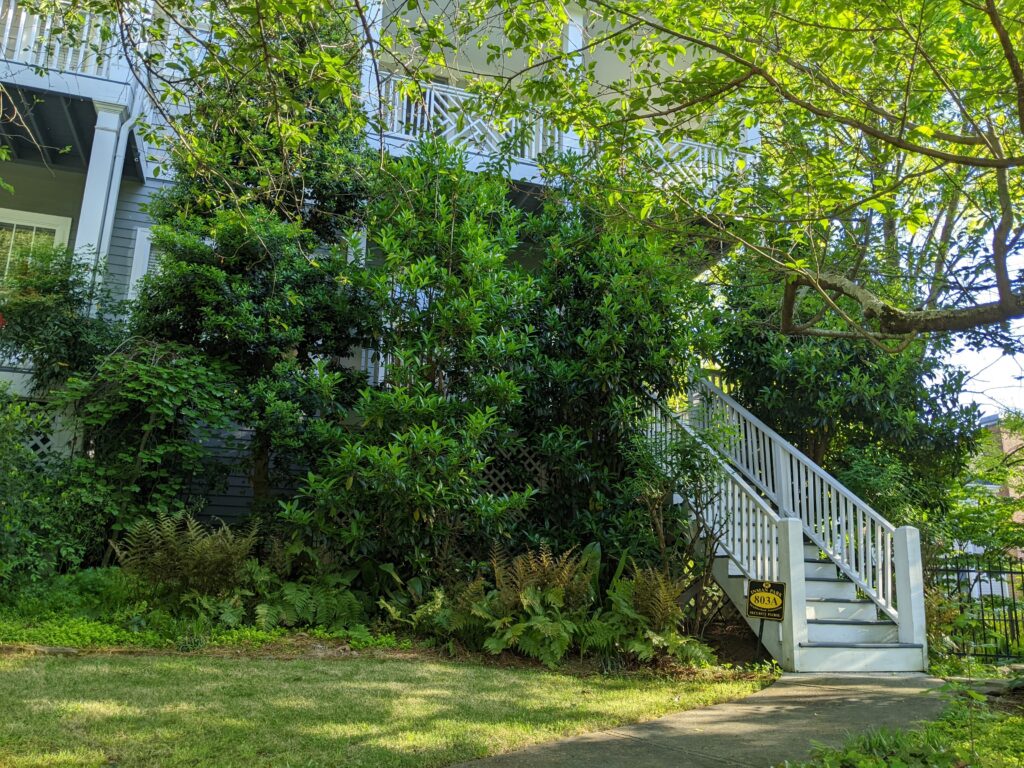
Each year, the days and weeks leading up to the festival are full of anticipation as signs of preparation appear around the neighborhood. Temporary power poles go up, and American flags are installed along the streets. There are volunteer events to clean up the neighborhood parks, and people tidy their own yards and plant flowers. The City of Atlanta street sweepers come through the day before, and the whole neighborhood is gussied up and ready for a party. In anticipation of the festival, here is what happens in the neighborhood.

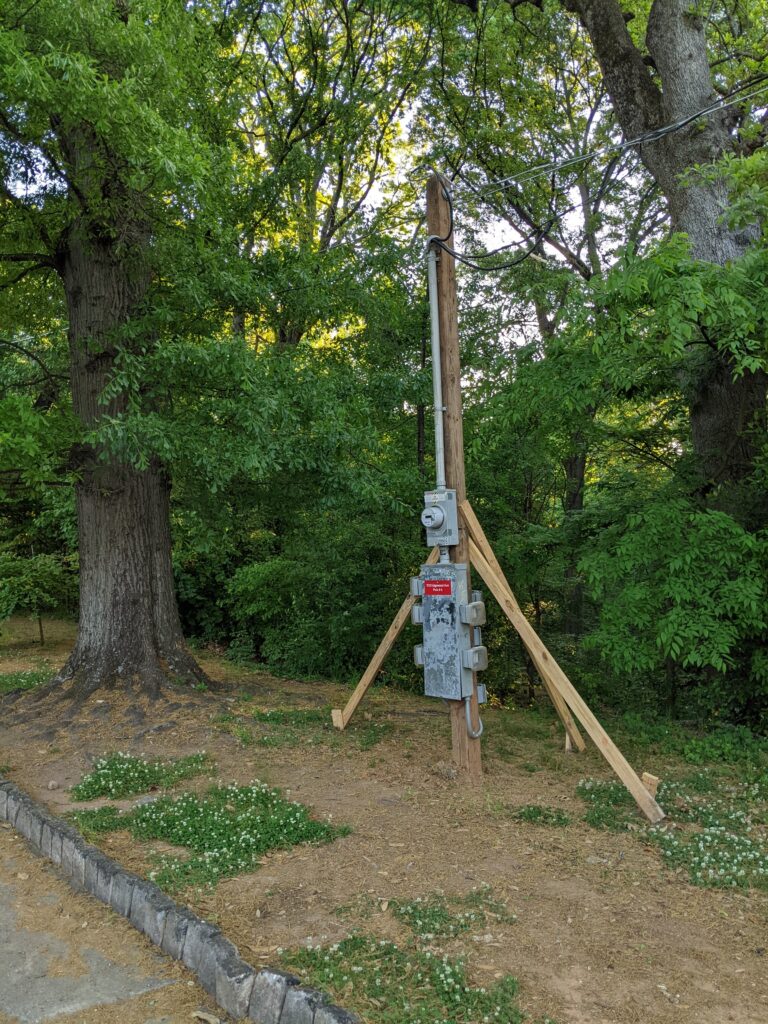
About 6 weeks before the event, the temporary power poles are installed. These are used by the music stages and some of the food vendors. 
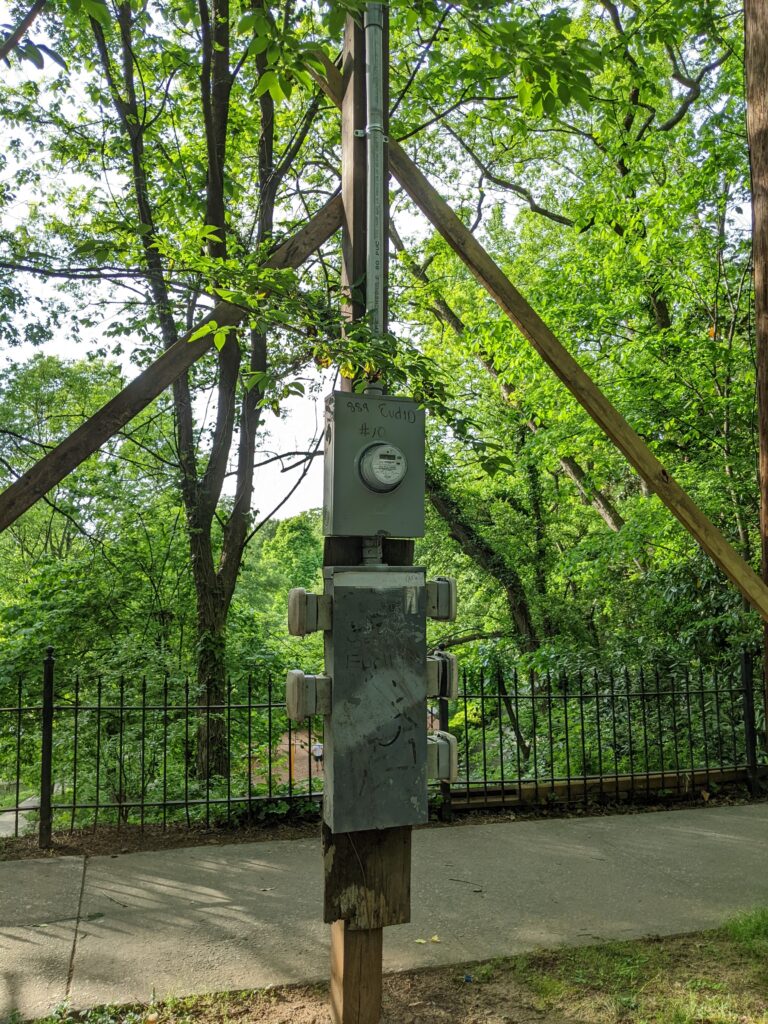
This meter will provide power for one of the music stages
This power pole will be used for food vendors and other services

Signs go up advertising the festival and asking for volunteers to sign up.
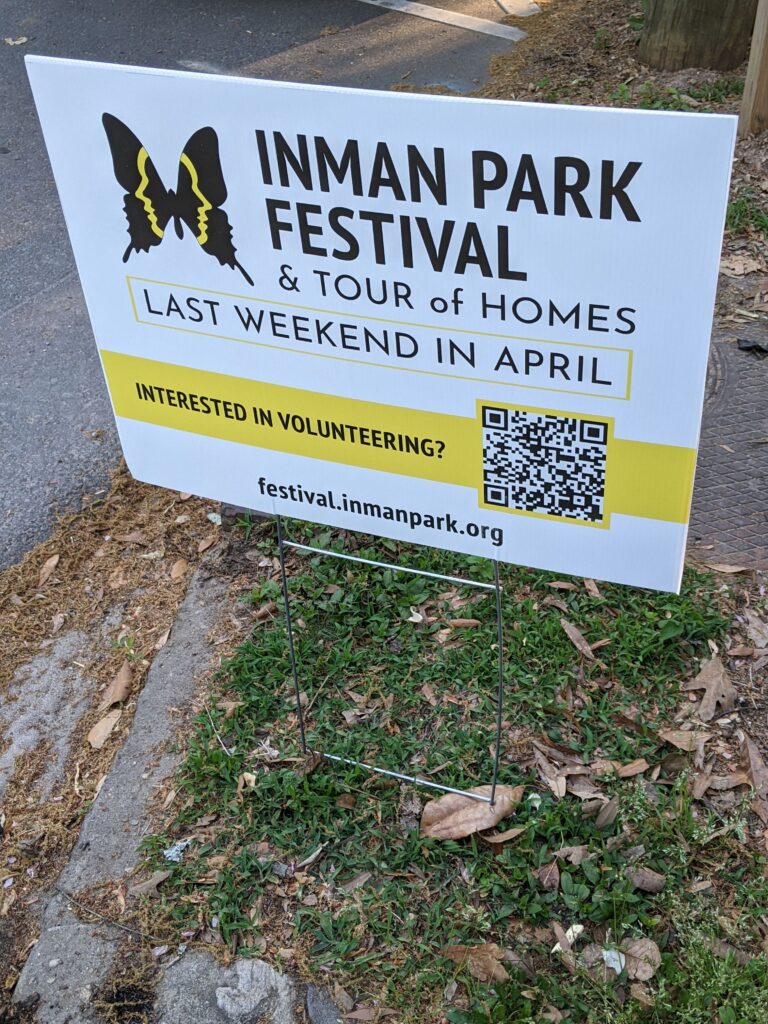
There are signs around the neighborhood soliciting volunteers for the festival

Tickets for the Tour of Homes go on sale. Inman Park residents get a discount.
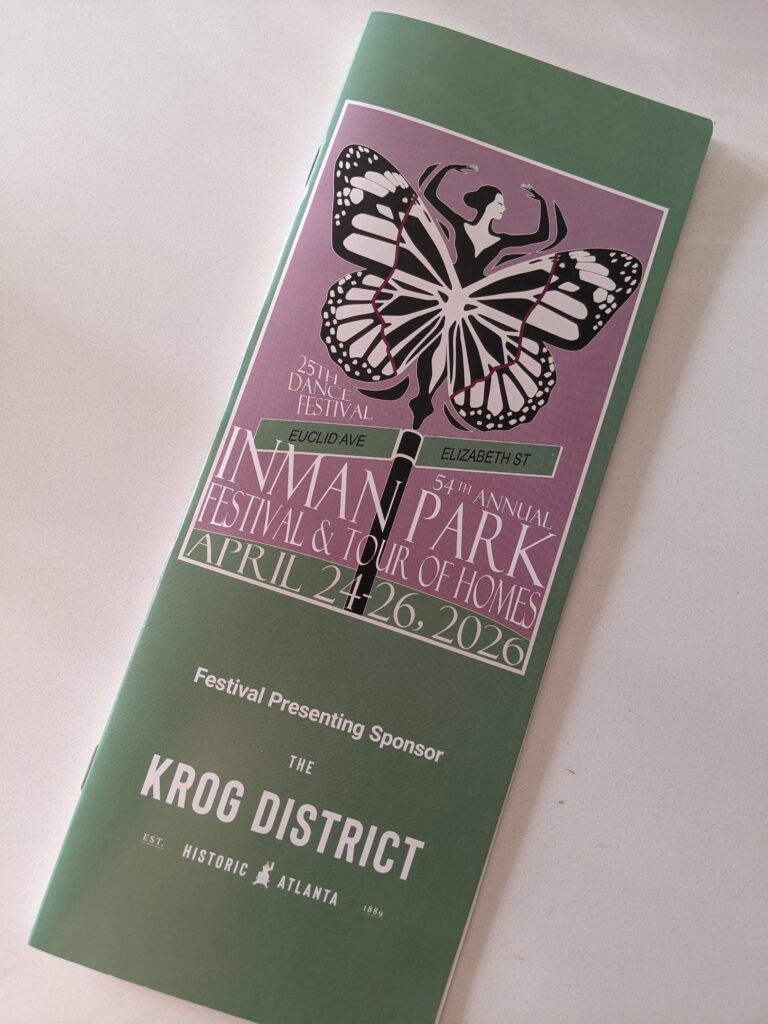
We’ve purchased our tickets for this year’s Tour of Homes

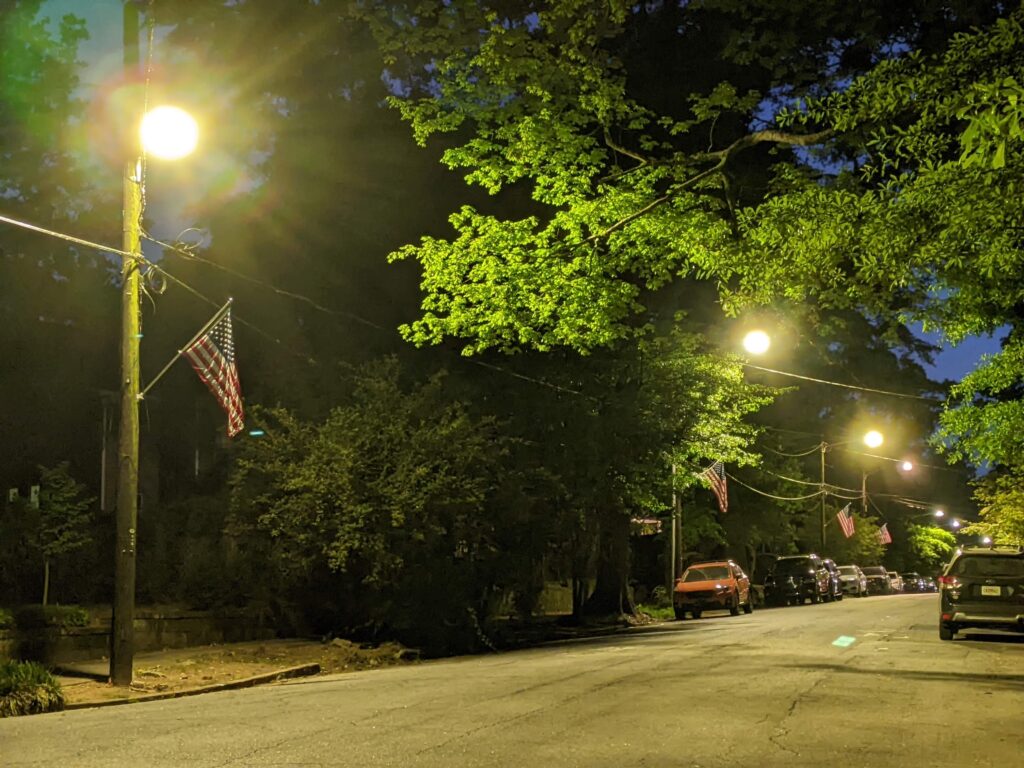
Two weeks before the event, the flags show up. I saw these flags around the neighborhood this week. Now I know we’re getting close to Festival!
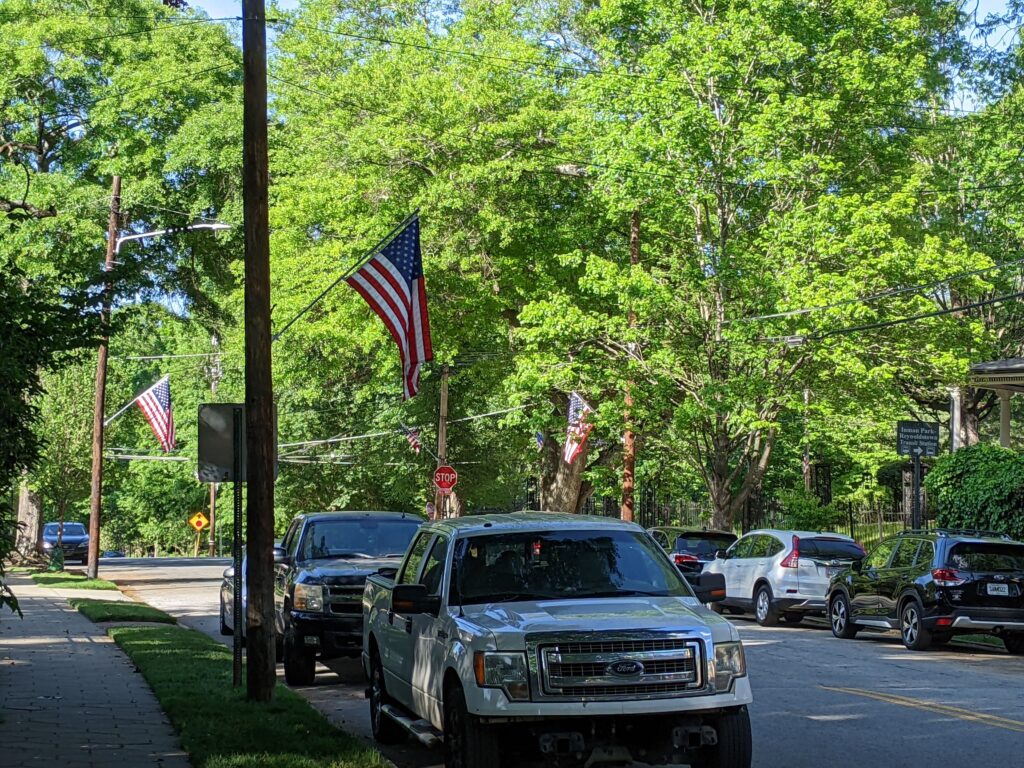
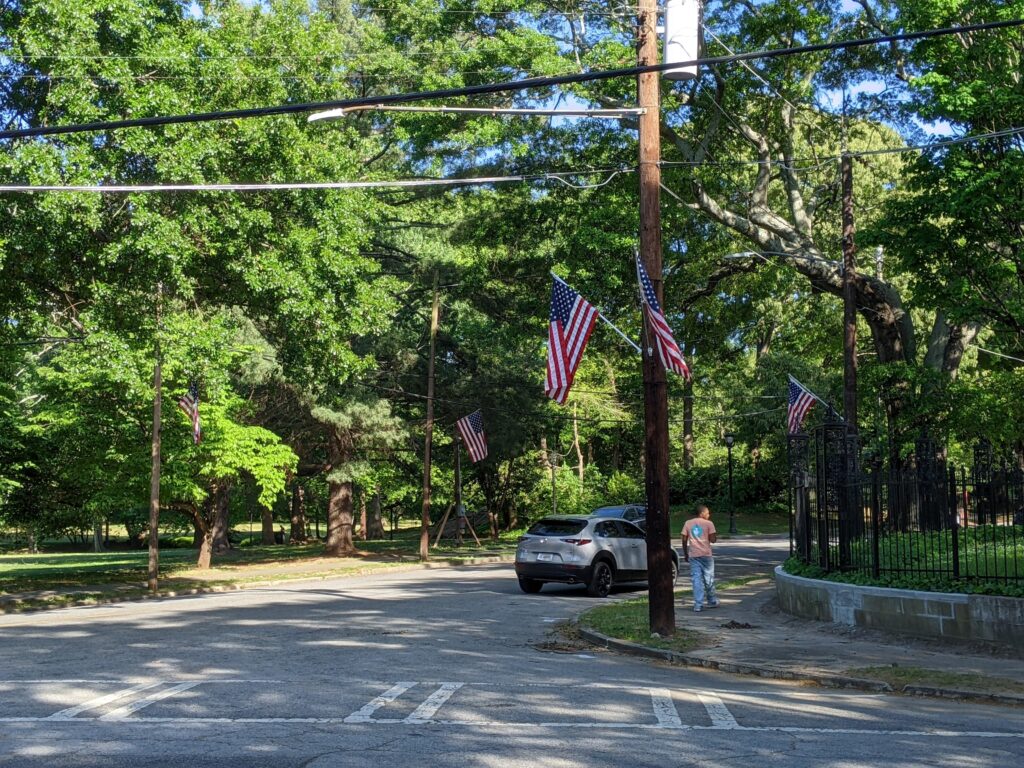
Flags line the streets
More flags
A flag-lined street at night

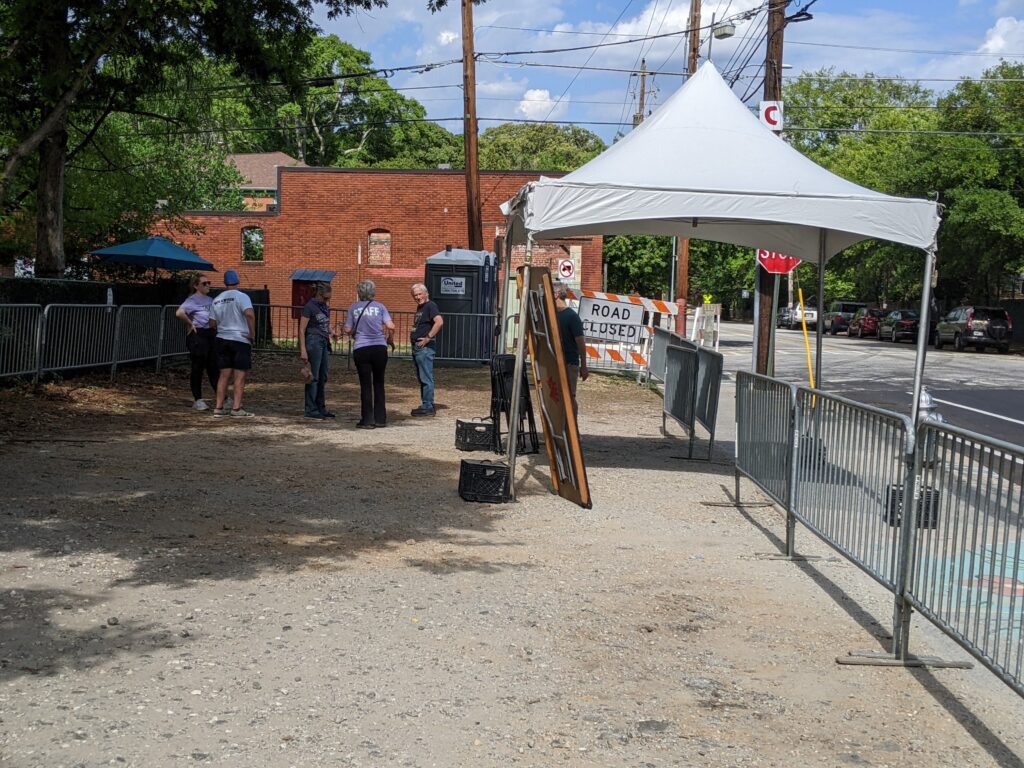
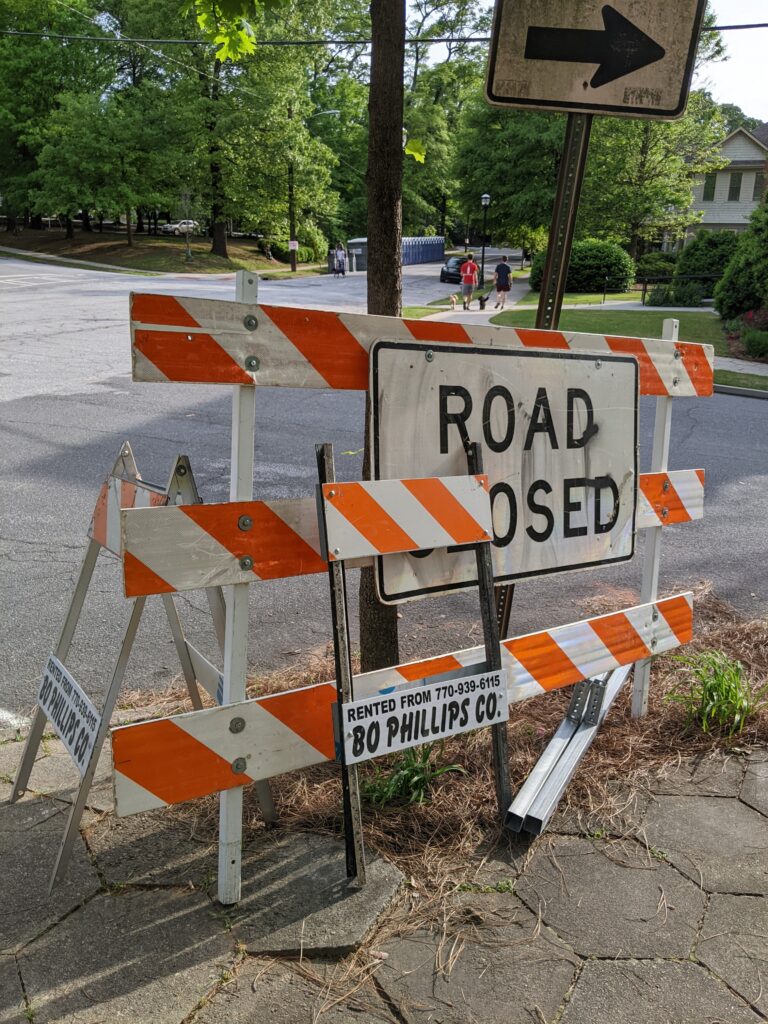
During the week before the festival, we start to see No Parking signs and street barricades delivered. During the event, several neighborhood streets are blocked off to create a pedestrian zone. The streets are lined with booths for the arts and crafts fair and the street market, and there is no room for cars. If you live on one of these streets, you have to either put your car in your driveway and leave it there all weekend or move your car to another part of the neighborhood if you plan on driving somewhere during the weekend.
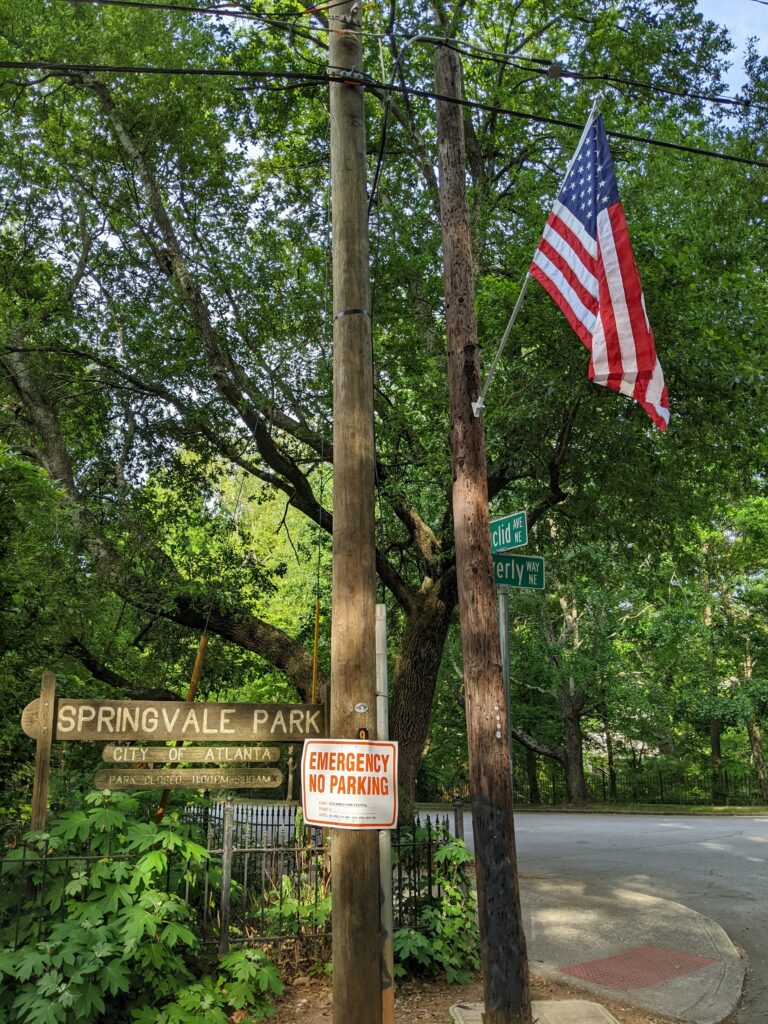
No Parking signs warn neighbors to move their cars
Barricades arrive and are staged at the side of the road

A couple of days before Festival, the golf carts are delivered. Since the area becomes a car-free zone during the festival, golf carts are used by the staff and volunteers to deliver ice, to take away trash, and to run other errands.
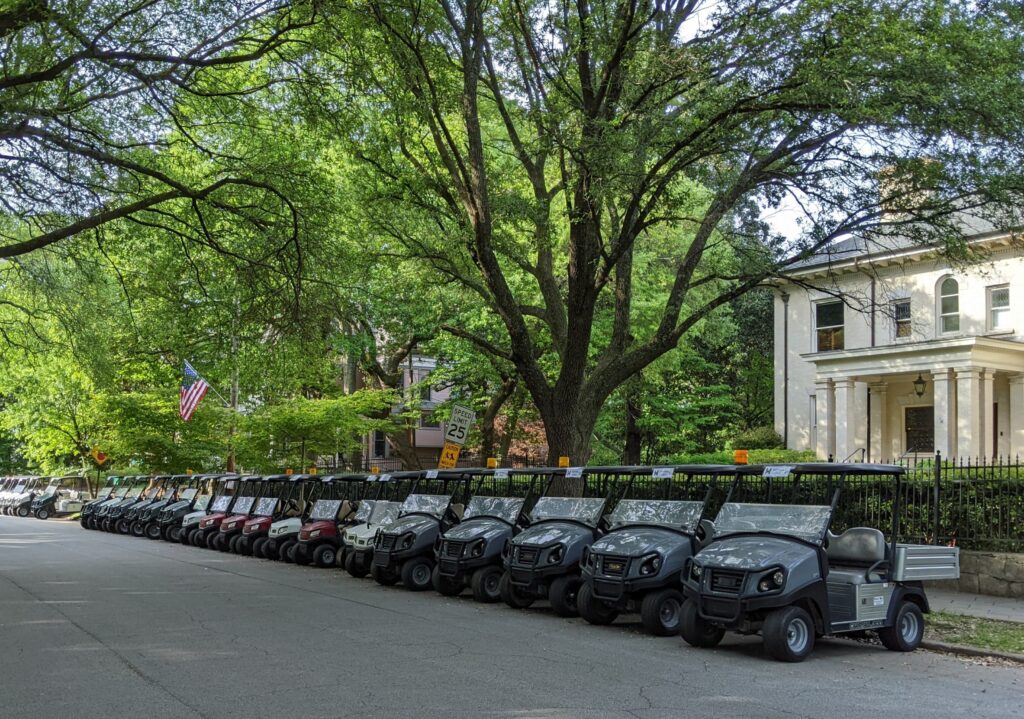
Golf carts awaiting the start of Festival

Port-o-potties are also delivered, because, well you know…
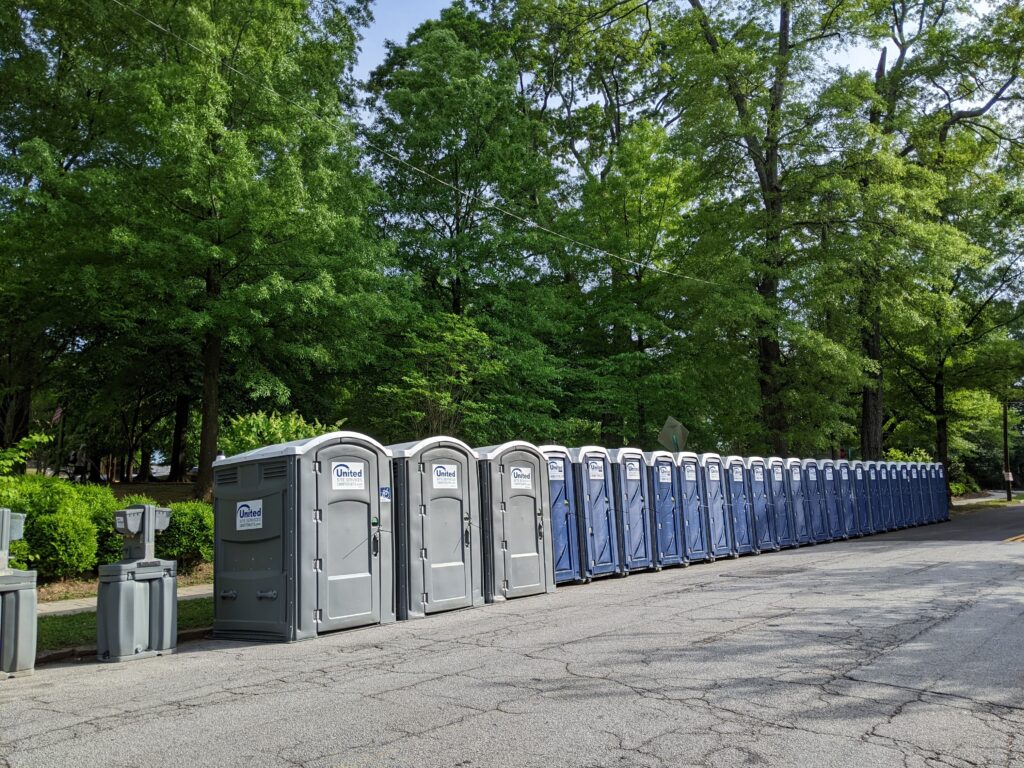
There is always an impressive row of port-a-potties a block away from my house

On the Thursday before festival, the local preschool organizes hay rides for the kids, and a couple of older neighbors drive groups around the neighborhood. What I can’t figure out is where these guys store the tractors during the rest of the year. It’s not like we have farms and barns around here.
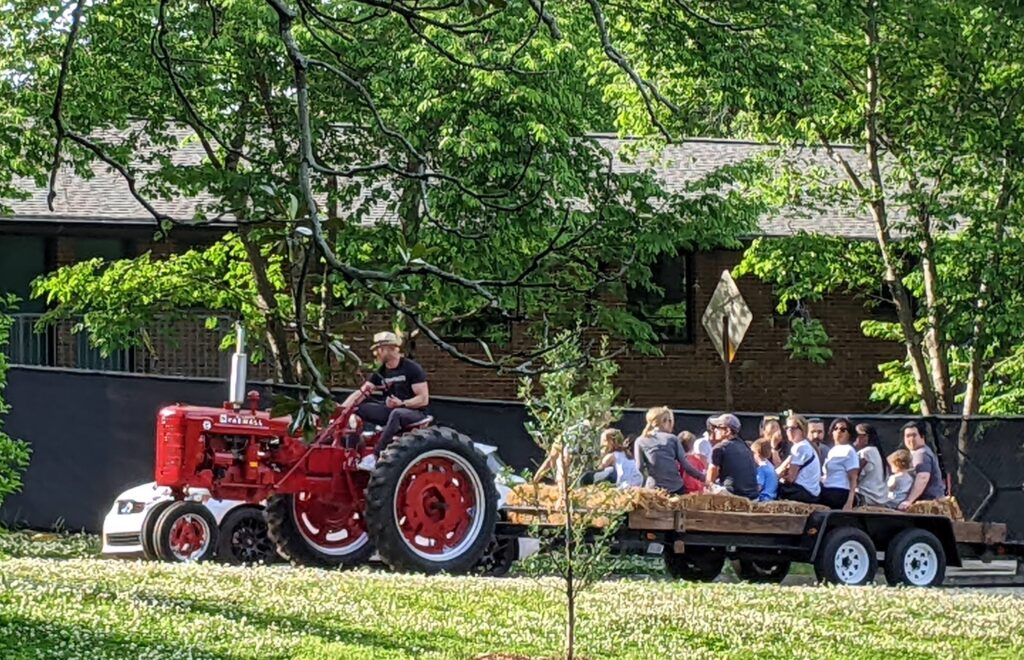
A preschool hay ride

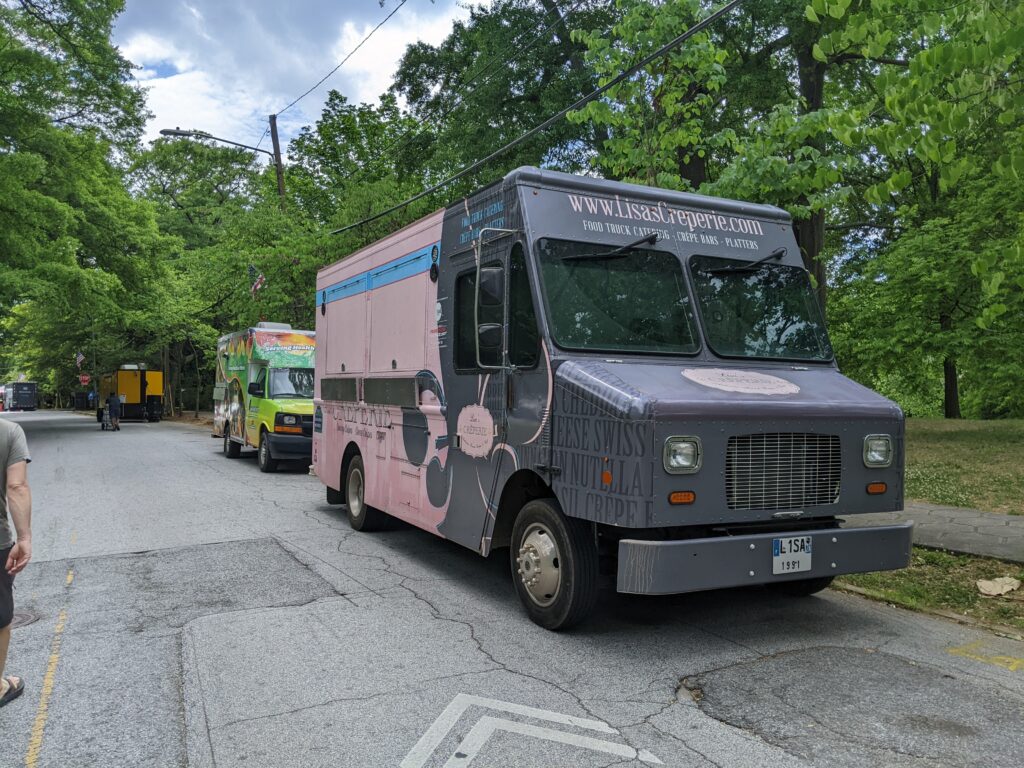
On the Friday of Festival weekend, the music tents go up, stages for the musicians are erected, and chairs for the audience are set up. Bike racks are arranged at the bike valet stations for guests who arrive on bicycle. Directional signposts are also staged around the neighborhood. The food vendors set up their tents and park their food trucks.

The music stage near my house
I did a volunteer shift this year on Friday afternoon to set up tables and chairs for the music venues, behold my handiwork
I also set up tables and chairs at this music tent
And we set up tables and chairs in the street near the food booths and food trucks where people can sit and eat
I also helped set up barricade fencing for the bike valet, and this task was unpleasant – those fences are heavy
Festival directional signage – that’s the Candler house in the background, built in 1890 by the founder of Coca-Cola, Asa Candler
Food trucks ready for the weekend – I’ll be hitting up the crepe truck first thing on Saturday morning

At 6 am on Saturday morning, the vendors start to arrive and set up their booths.
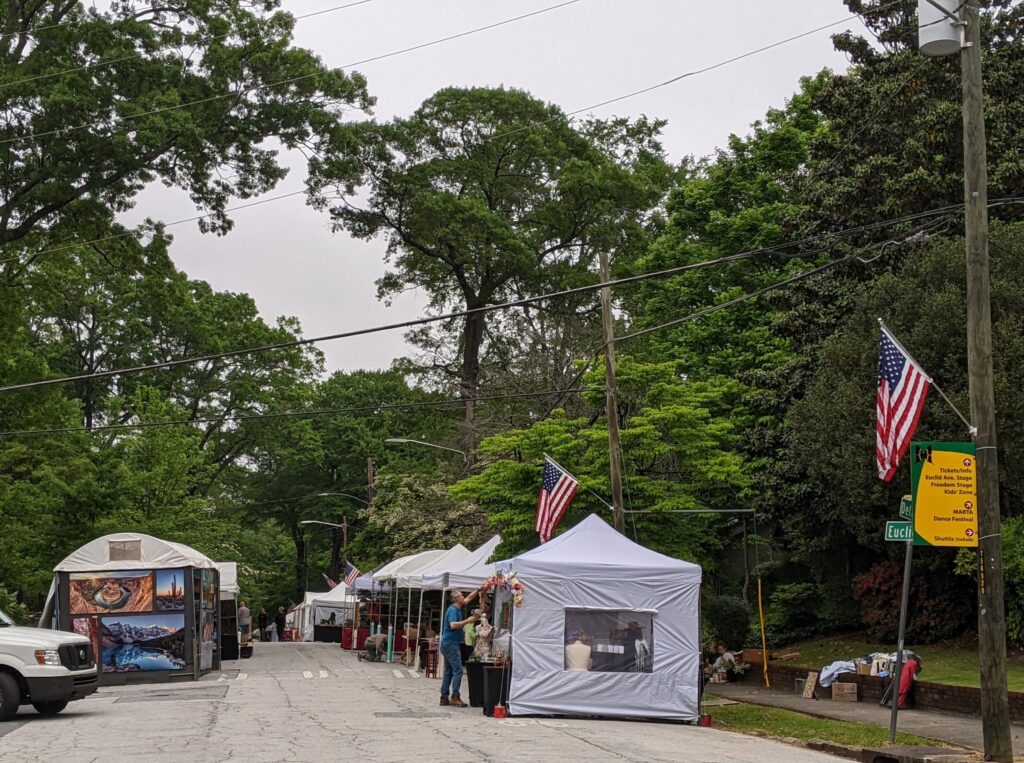
Vendors setting up their booths on Saturday morning

By 11 am when the festival begins and people start streaming into the neighborhood, I am positively vibrating with excitement about the weekend ahead…

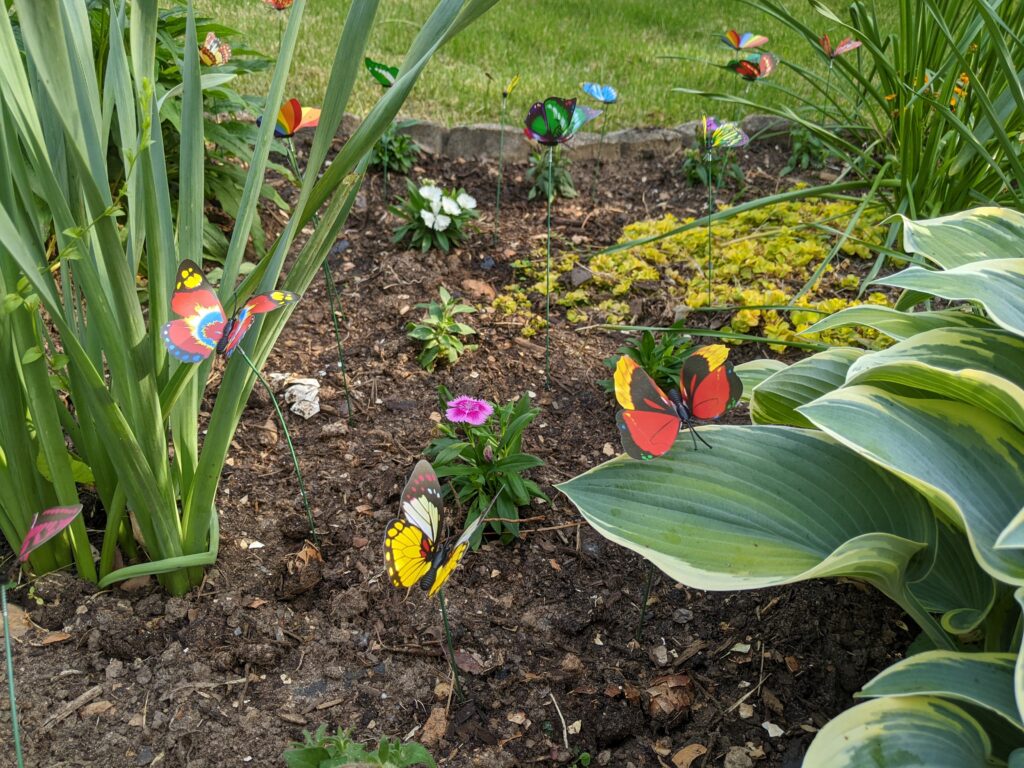
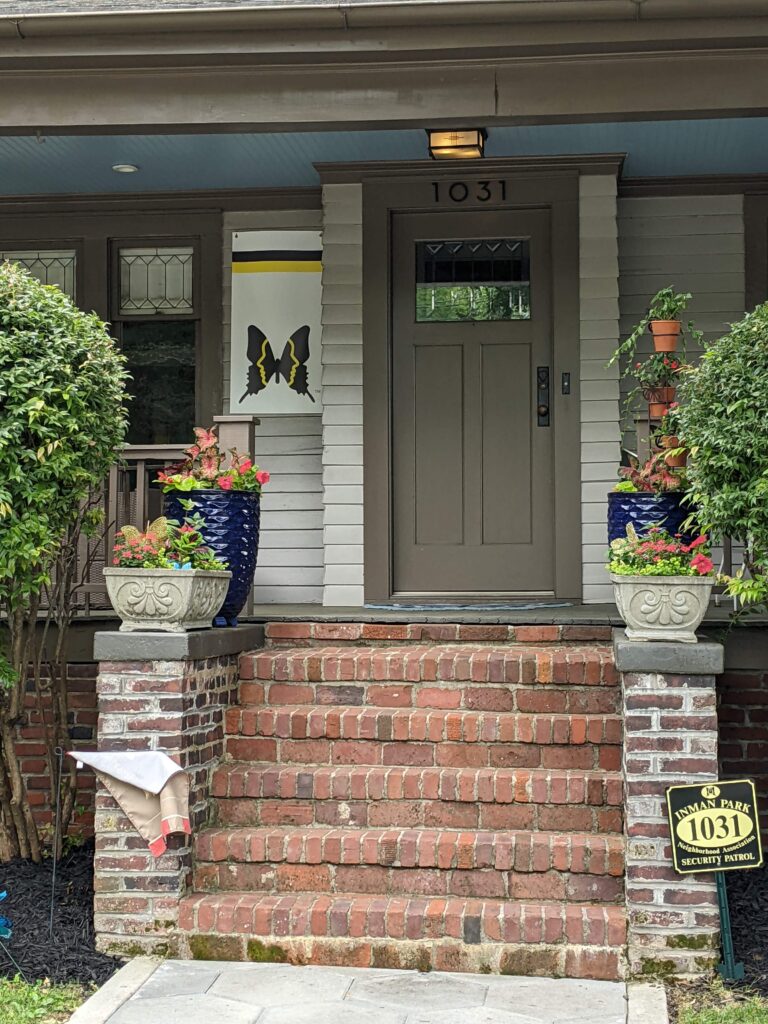
This house is decorated for Festival – the butterfly is the icon of Inman Park and symbolizes the rebirth of the neighborhood which started in the 1970s
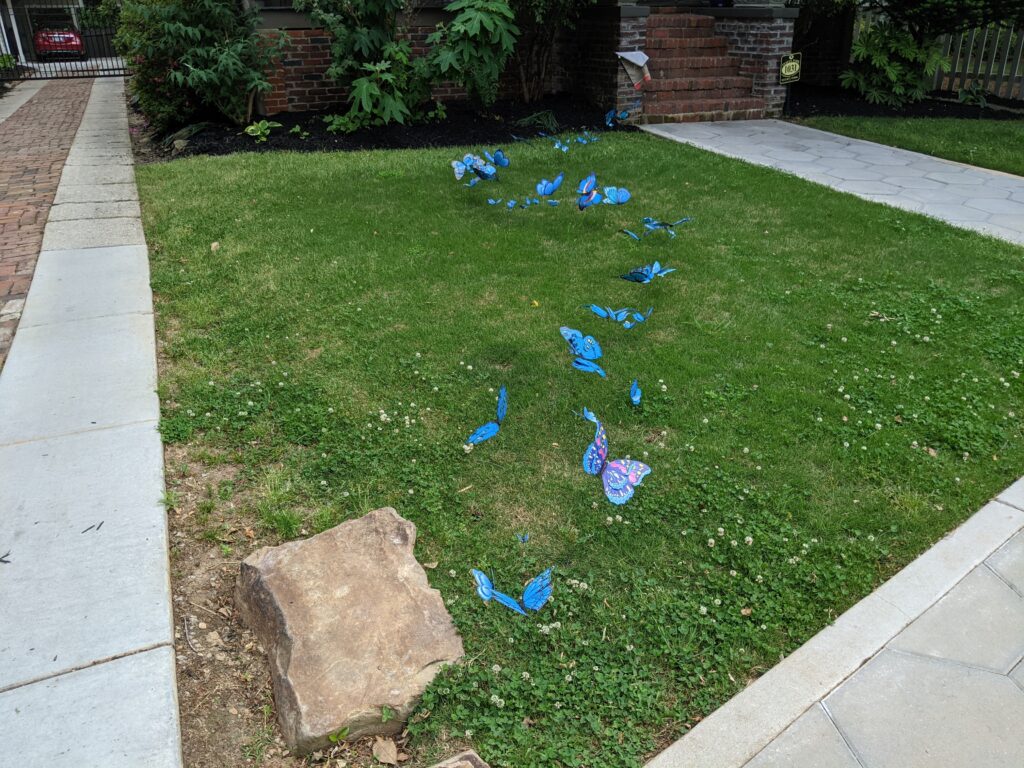
Butterflies in our neighbor’s yard
More butterflies in Jen’s yard
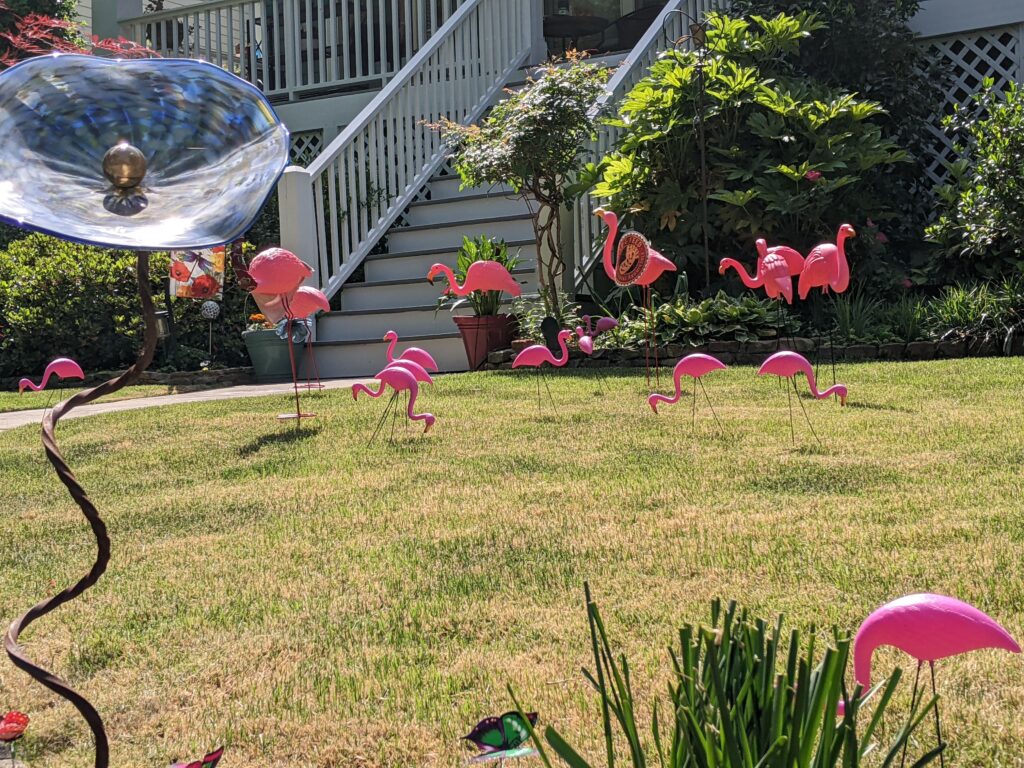
And now Jen has added a flock of flamingos to her yard
Another yard decorated with butterflies
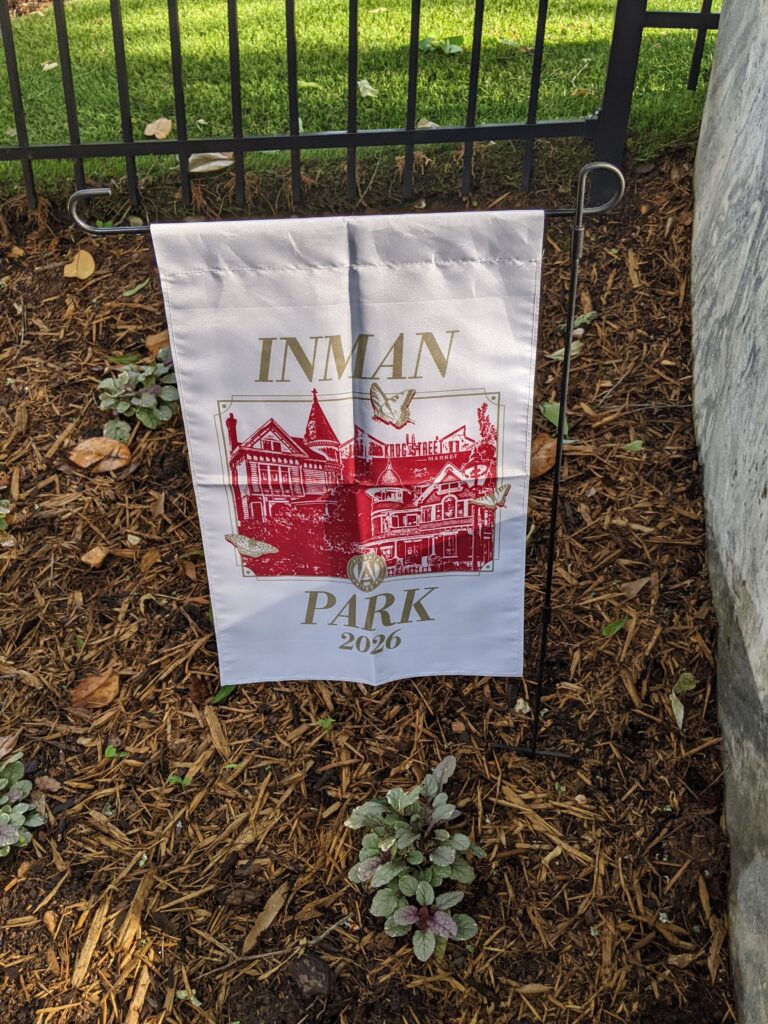
The ubiquitous buttery banner that can be seen on houses all around the neighborhood
Inman Park Festival 2026
Standard
Uncategorized

Freedom Farmers Market

The Freedom Farmers Market is a year-round market held in the parking lot of the Jimmy Carter Presidential Center. The Carter Center is in our neighborhood, a 25-minute walk or a short drive away, and we generally go every Saturday morning. We go at 8:30 am because it can get really crowded, especially in the spring and summer when the weather is nice and the produce is abundant.

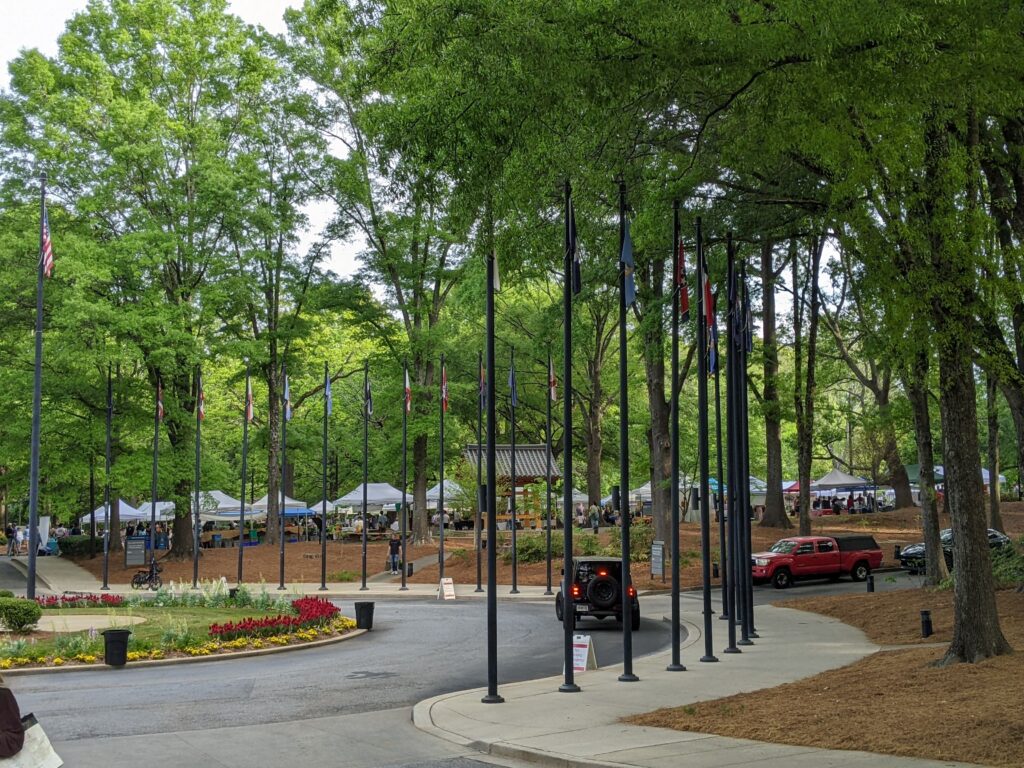
The entry at the Carter Presidential Center has a circular drive lined with the 50 state flags – you can see the farmers market tents in the background
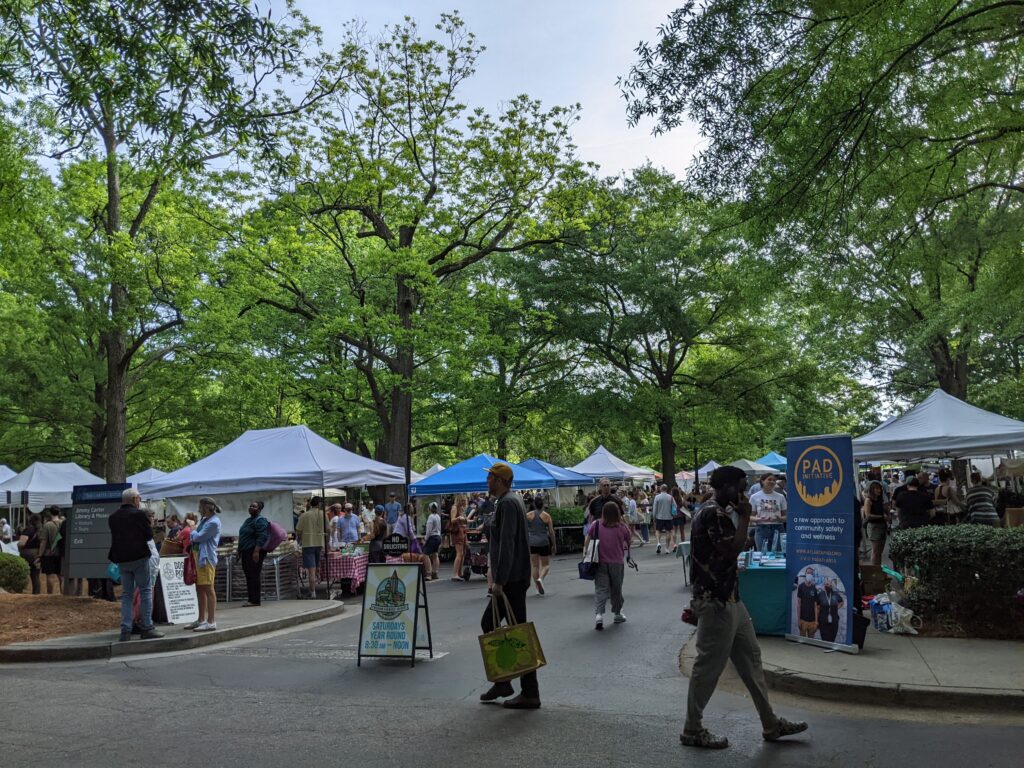
The entry to the market
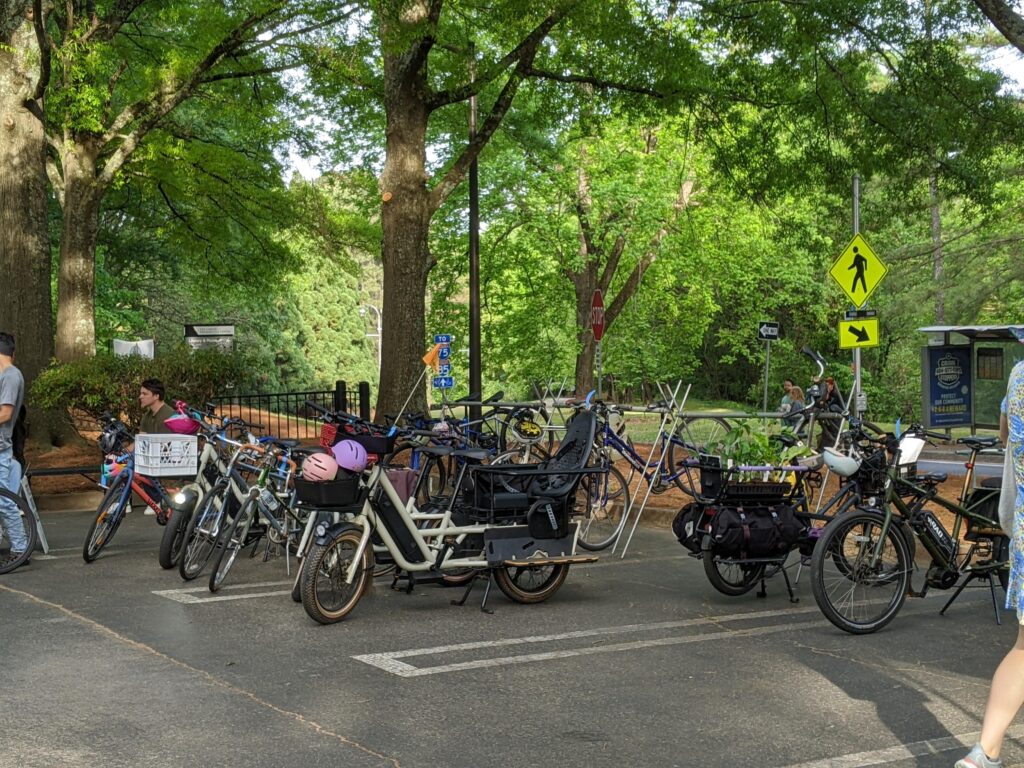
There is bicycle parking for those who bike to the market

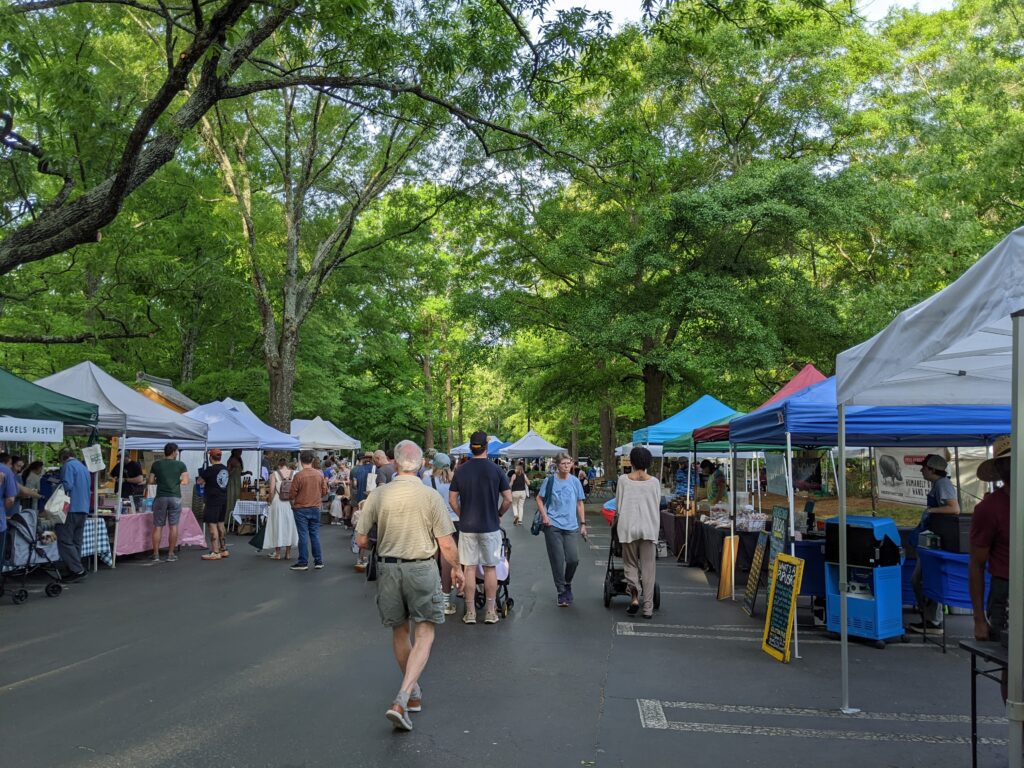
It’s a large market with a wide variety of vendors – fruit and vegetables, mushrooms, bread and pastries, shrimp, beef, chicken, eggs, and cheese as well as a couple of breakfast stalls and booths selling packaged goods like jams, kimchi, honey, and cured meats. In our early days in the neighborhood, the market was smaller during the winter, but now there are plenty of vendors during the colder months to make the weekly trip worthwhile.

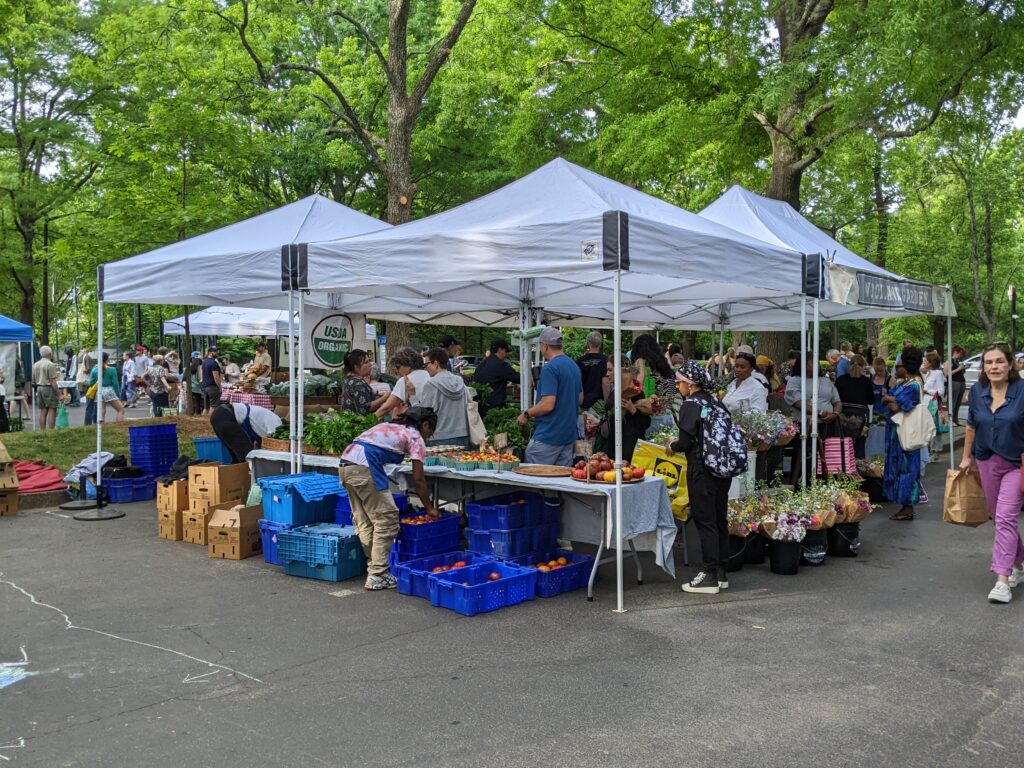
In the market
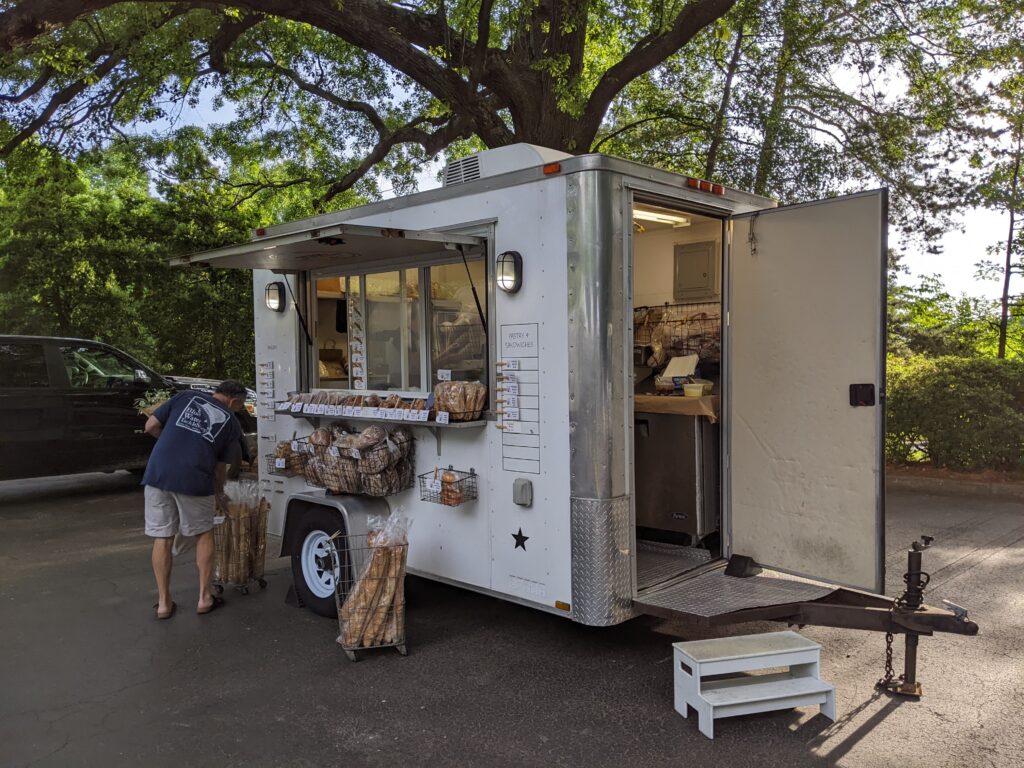
Star Provisions bakery has a food truck
One of the produce stands
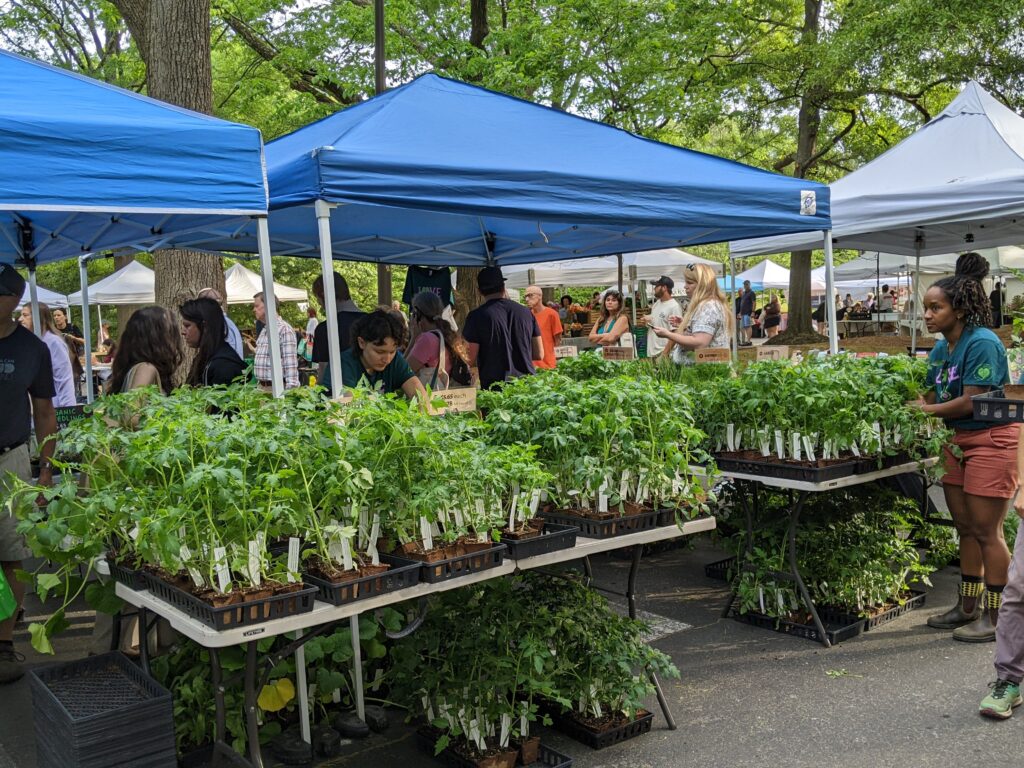
This vendor was selling vegetable and herb plants this morning
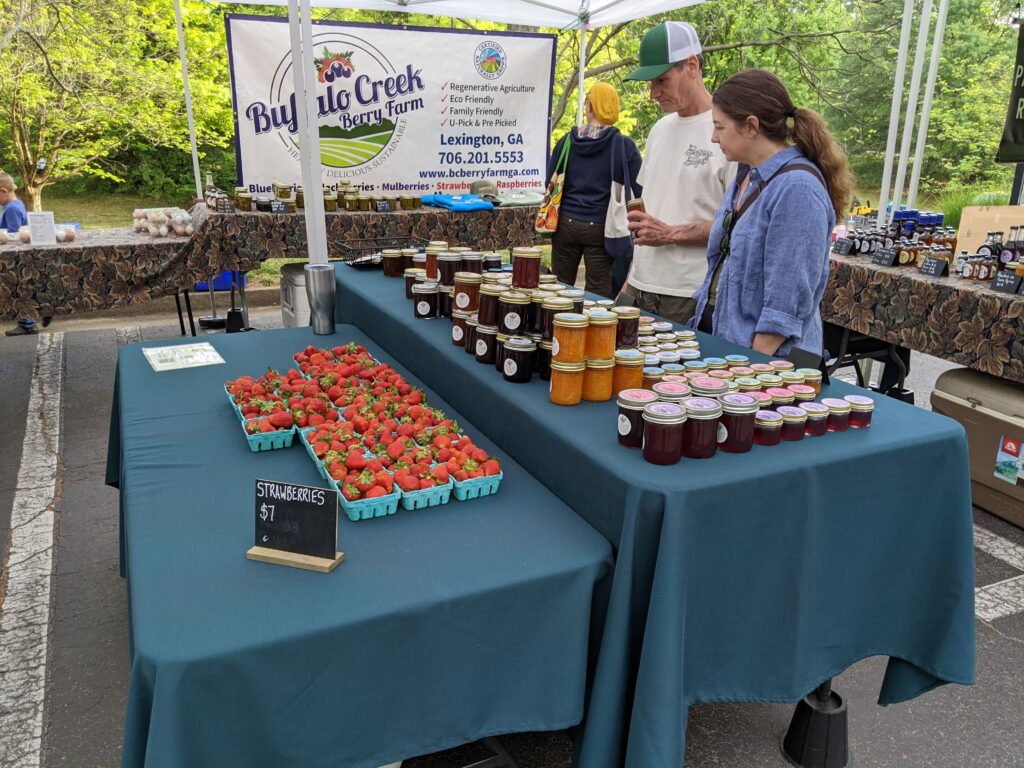
Fresh strawberries and homemade jams
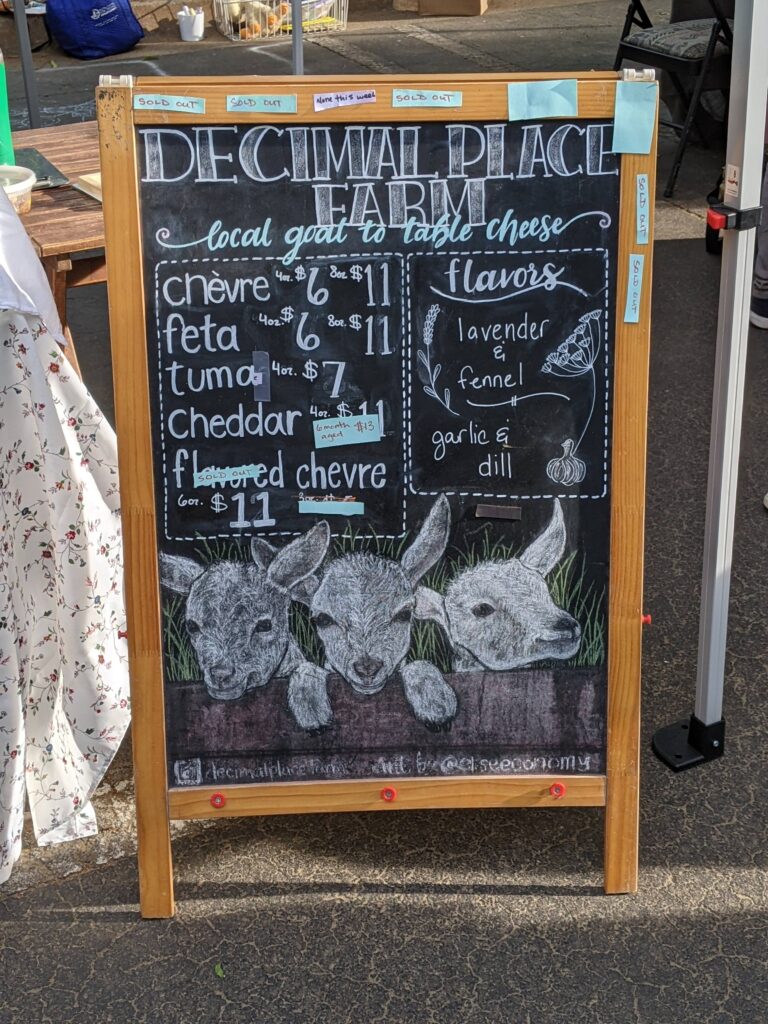
There’s a cheese lady who makes several different types of goat cheeses
There’s a stand dedicated to mushrooms
More mushroooms
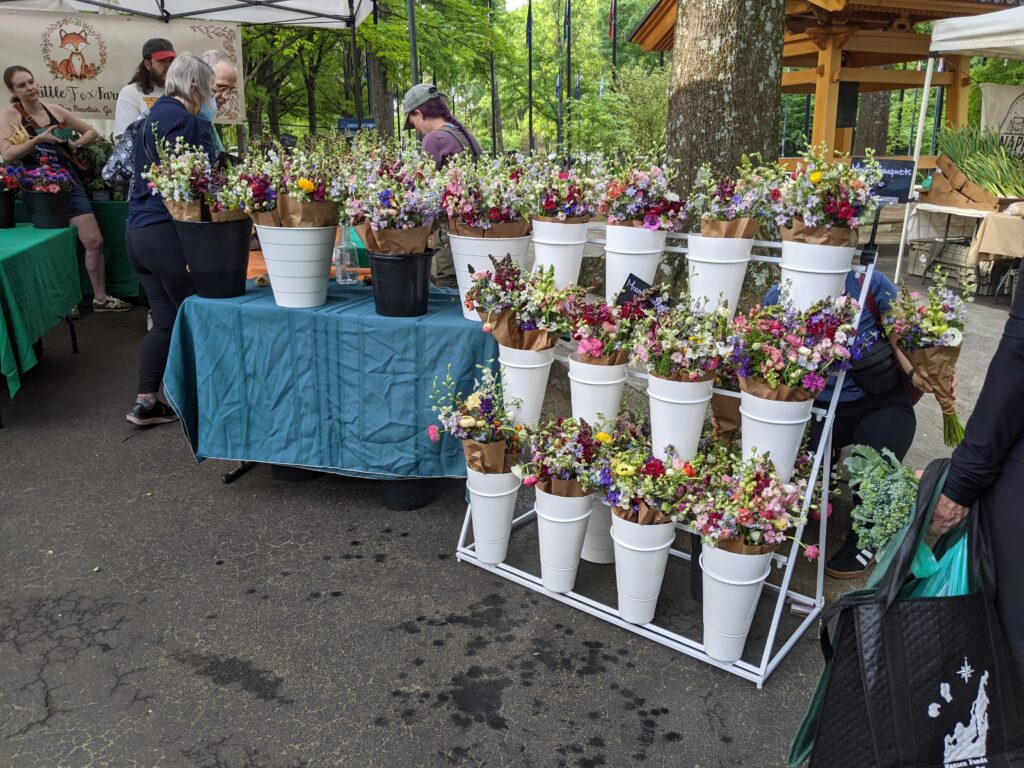
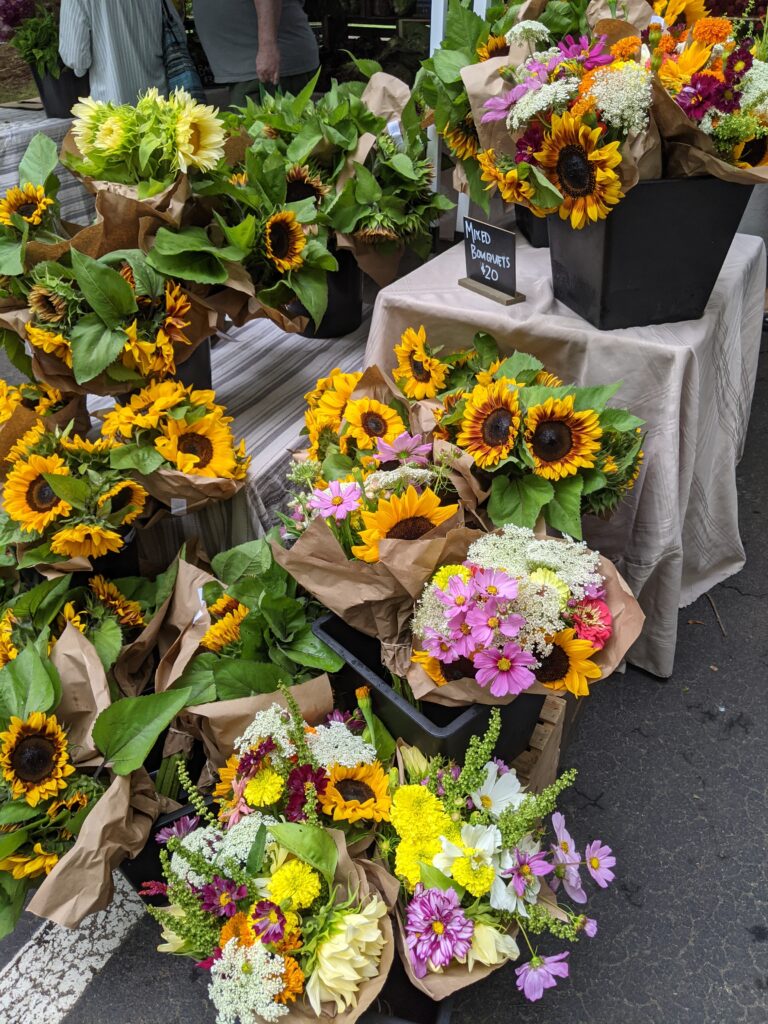
Flowers for sale
More flowers for sale

The food costs more than the offerings at the grocery store, but we’re okay with that. It’s all organic and, because it’s local and in season and just picked, it tastes so much better. Plus, we like to support small, local farms and businesses. We visit the farmers market on Saturday morning, and based on what we buy, we then plan our meals and grocery shopping for the upcoming week. We eat what’s in season, and the result is a varied menu throughout the year. 

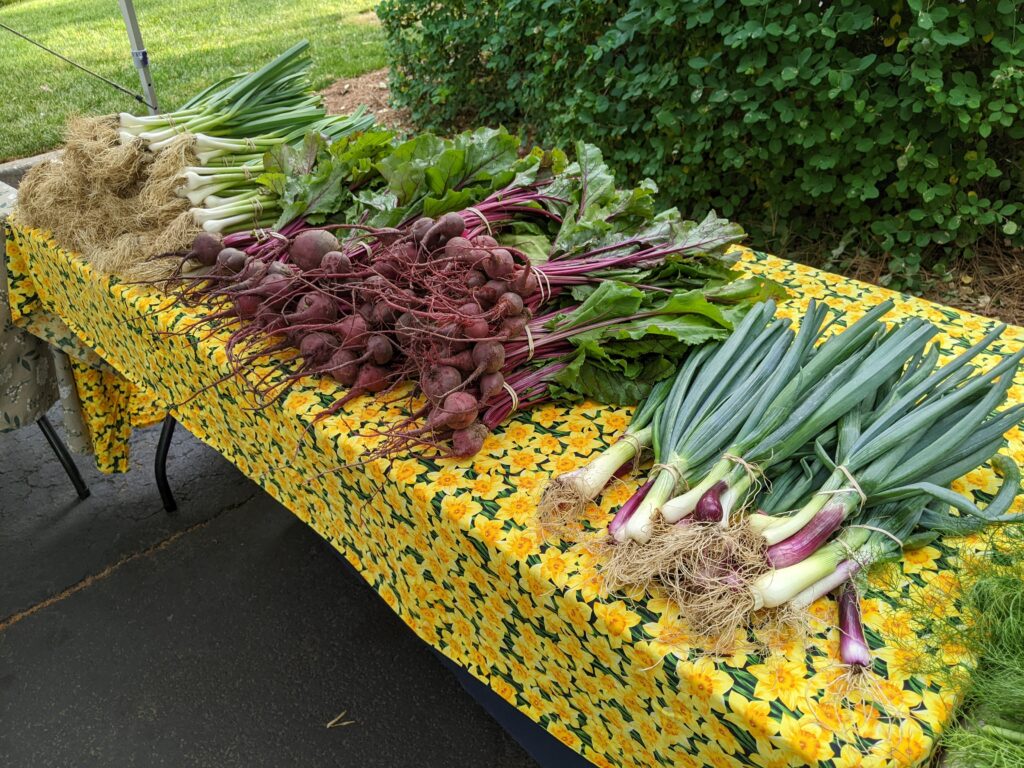
Green onions, beets, and baby leeks
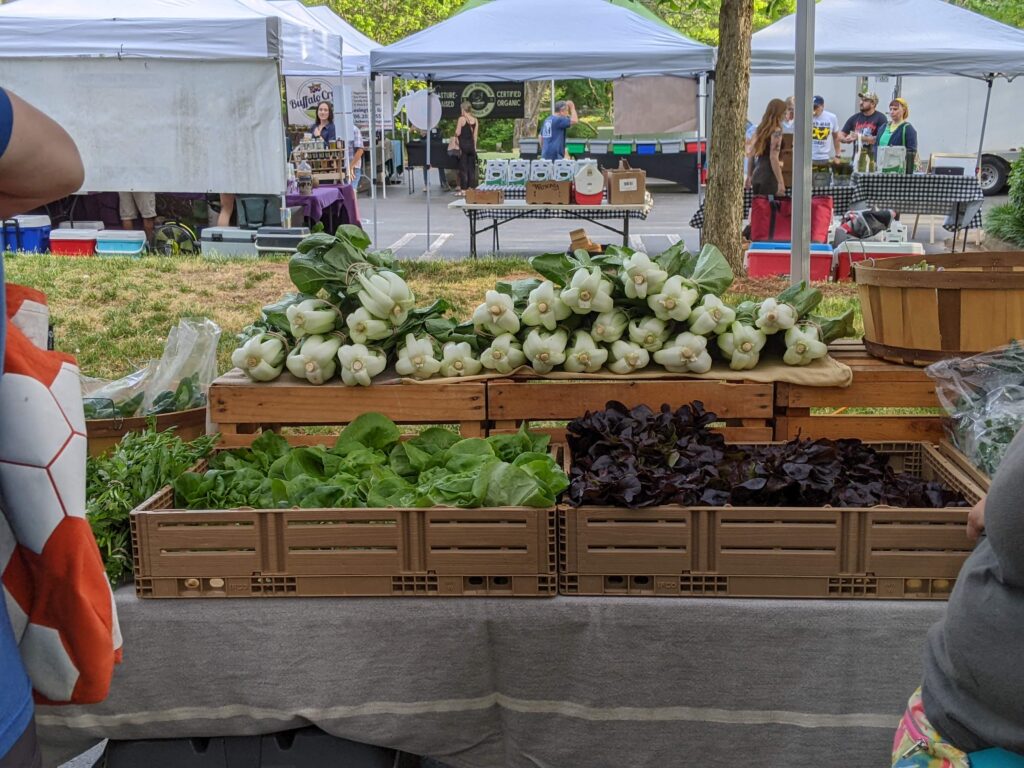
Bokchoy, green lettuce, red lettuce
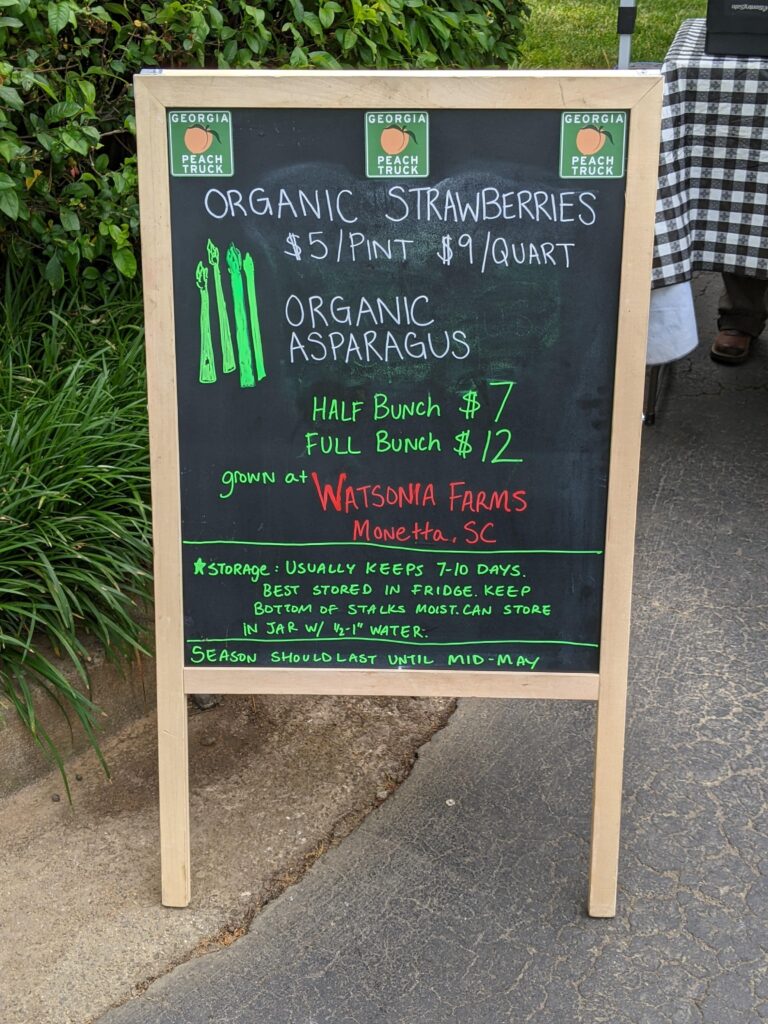
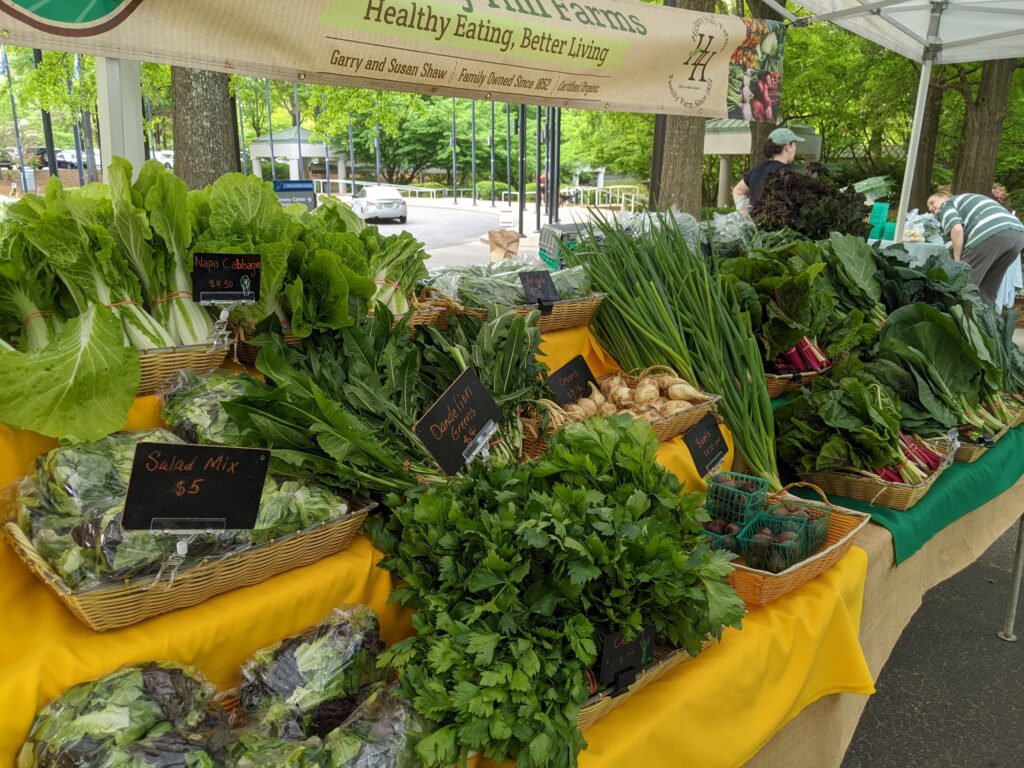
Signboard in front of a booth
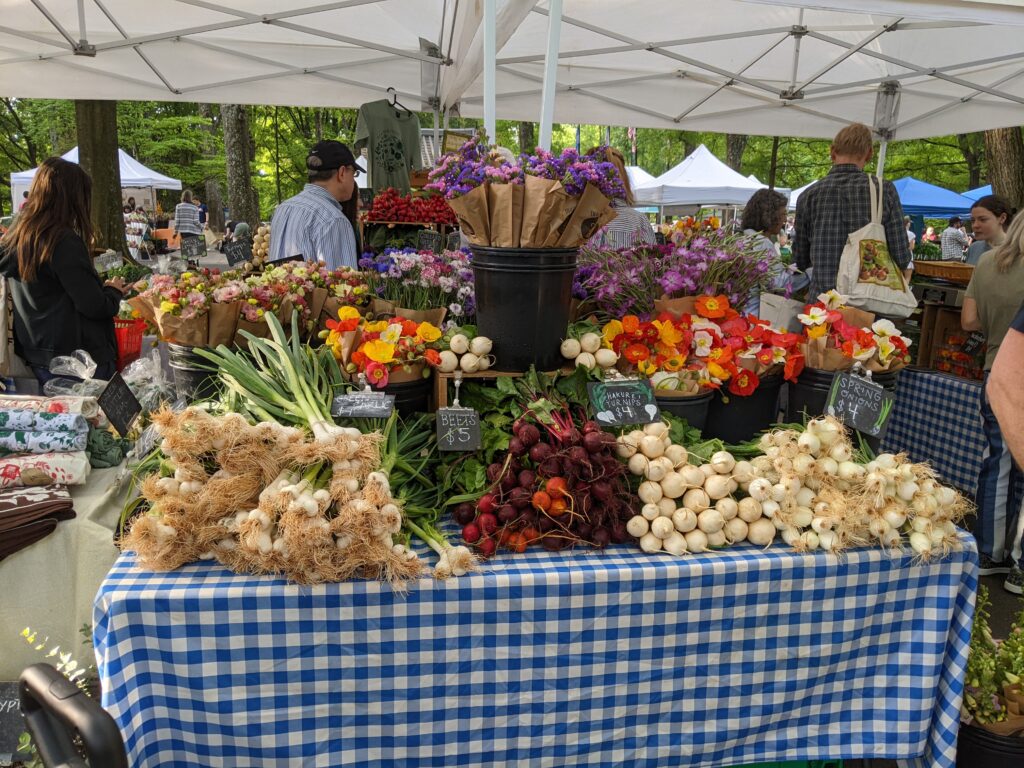
Green garlic, beets, hakurei turnips, spring onions, flowers
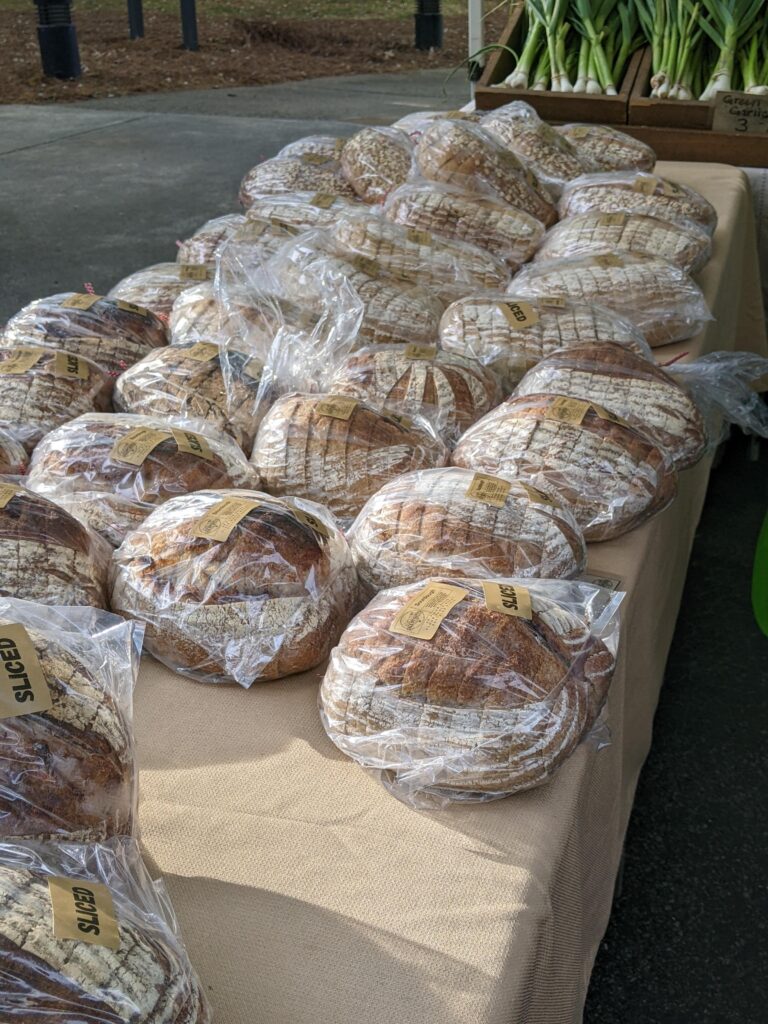
Bread for sale
Salad mix, dandelion greens, Napa cabbage, onions, beets, arugula, chard, kale
May produce
Snapdragons, zucchini, and squash – oh my!
A giant pile of easter egg radishes

We’re fortunate to have such a great resource within walking distance of our house. In addition to providing healthy food choices, it’s a fun part of our weekly routine and it offers creative culinary inspiration throughout the year.

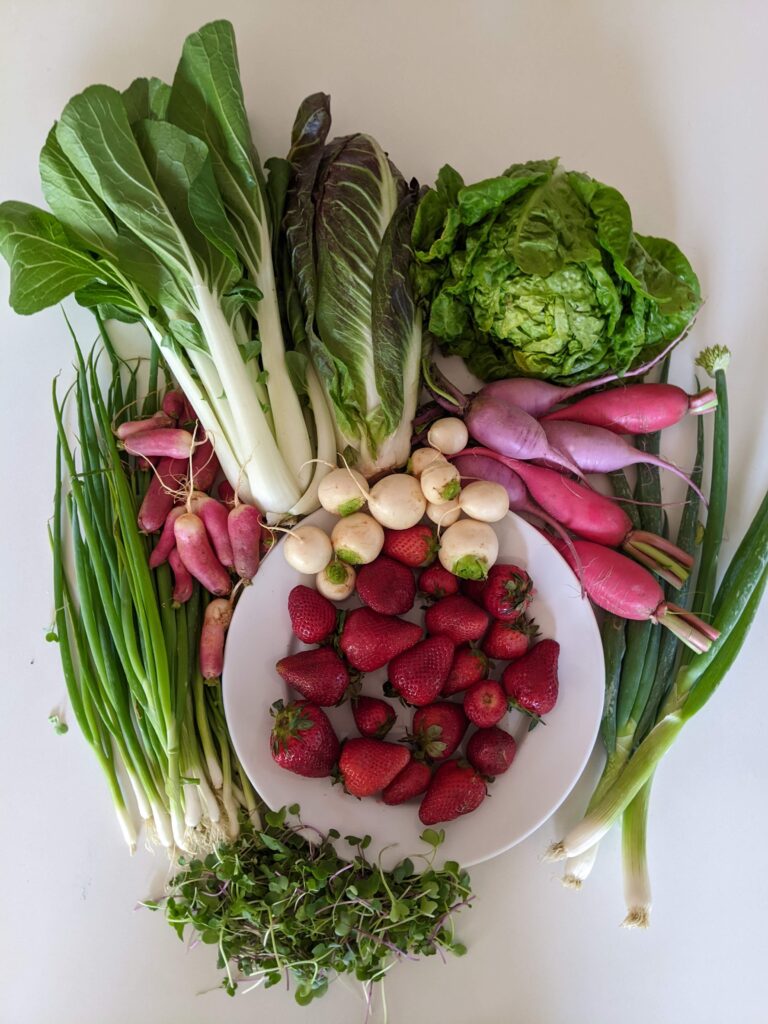
Our purchases last weekend
May 2, 2026 – lettuce, flowering broccolini, beets, turnips, leeks, green onions, broccoli, carrots, white onions, bokchoy, cabbage, red onions
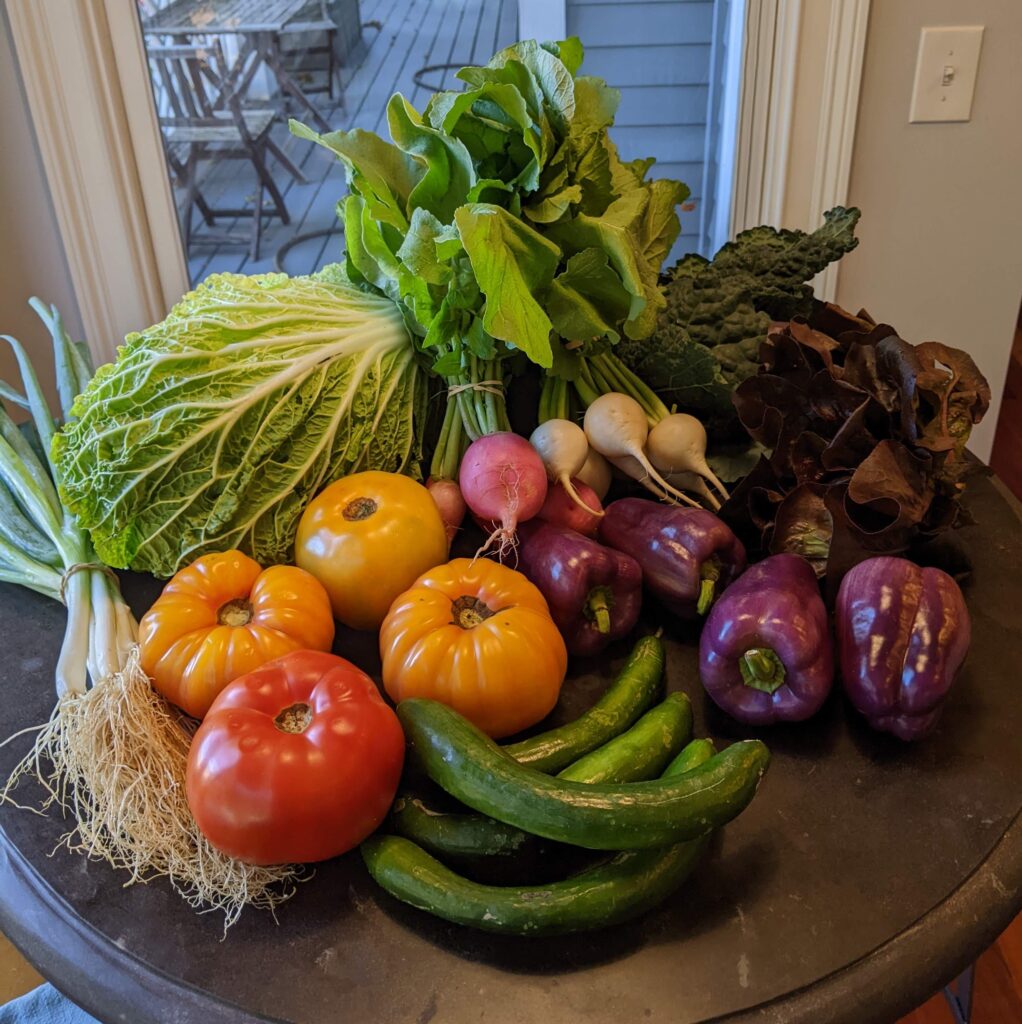
An October haul
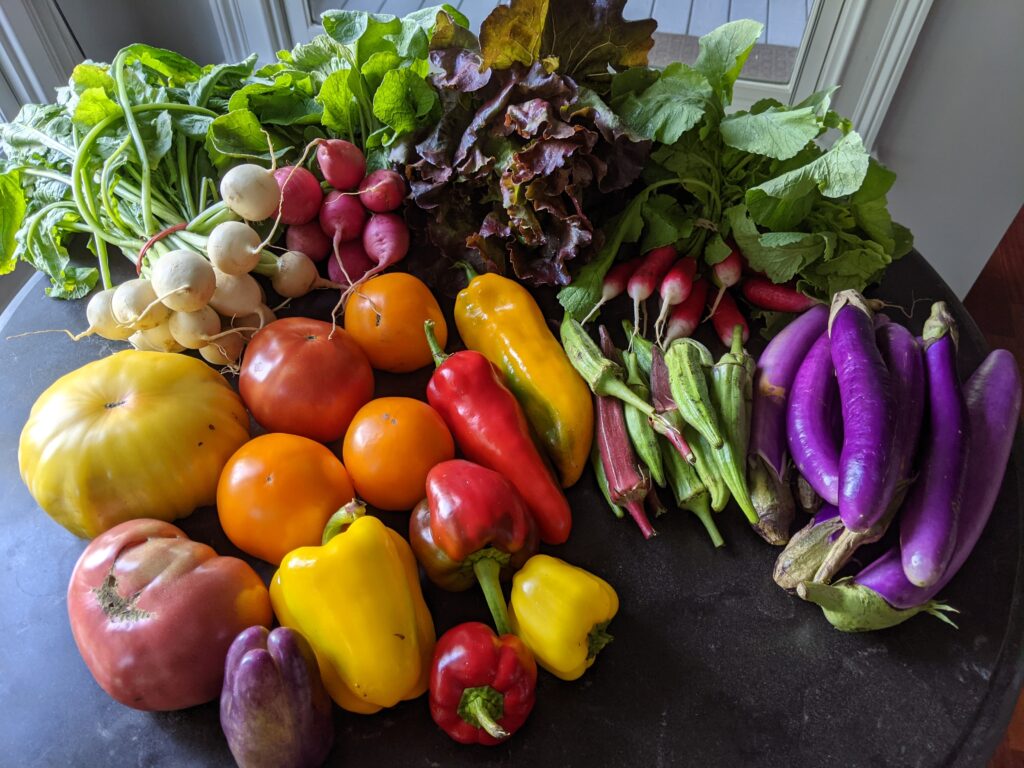
A November bounty
Standard
Uncategorized

Our Yard in Spring

When we moved into our house, our front yard was mostly pine straw and our side yard was all turf grass. Over the years, Chad has spent a lot of time and effort turning our yard into a beautiful garden where it’s a pleasant place to spend time when the weather is nice. The thoughtful selection of plants ensures that there is always something green or flowering or both throughout the year. As you might guess, springtime is my favorite season, and there is a lot happening in the garden right now.

The plants in front of the porch are going a little wild with new growth – viburnum, ferns, hydrangea, weeping redbud
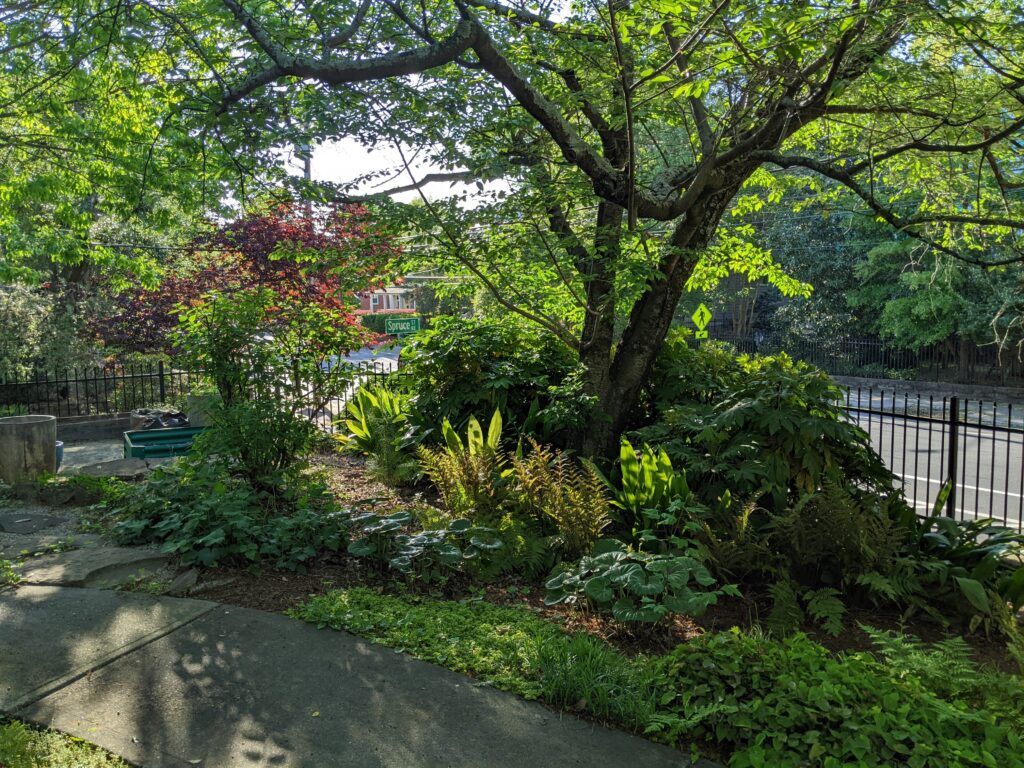
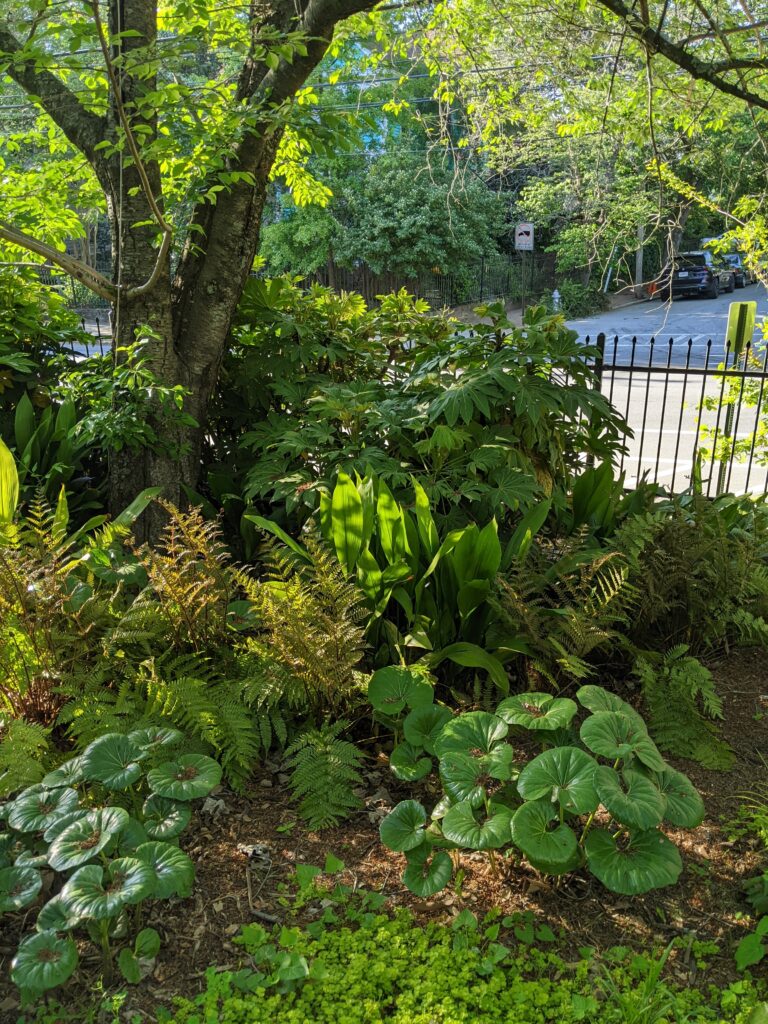
The area under the cherry tree used to be dirt covered in pine straw – now it’s a mass of vegetation
I can’t even remember the names of all of these plants under the cherry tree
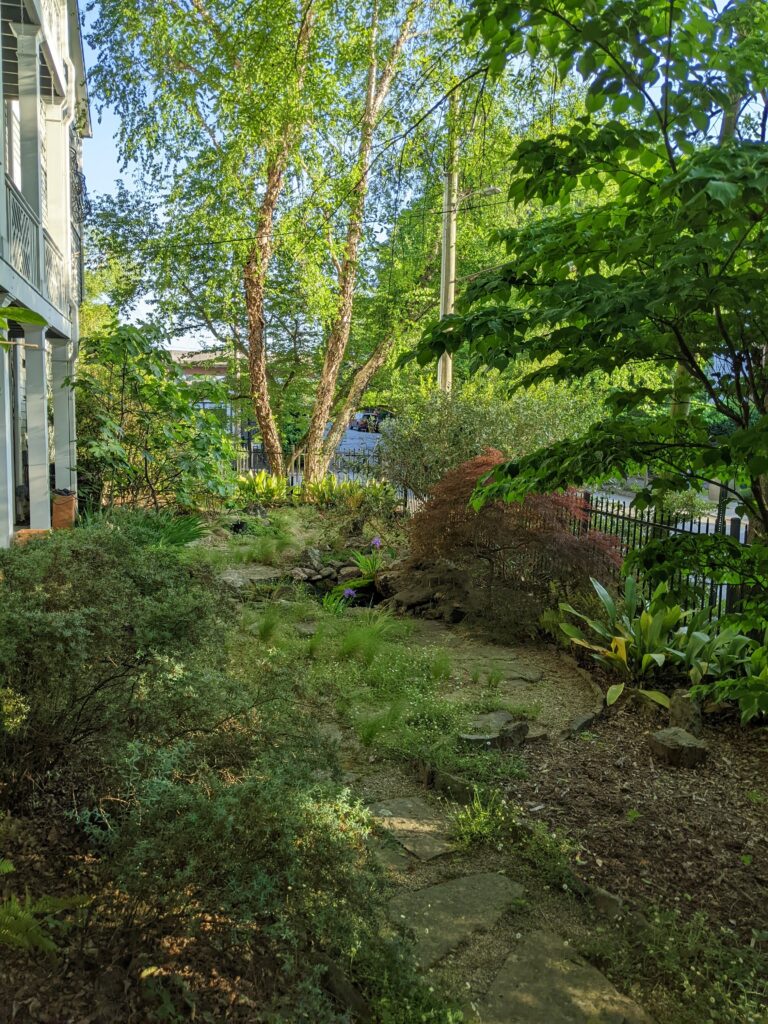
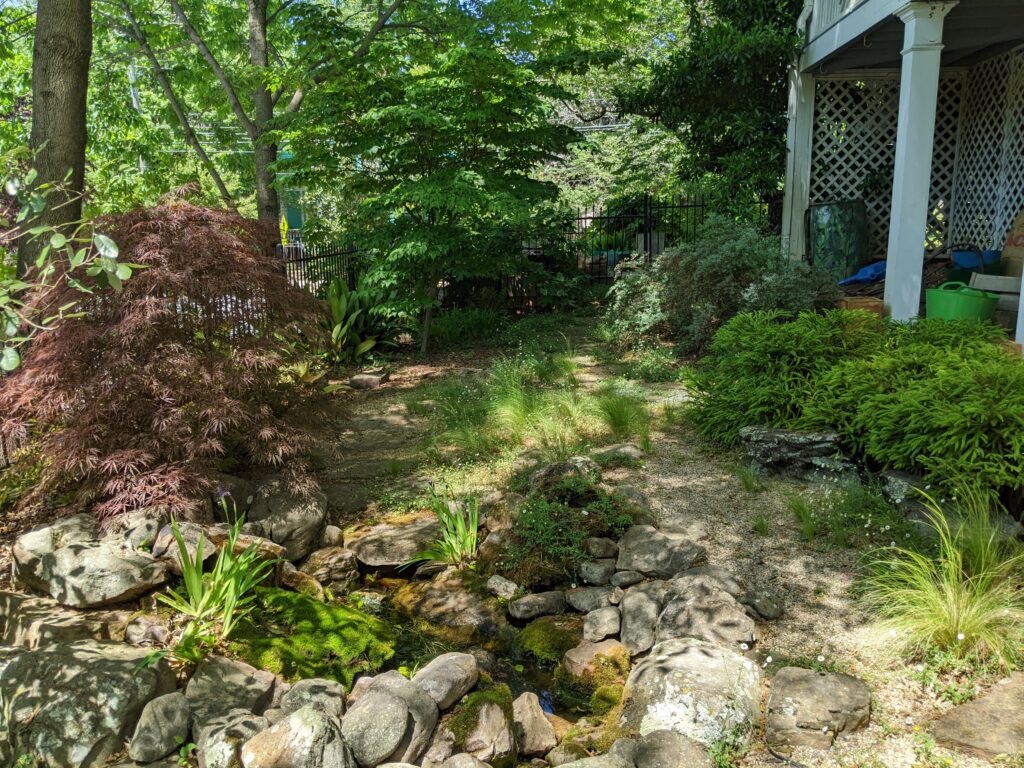
Our side yard used to be just turf grass – now there’s a variety of plants, a walking path, and a water feature
View from the other direction
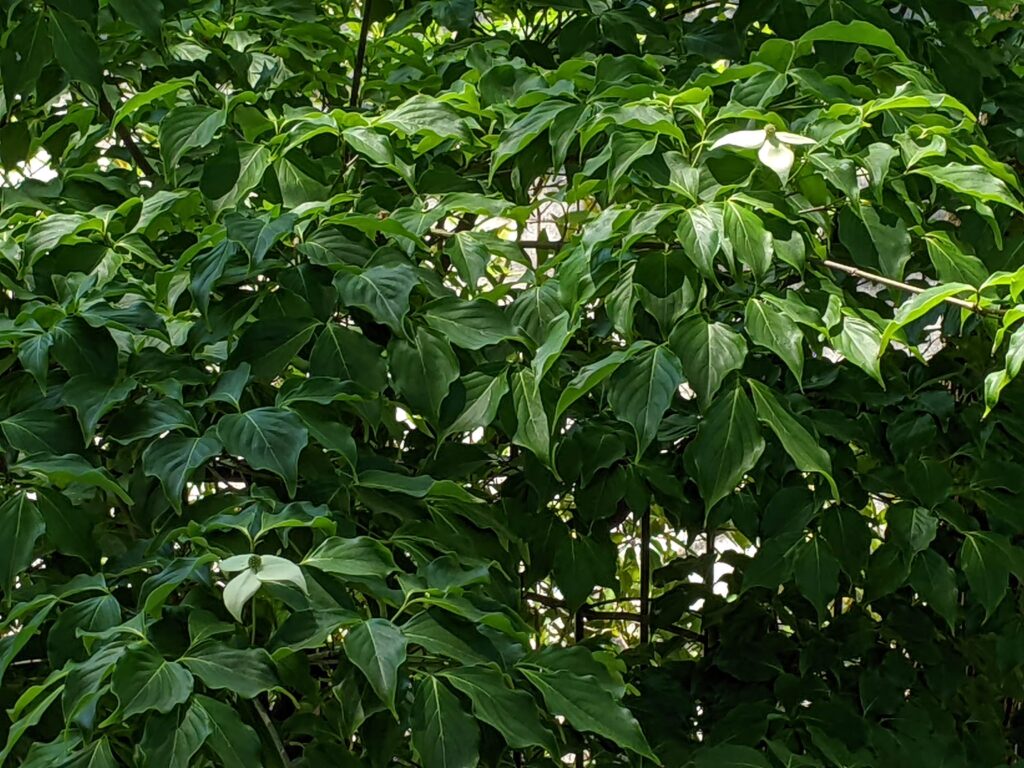
The kousa dogwood has just started blooming with flowers on the top
The kousa dogwood is just starting to flower, it blooms later than other species of dogwood
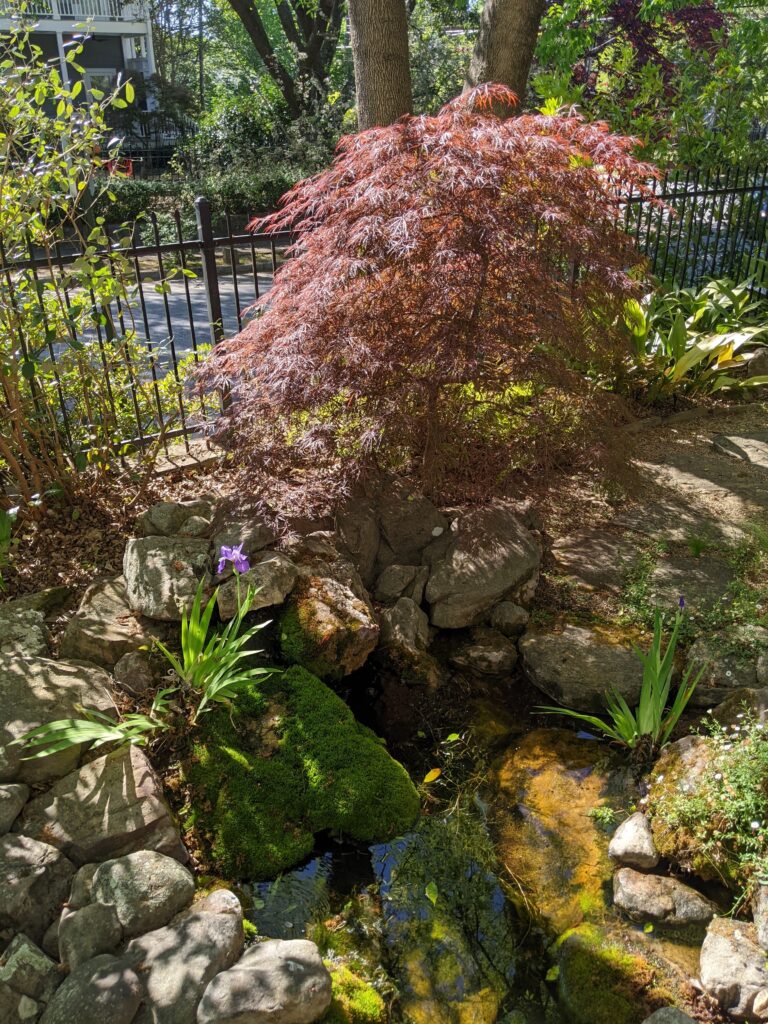
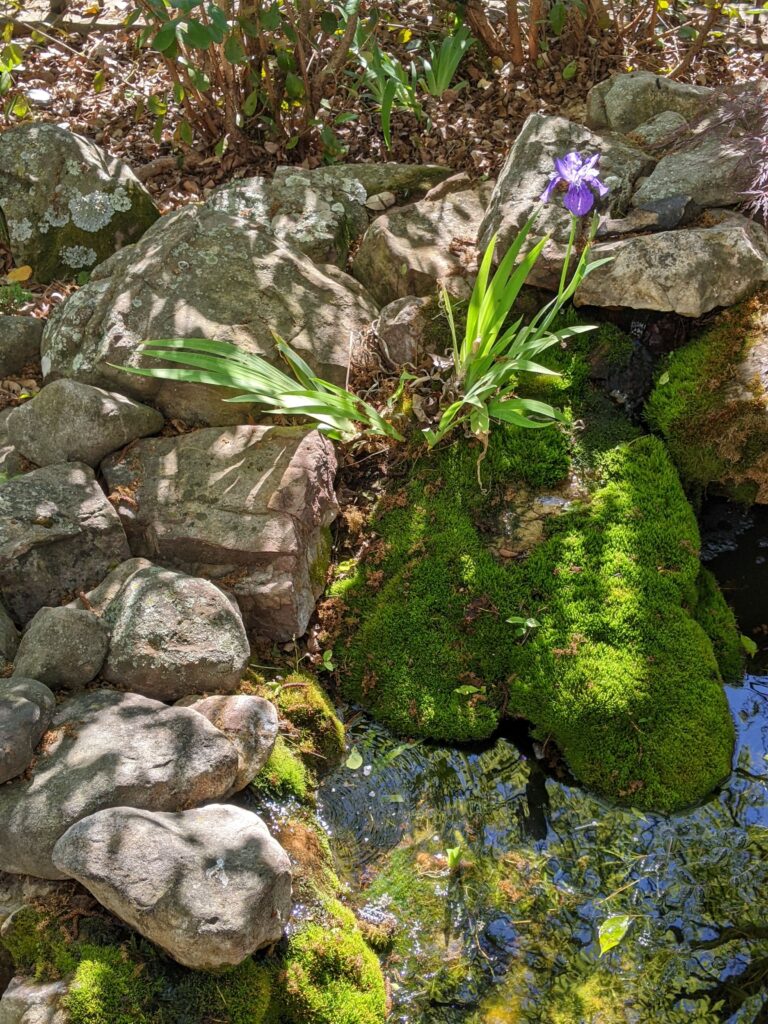
The Japanese maple next to the water feature – by the way, we didn’t plant the moss on the rocks, it just appeared
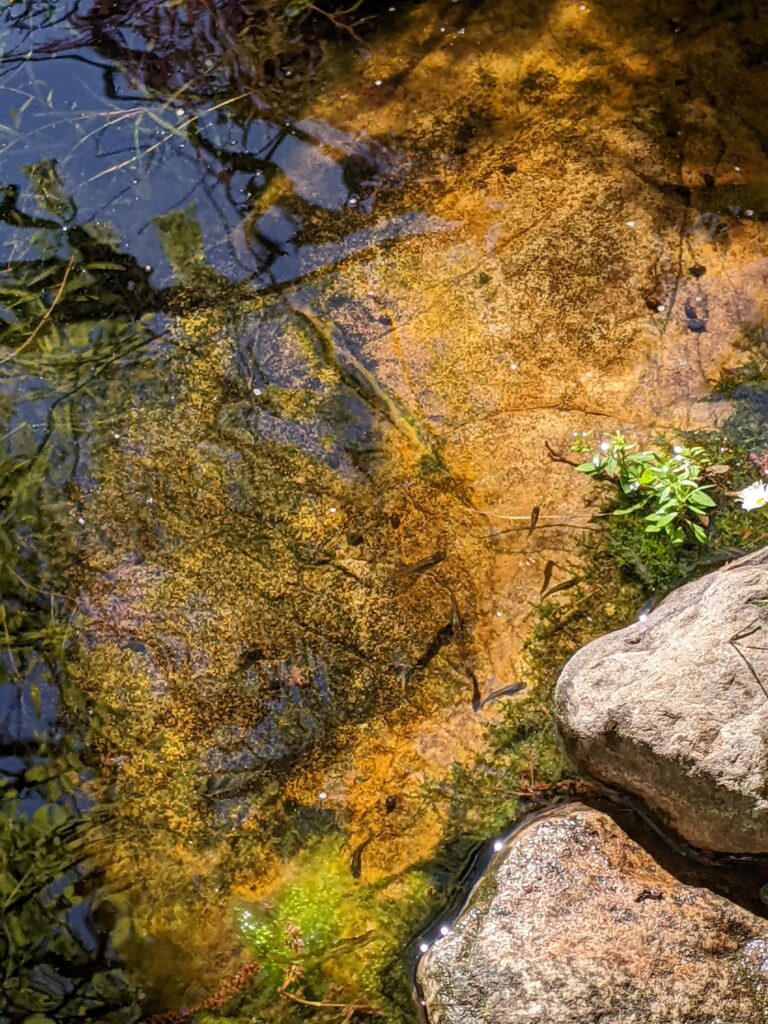
If you look closely, you can see little minnows in our pond, and there are little black snails on the rock in the upper right corner
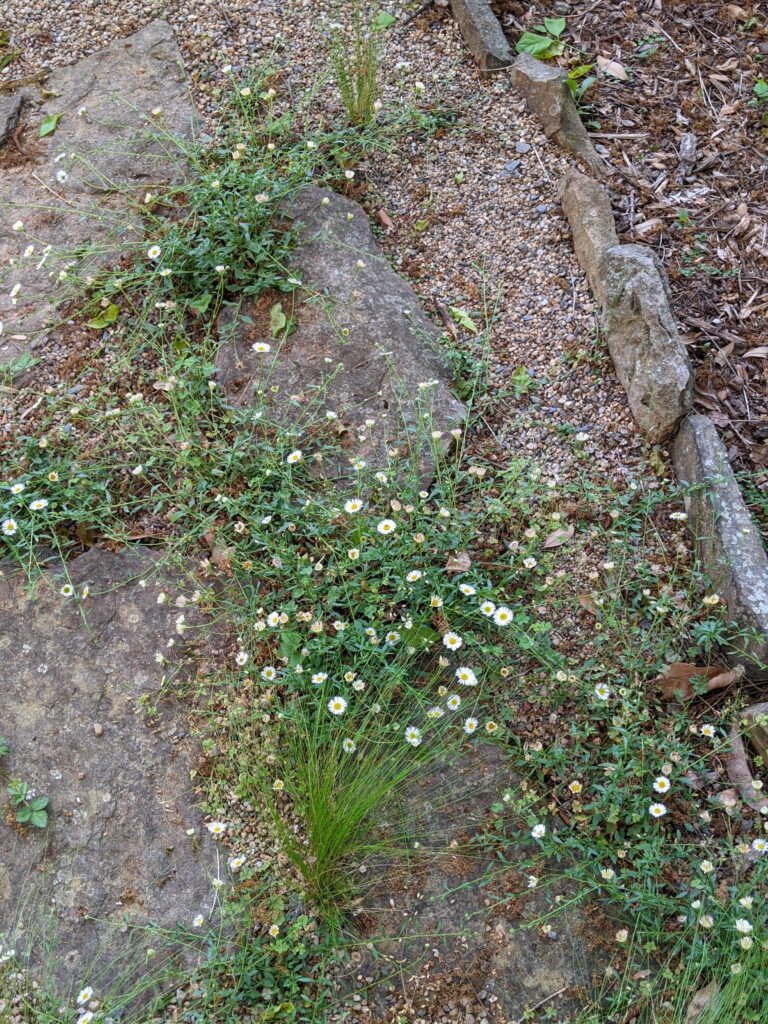
Over the years, the plants have sprouted in new locations including in the middle of the path
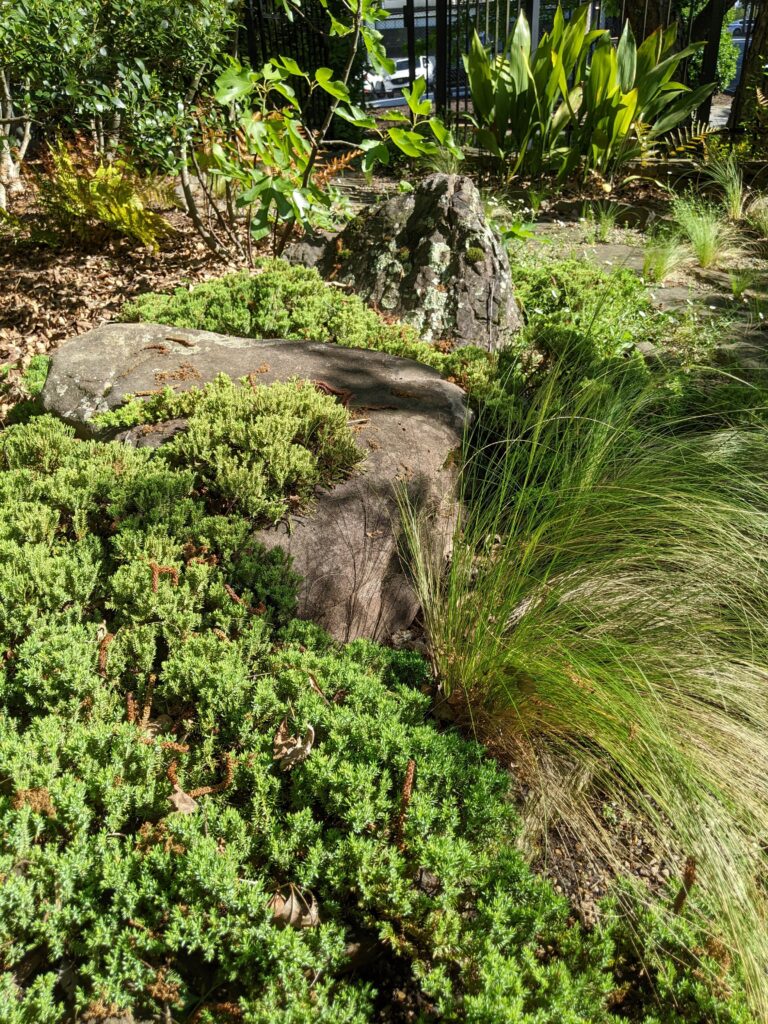
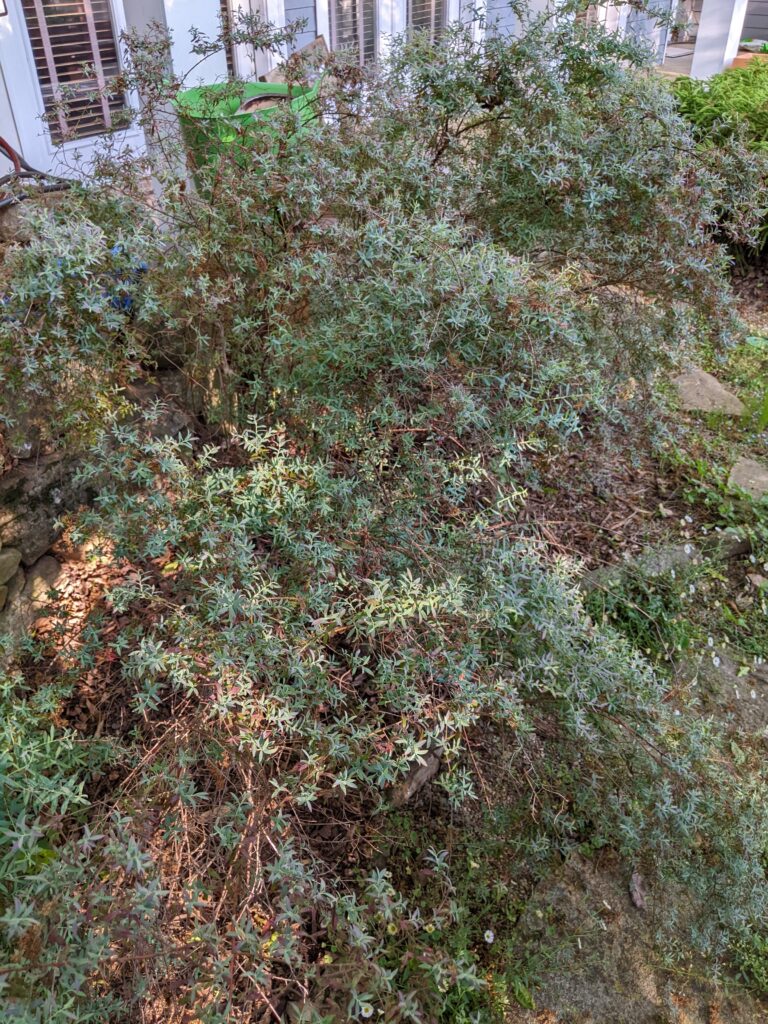
Low-profile juniper and Mexican feather grass with cast iron plant in the background
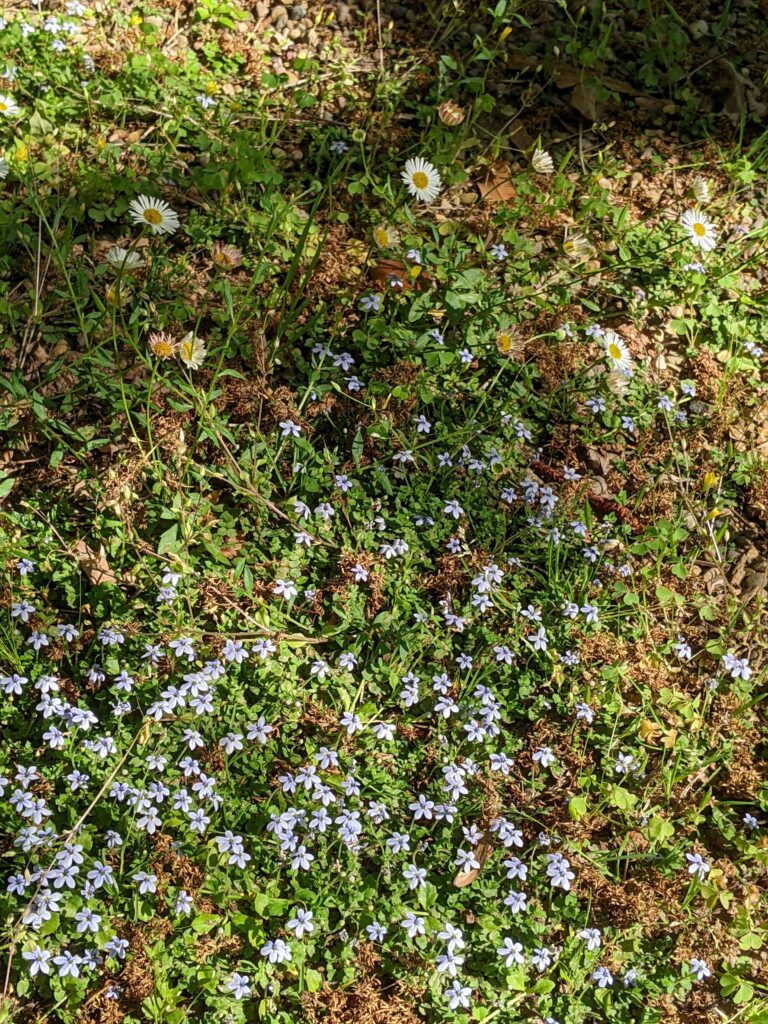
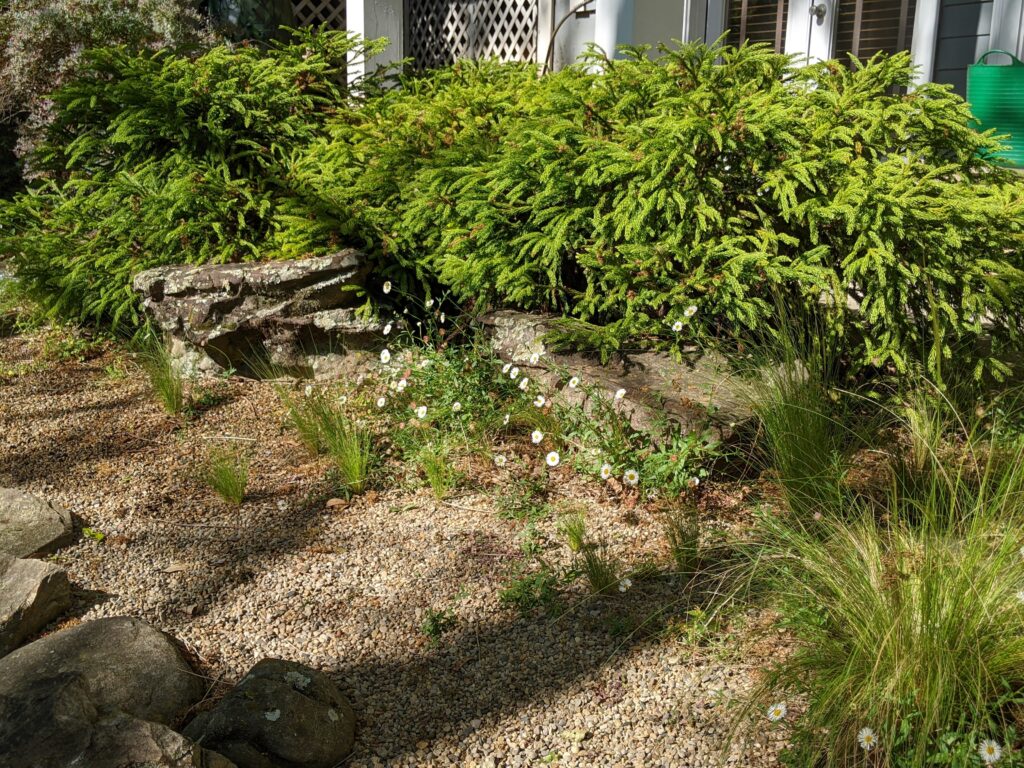
Blue star creeper and some little white flowers
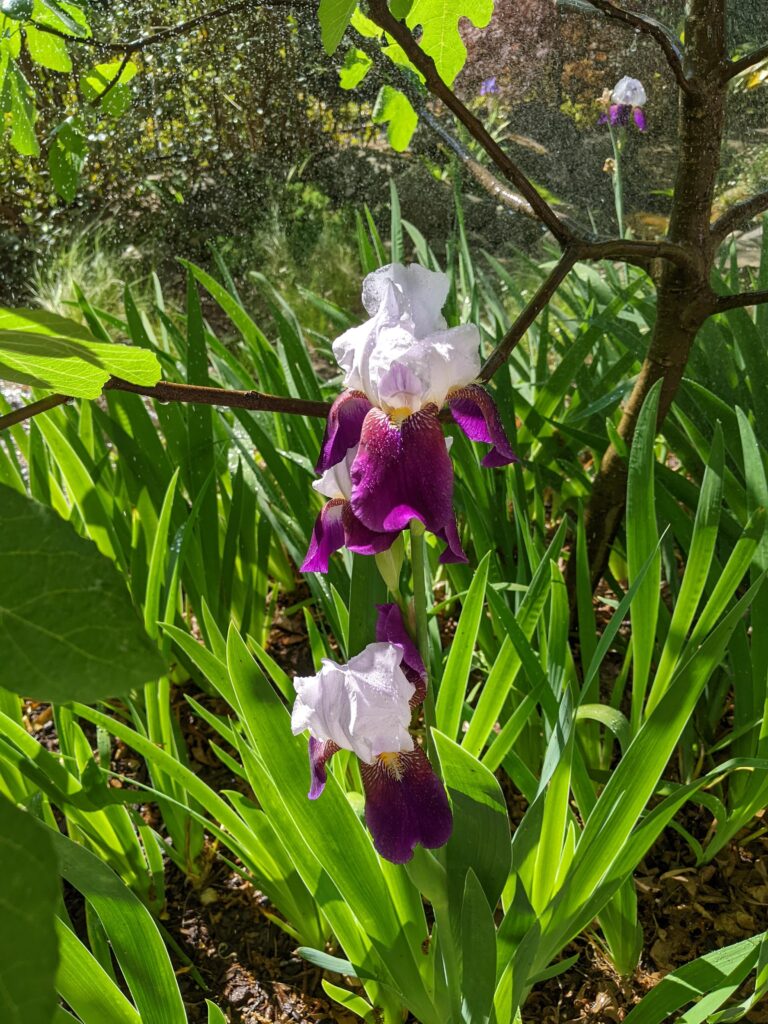
The irises have started to bloom
Another variety of iris at the pond
Kryptomeria hedge behind some stone seats
Dwarf blueberry bushes
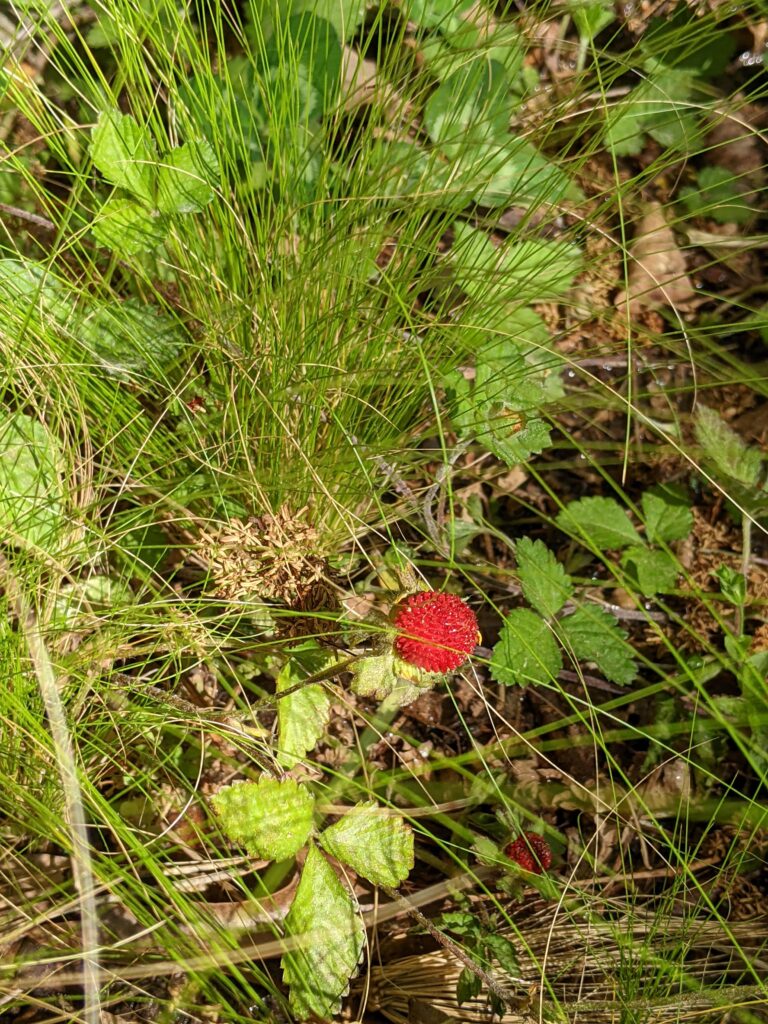
Little strawberry plants are scattered around with small berries ripening
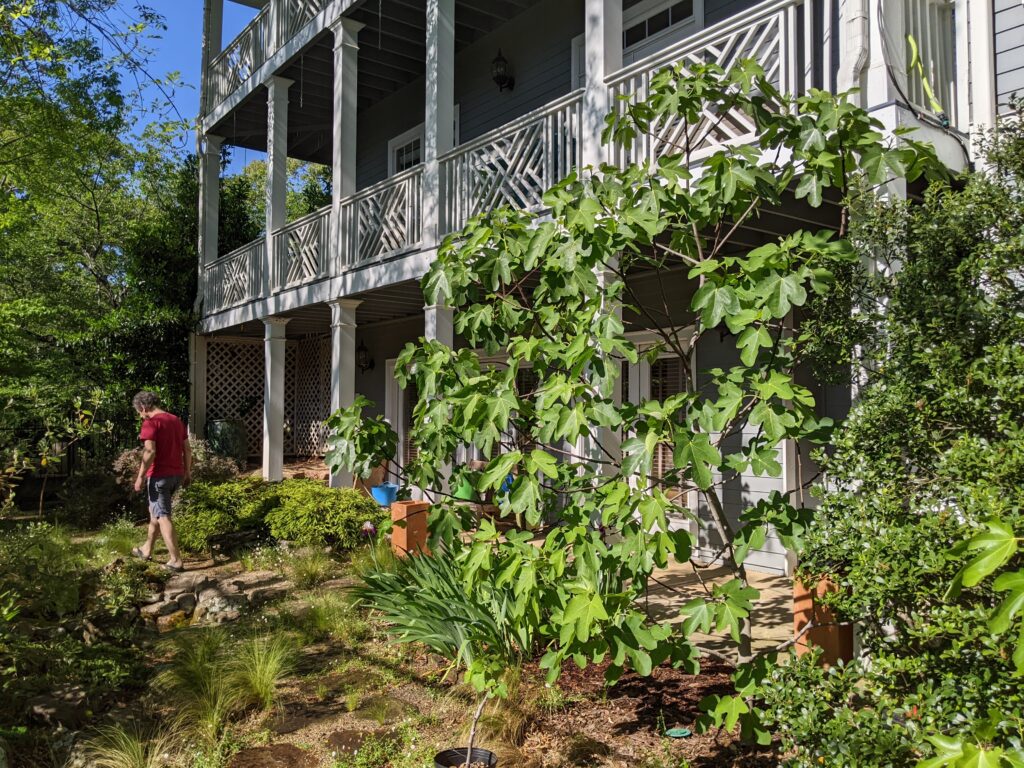
One of our fig trees
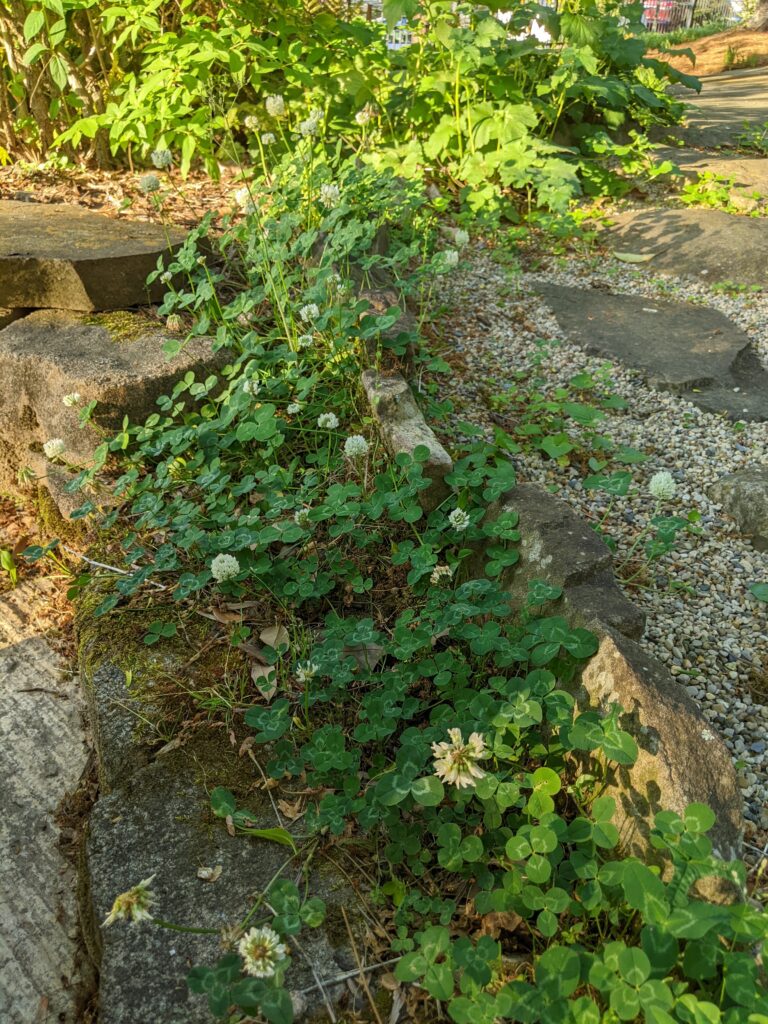
There’s some clover in the front yard which adds a nice texture in the spring

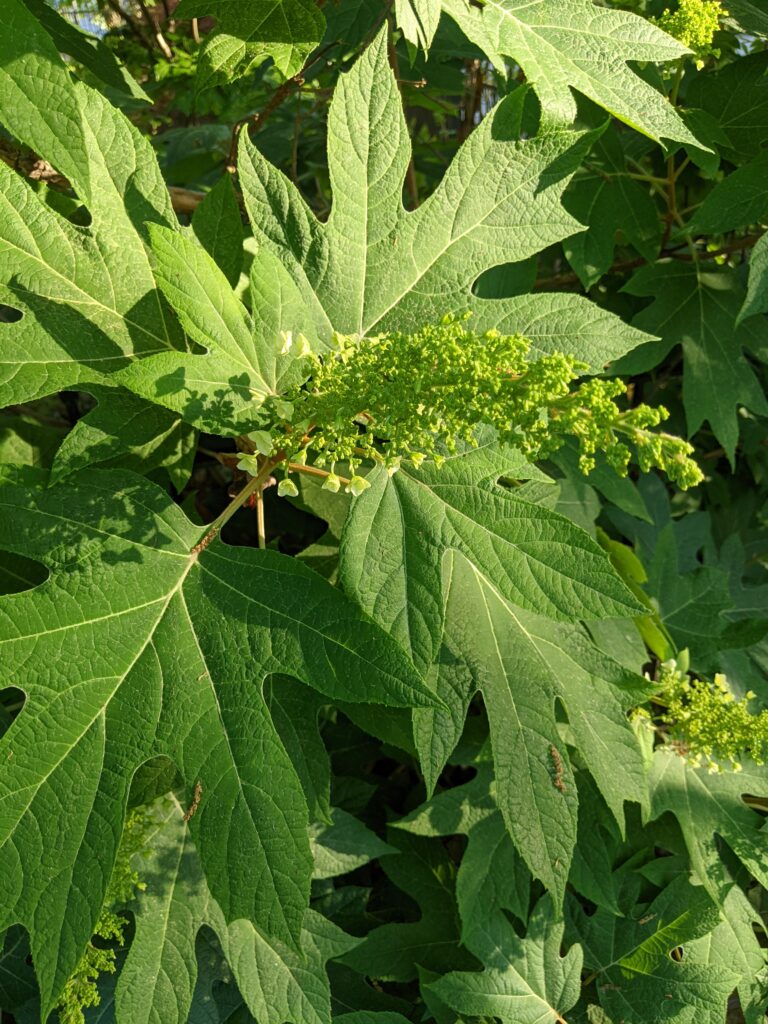
Finally, the oak-leaf hydrangea is just sending out buds, and I can’t wait for these to bloom over the next couple of weeks.

Happy Spring!

Standard
Uncategorized

Springtime Continues

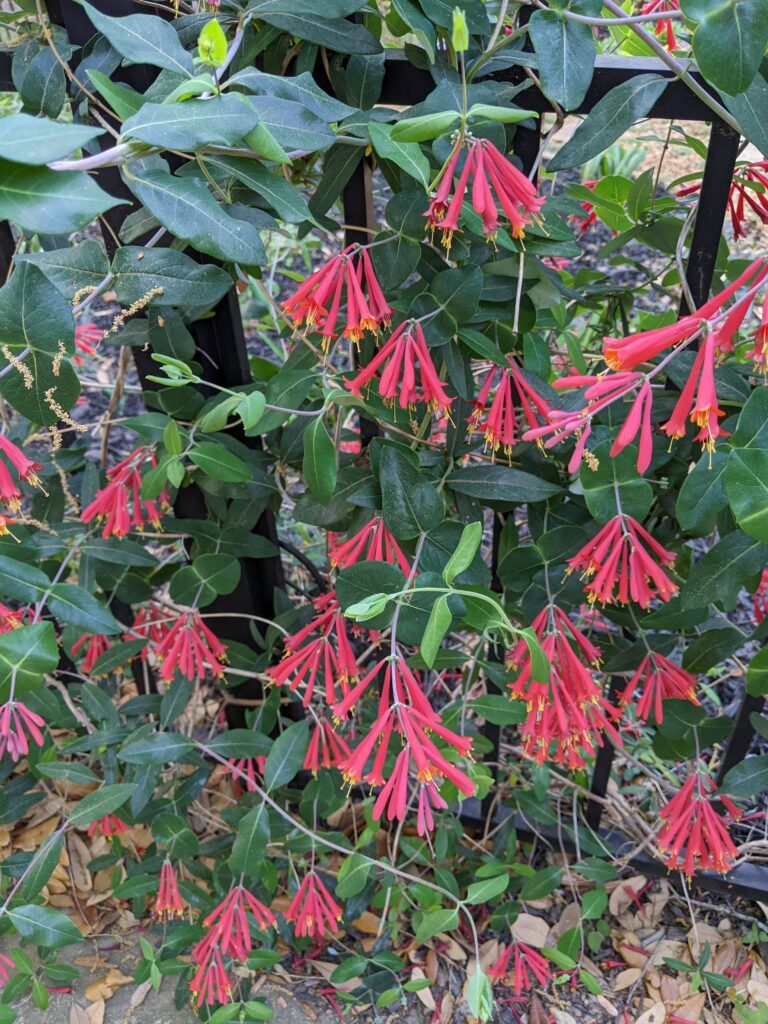
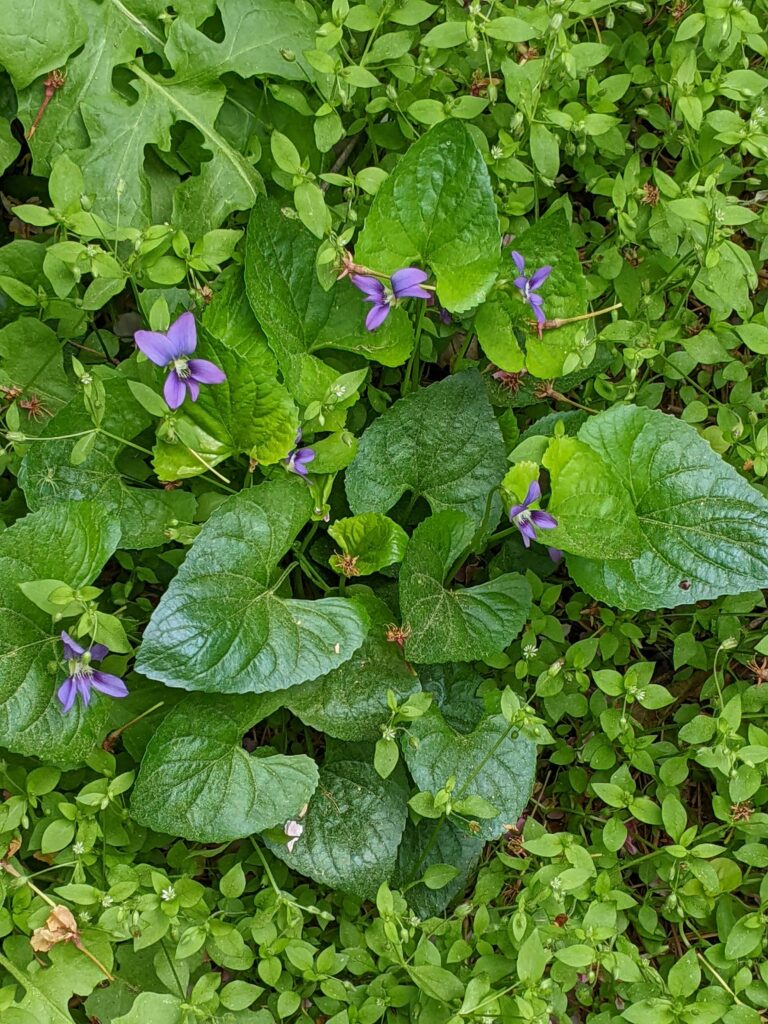
Another round of flowers are blooming.

A pretty blue flower
More flowers in the neighborhood
Tiny flowers in our yard

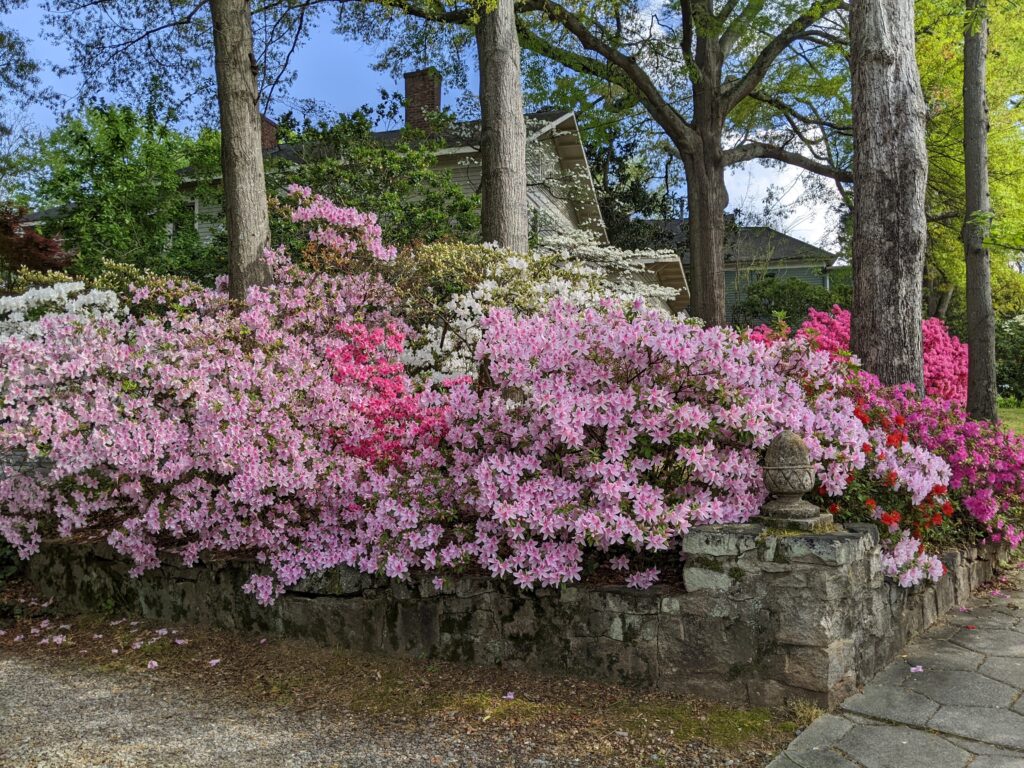
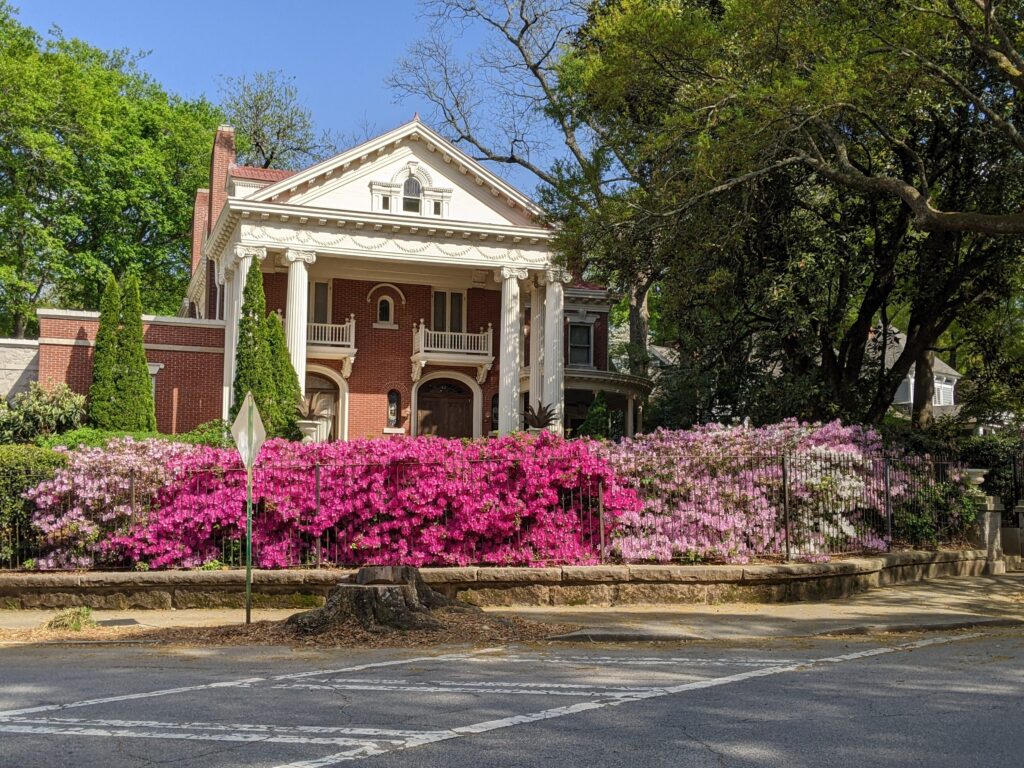
Azaleas are in full bloom, and it seems  like they’re everywhere.

Azaleas down the street
The Candler House has a riot of azaleas (Asa Candler was the founder of The Coca-Cola Company)

Trees are also blooming and filling out.

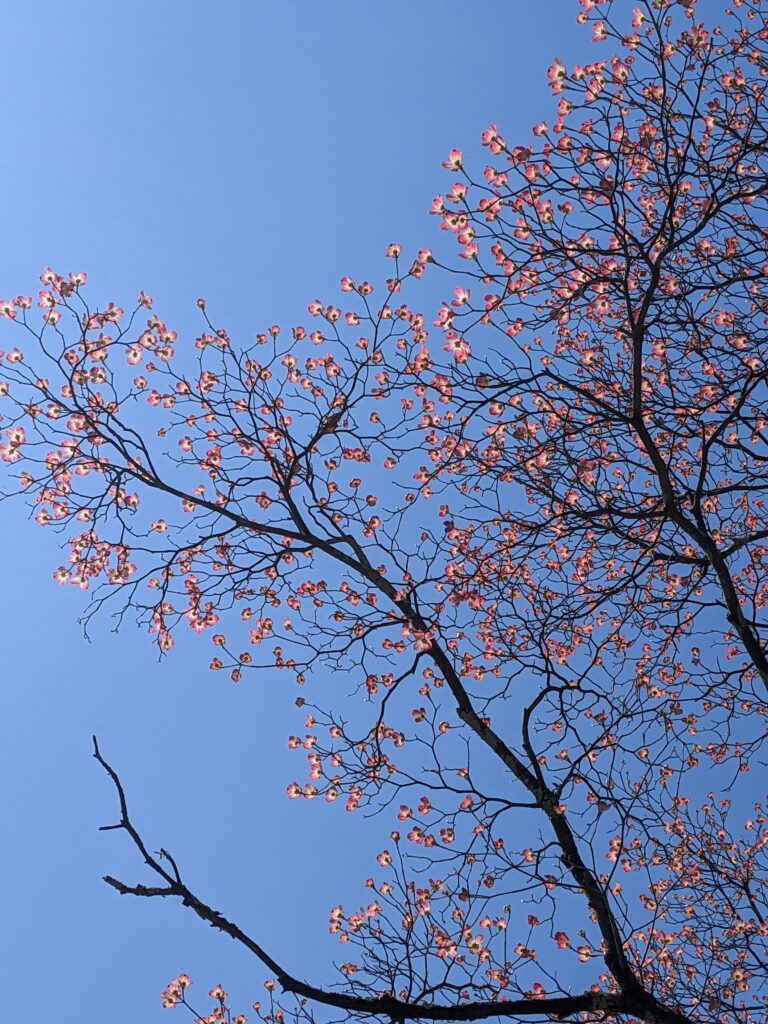
A pink dogwood is pretty – the flowers usually white
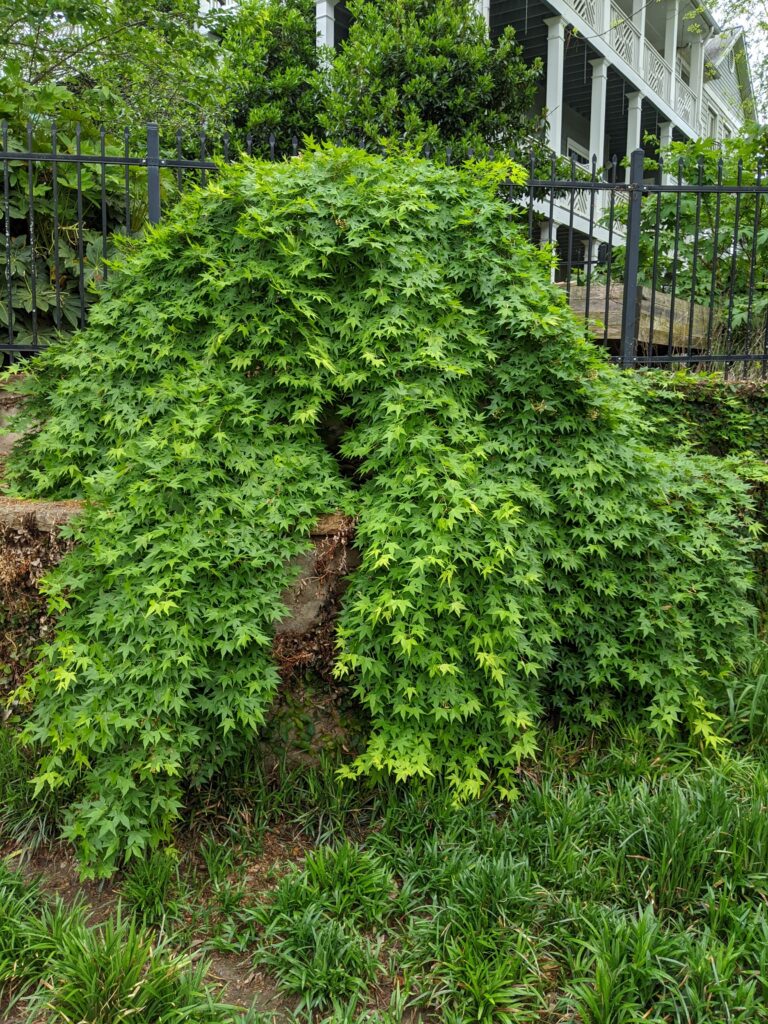
Our weeping Japanese maple is now full of leaves
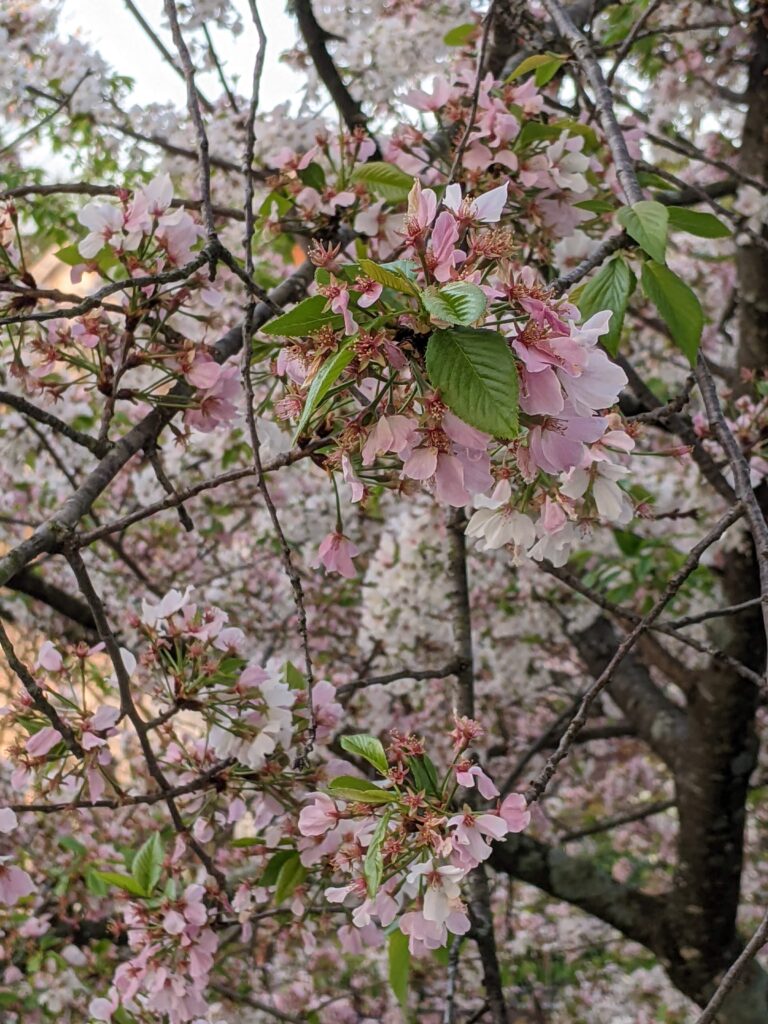
The flowers on our cherry trees changed from white to pink
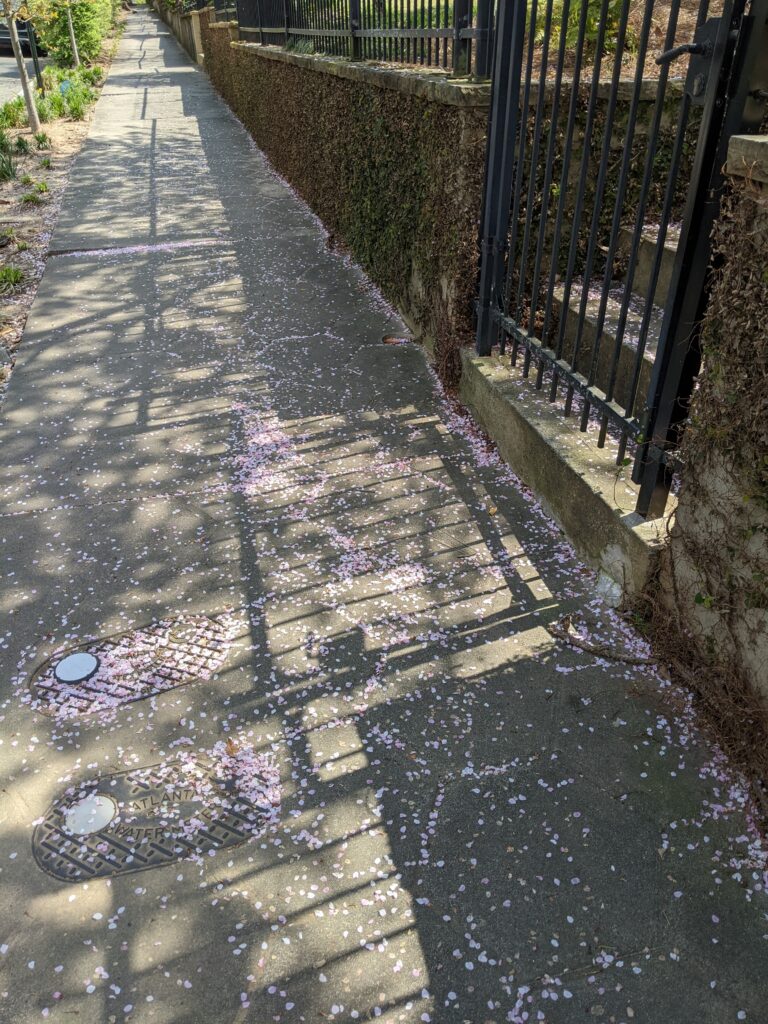
Cherry flower petals decorate the sidewalk in front of our house

Of course, along with all of this growth comes the pollen which is terrible in Georgia. There is green powder on everything. Even though I’m not allergic to anything, all of the particulate matter in the air bothers my eyes and makes me cough. It’s pretty bad.

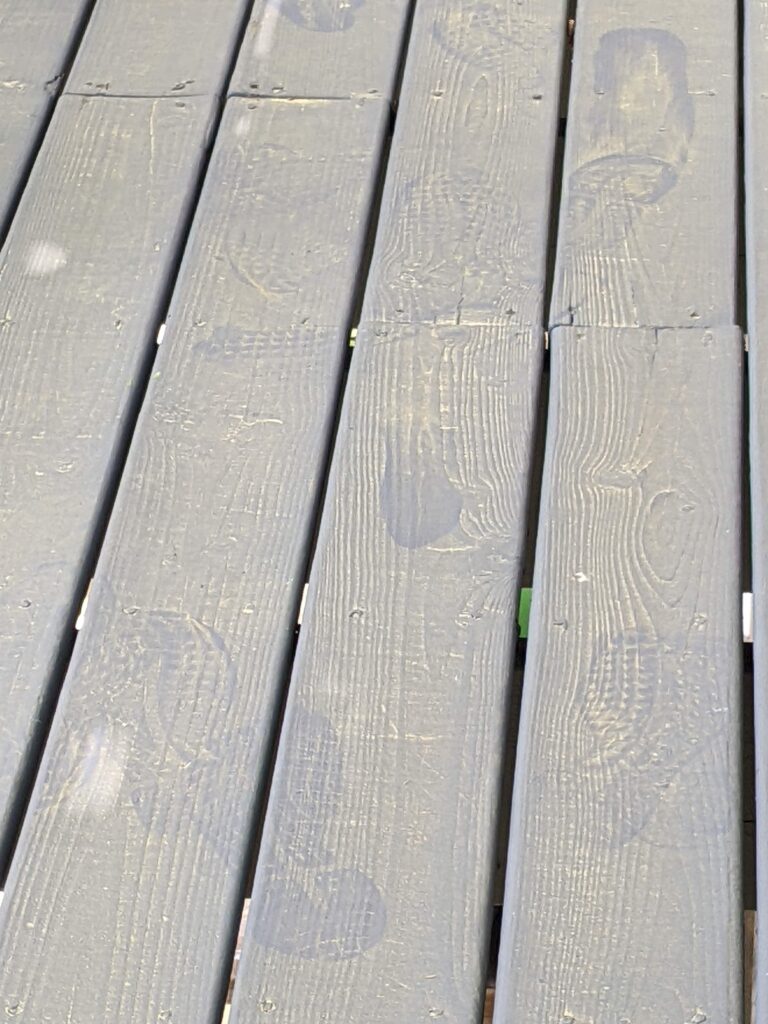
Footprints in the pollen on our porch
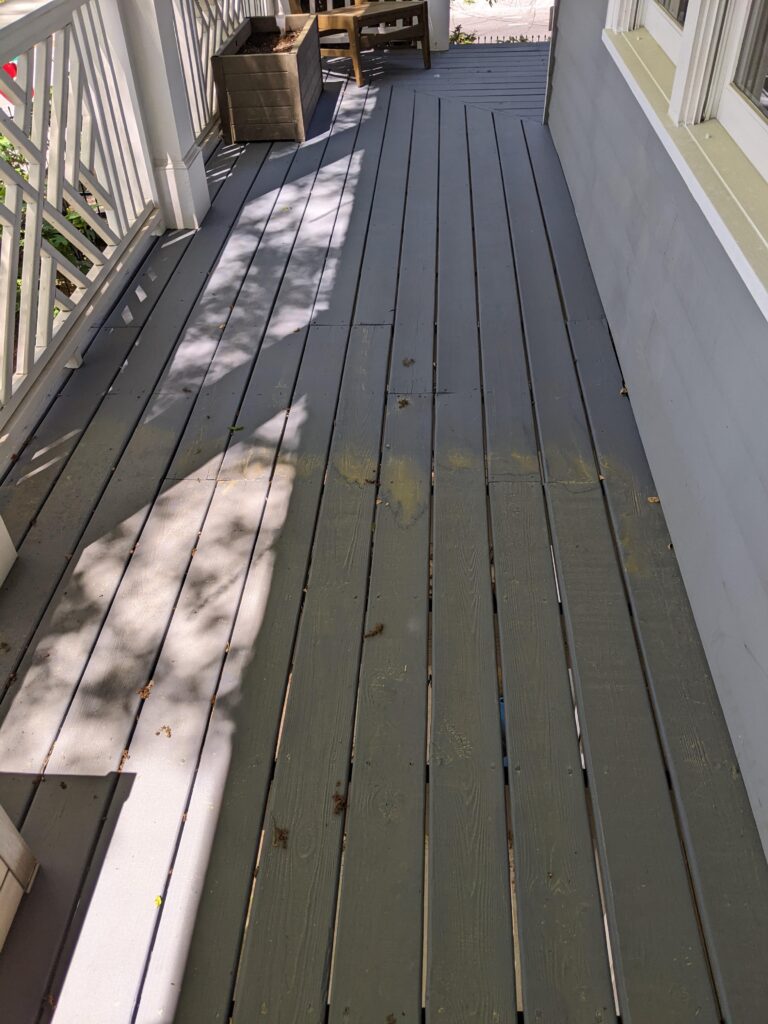
Chad has started powerwashing the porch, and you can see the difference
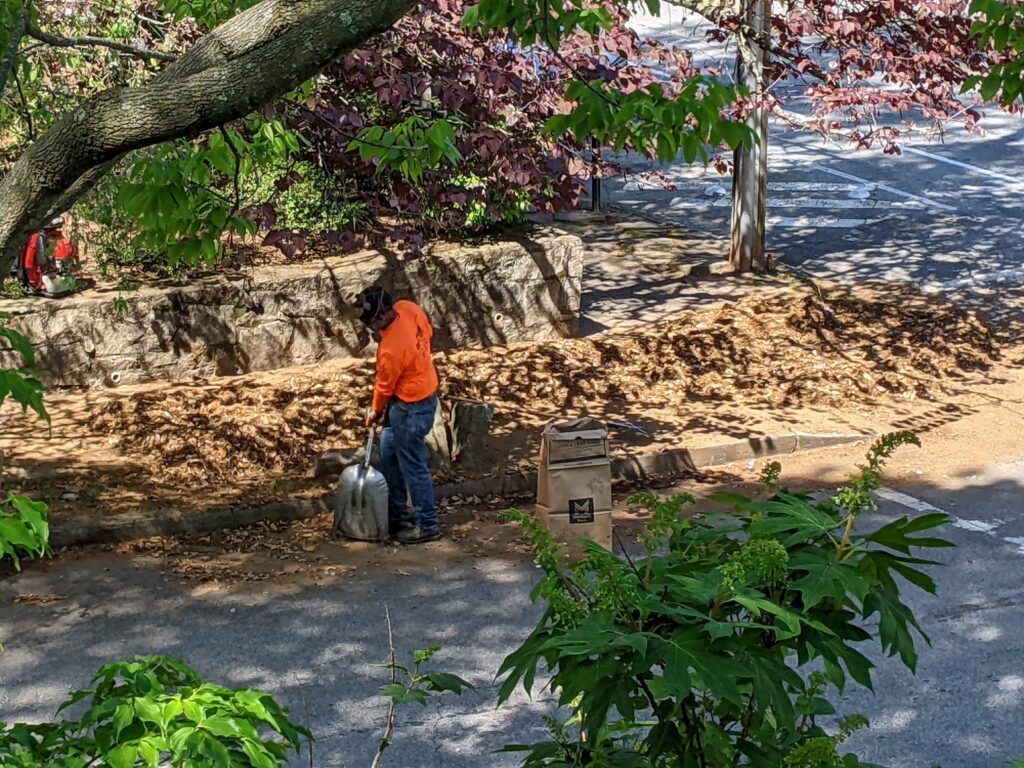
Meanwhile, across the street, the yard guys are cleaning up all of the pollen pods that have fallen from the live oak

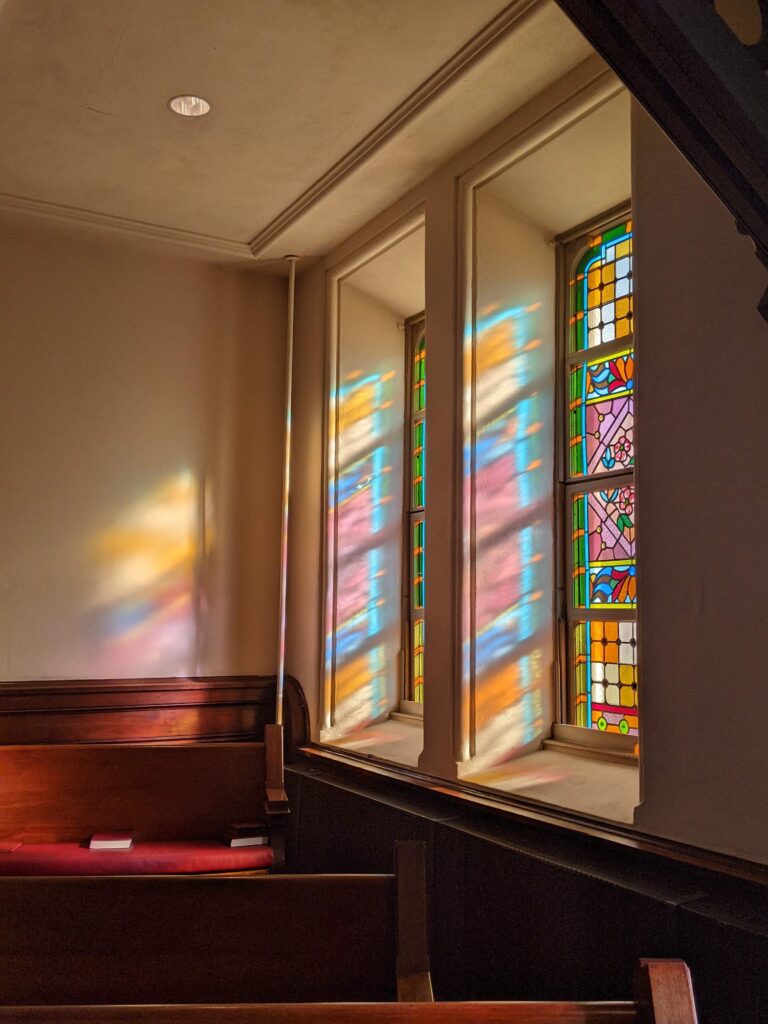
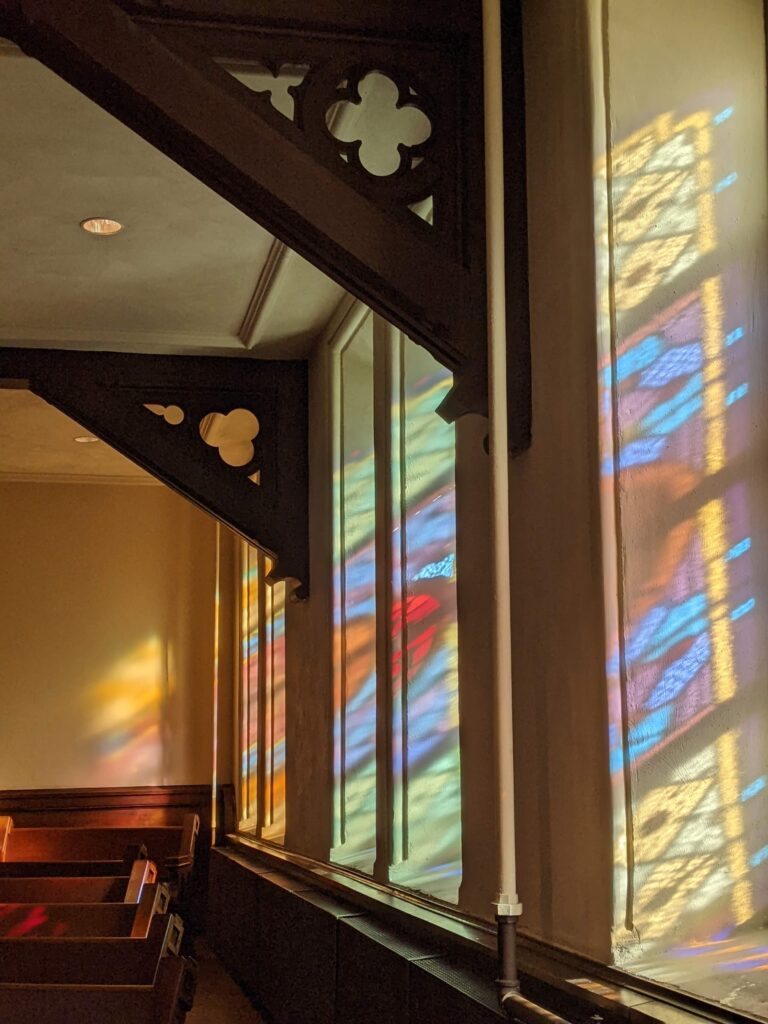
Finally, I saw the sunlight coming through these stained-glass windows on Palm Sunday morning, and it reminded me again of all of the colors that show up during springtime.

Sunday morning sunlight
A wash of color through the architecture
Standard
Uncategorized

Springtime at the Atlanta Botanical Garden

The Atlanta Botanical Garden is having its annual Spring Blooms event. At the end of winter, gardeners plant spring bulbs around the property, and, over the course of the spring, thousands of flowers appear. 

Here’s a field of spring flowers in front of the plant conservatory
So many tulips! These are extra-tall…
The primary focus is on tulips, and this year, 200,000 tulip bulbs were planted. Tulips come in a wide range of colors, shapes and sizes, and there are many varieties growing in the garden right now. Colors range from whites and yellows to pinks and reds to deep purples. Some flowers are a single solid color, and some are striped. Some tulips have just a few petals, and some have a cluster of two or three dozen. Some petals have smooth edges, and some are frilly.

You can see variations in colors, and the pink flowers in the background have stripes
These rosy tulips have lots of petals
A field of colors

The garden staff does a great job of creating a variety of color palettes throughout the garden. Tulips are mixed with daffodils, hyacinths, jonquils and other flowers to provide a multi-colored tapestry with a variety of heights, shapes, and textures. Overall, the Spring Blooms event is always impressive.

A mix of flowers
An interesting mix of colors, textures, and sizes
A field of colors

Another springtime garden event is Orchid Daze. The garden has a premier orchid collection as well as programs focused on orchid research and conservation around the world. While the Orchid Daze lasts for a few weeks in the spring and features some special events like Vanilla Sunday (natural vanilla comes from the cured seed pod of the Vanilla planifolia orchid plant), the Orchid Display House is open year-round and focuses on orchids that grow in tropical regions from sea level to 4,000 feet elevation. 

Orchids on display in the plant conservatory
More orchids on temporary display

Just like tulips, orchids come in all kinds of shapes, colors, and sizes. Some grow harmlessly on other plants, some grow on rocks, and some grow in soil. It’s always fun to wander through the orchid house and take in the variety of plants.

Some pretty orchids
And here’s another type of orchid
Orchids in a hanging basket
It’s hard to believe that these flowers are all related when they have so much variation

Stay tuned for another post later this year where I’ll dive into more about the features of the Atlanta Botanical Garden.

…and one more pretty flower…
Standard