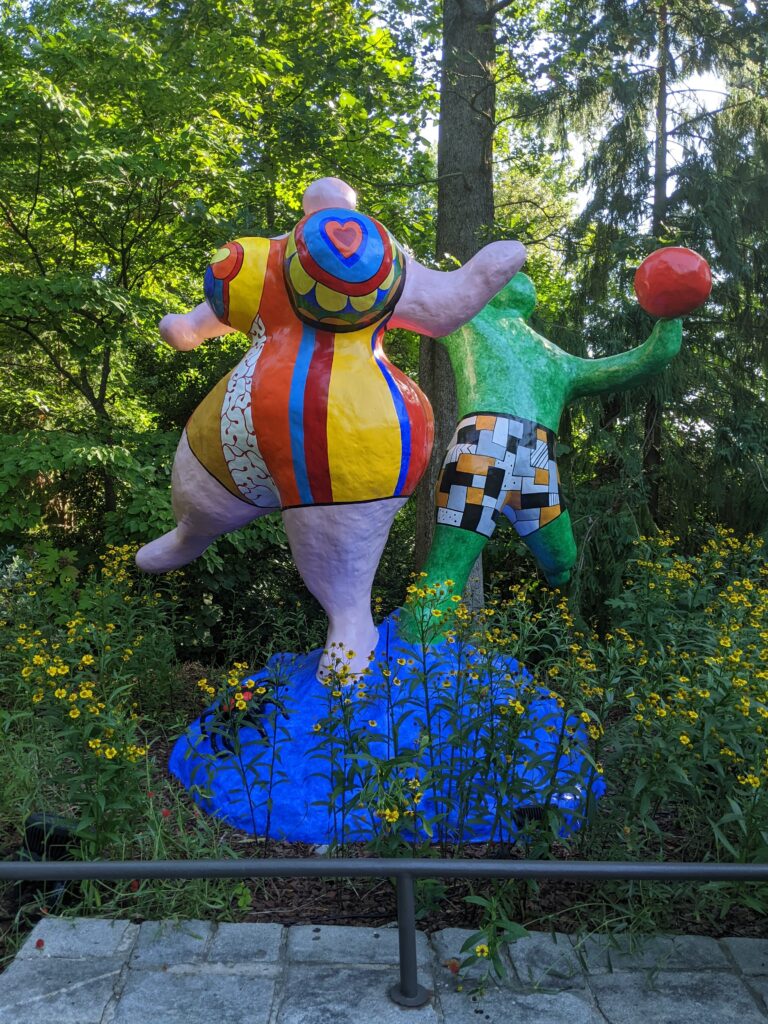
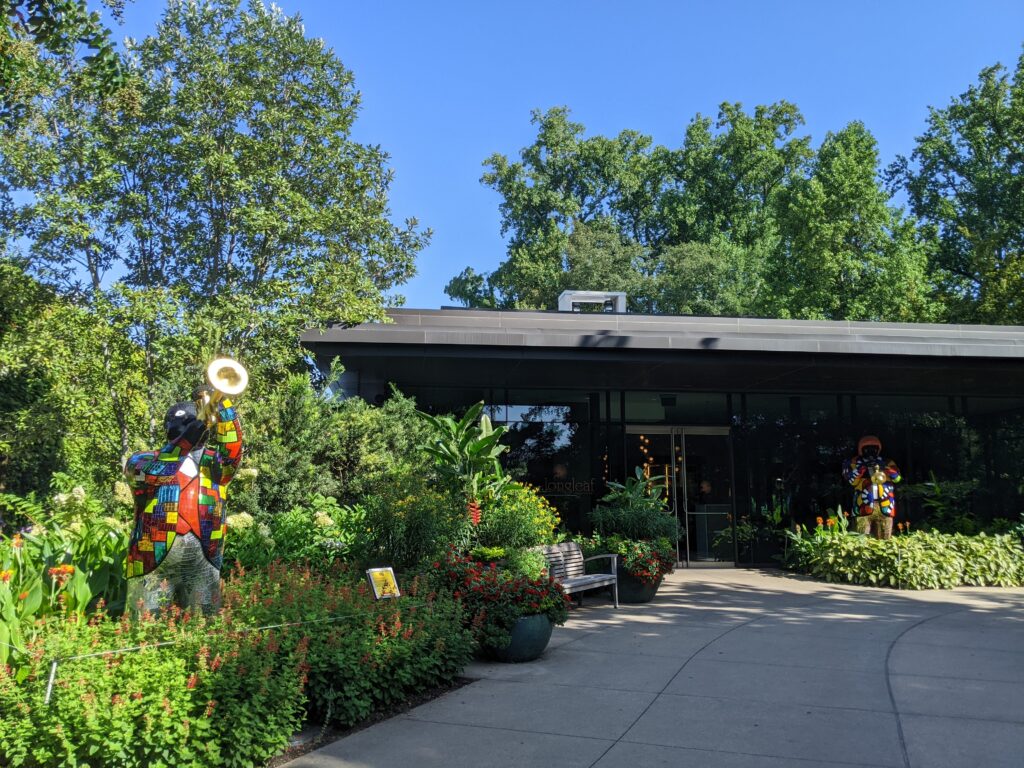
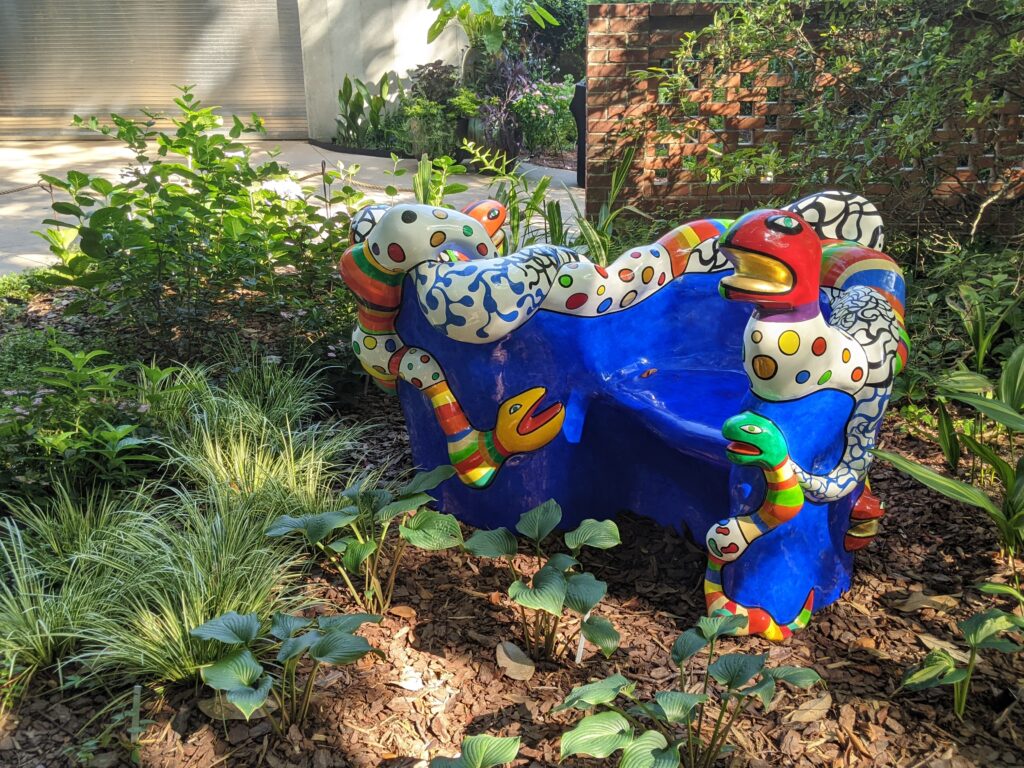
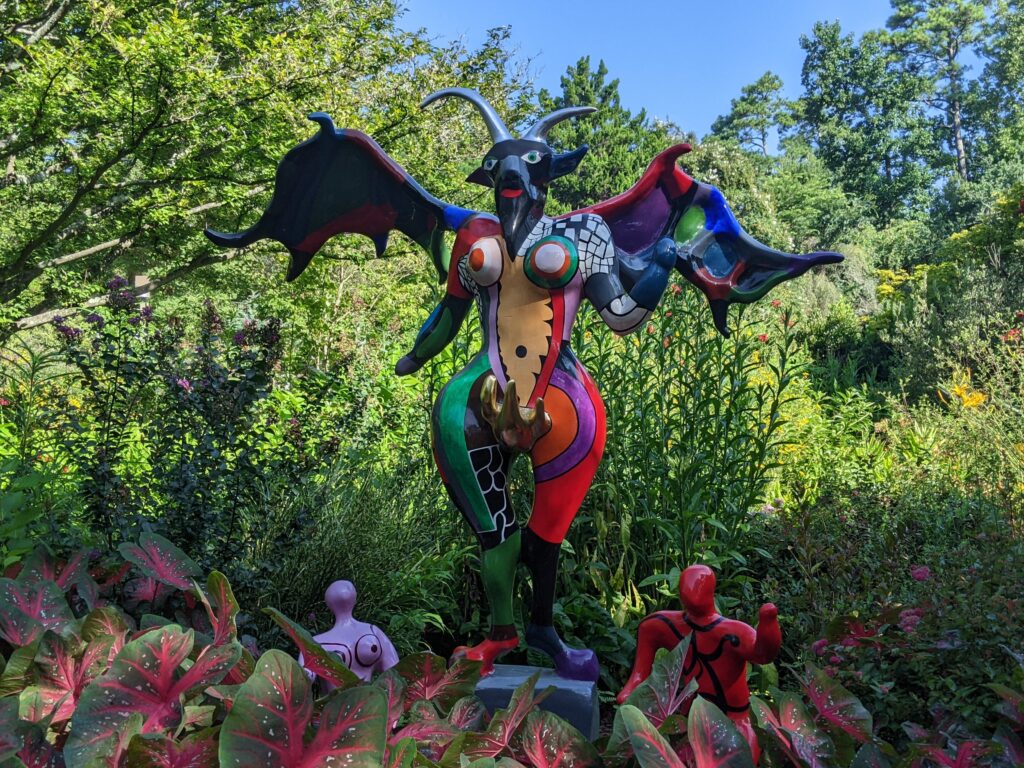
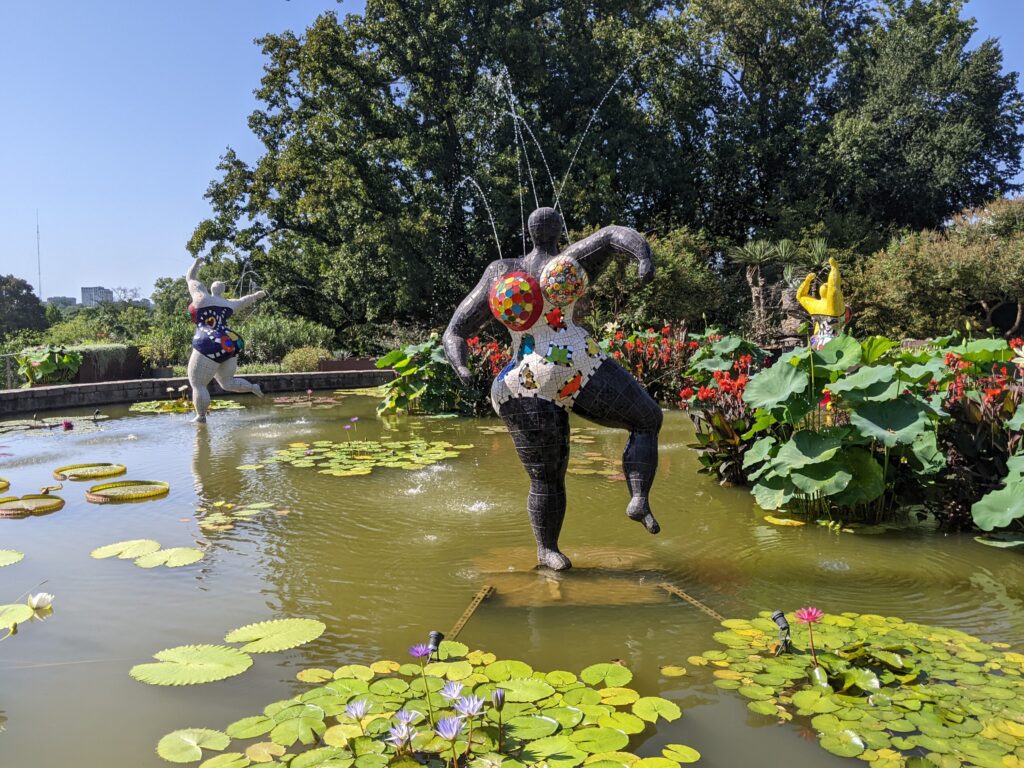
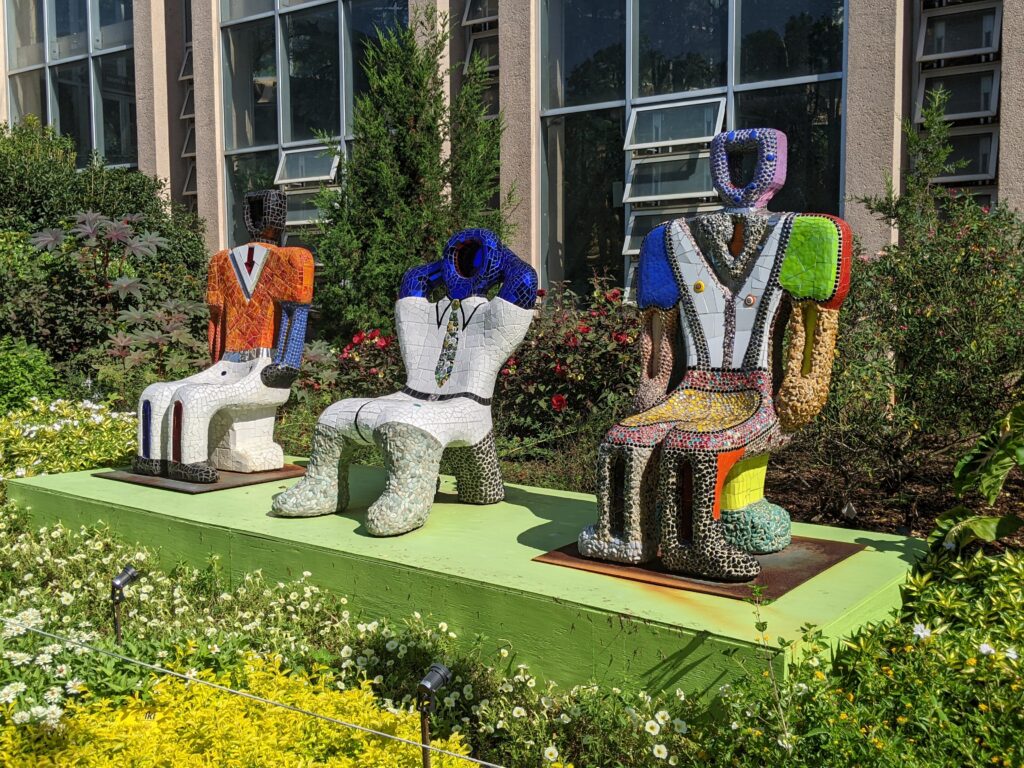
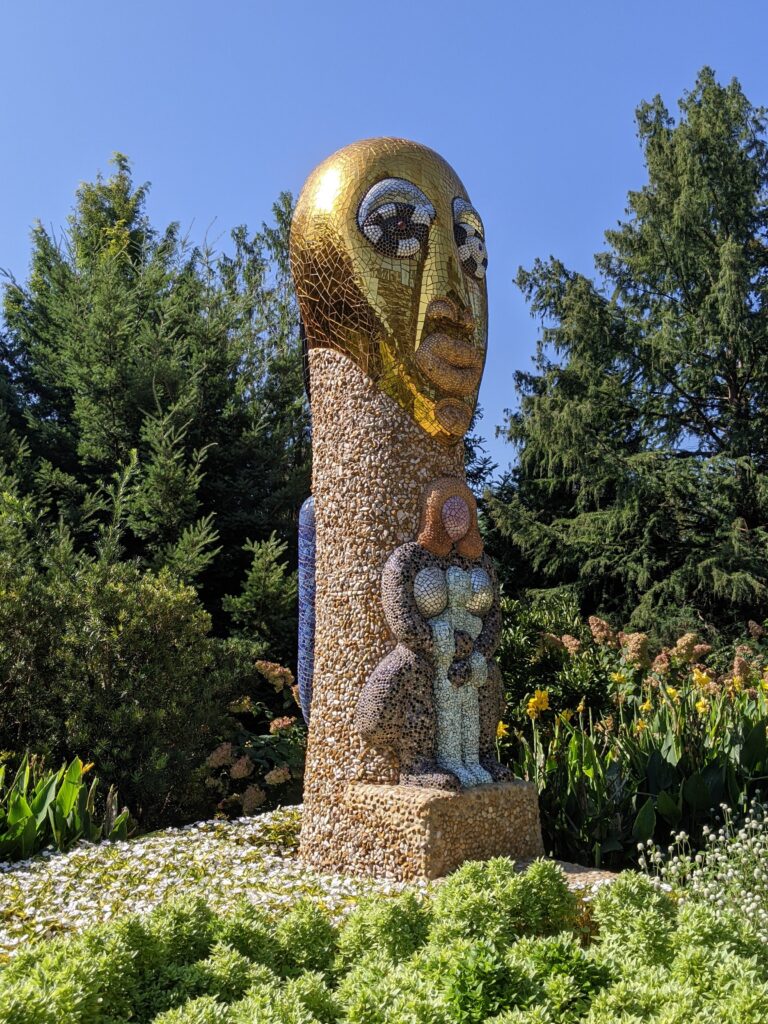
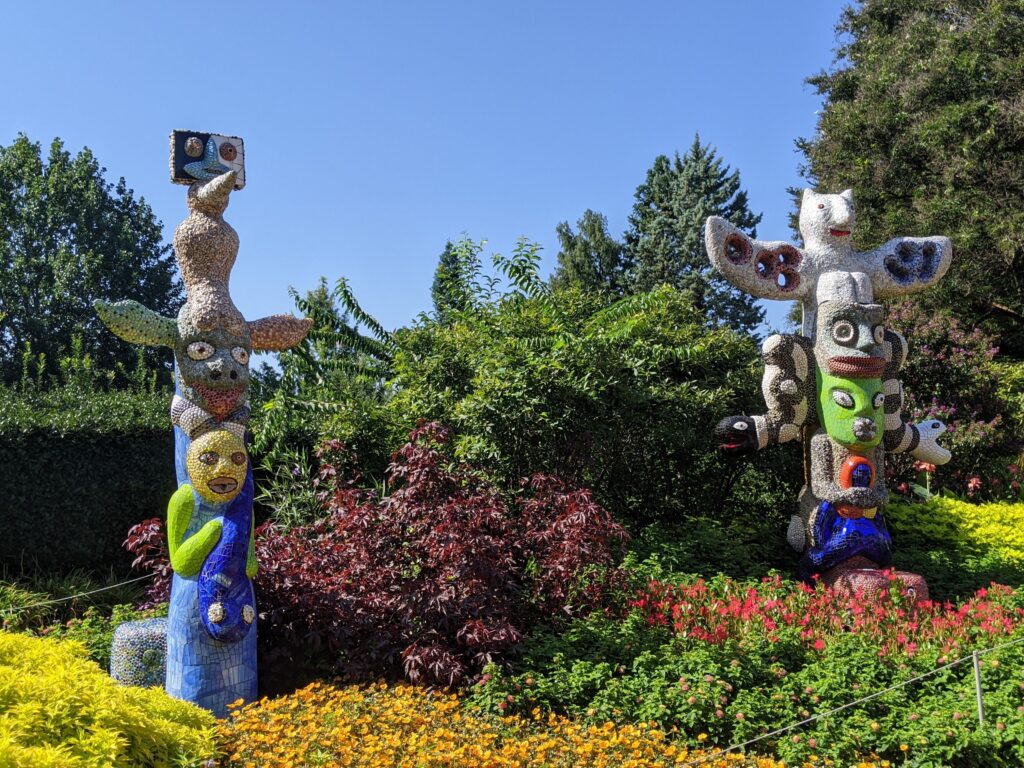
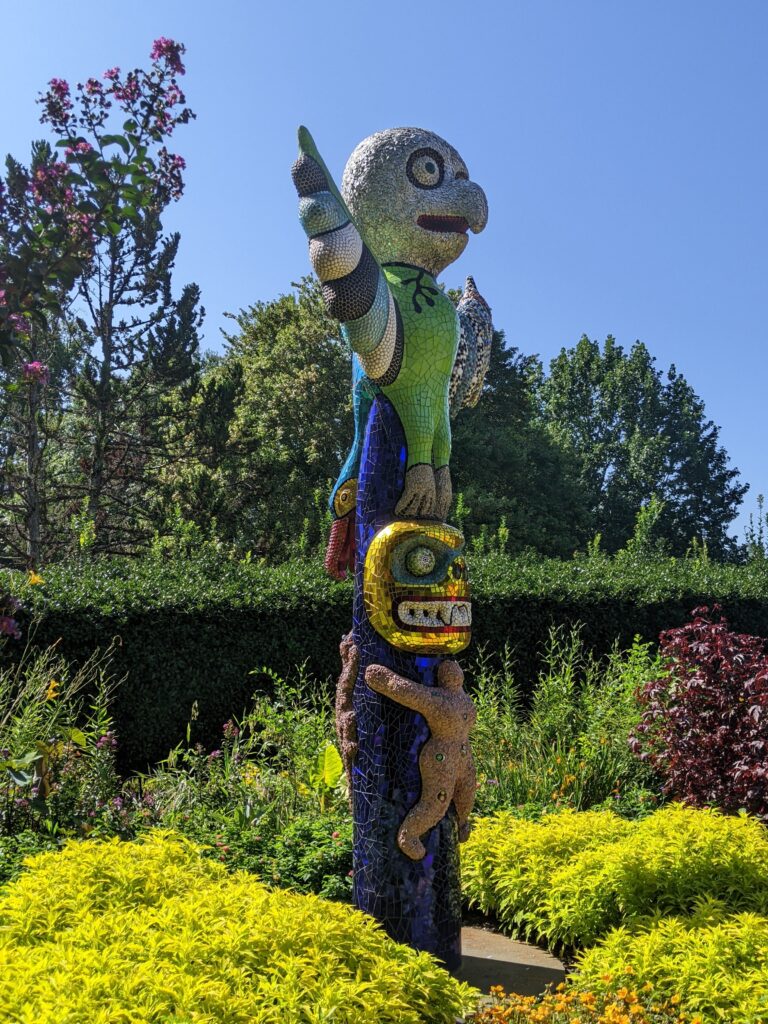
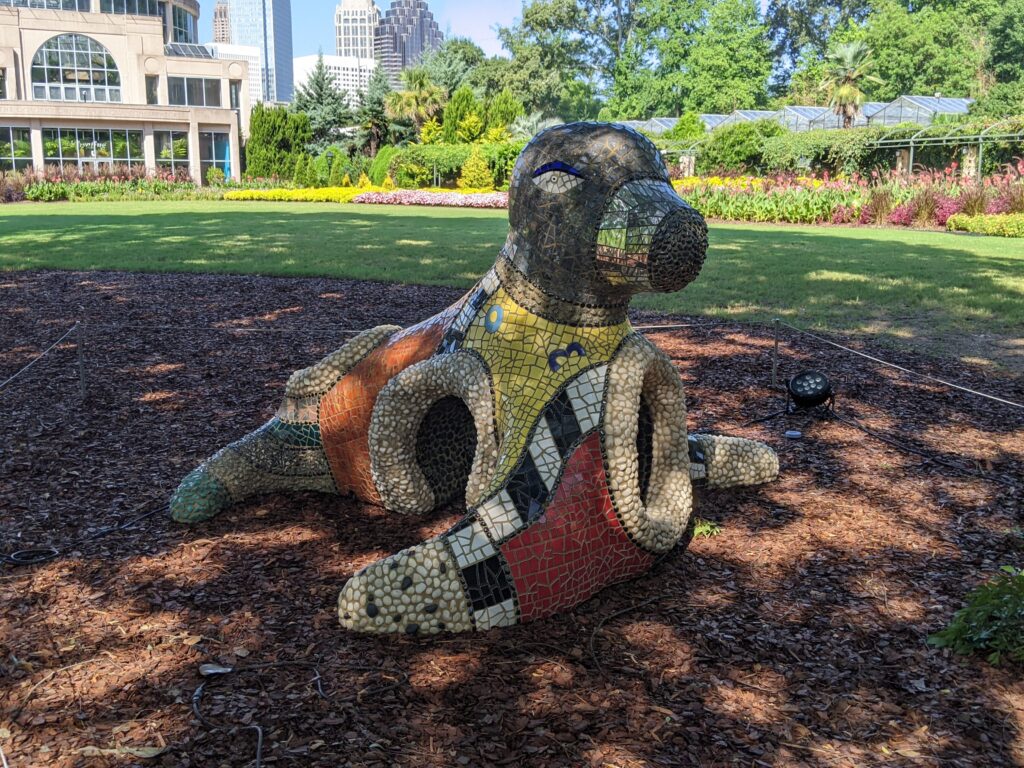
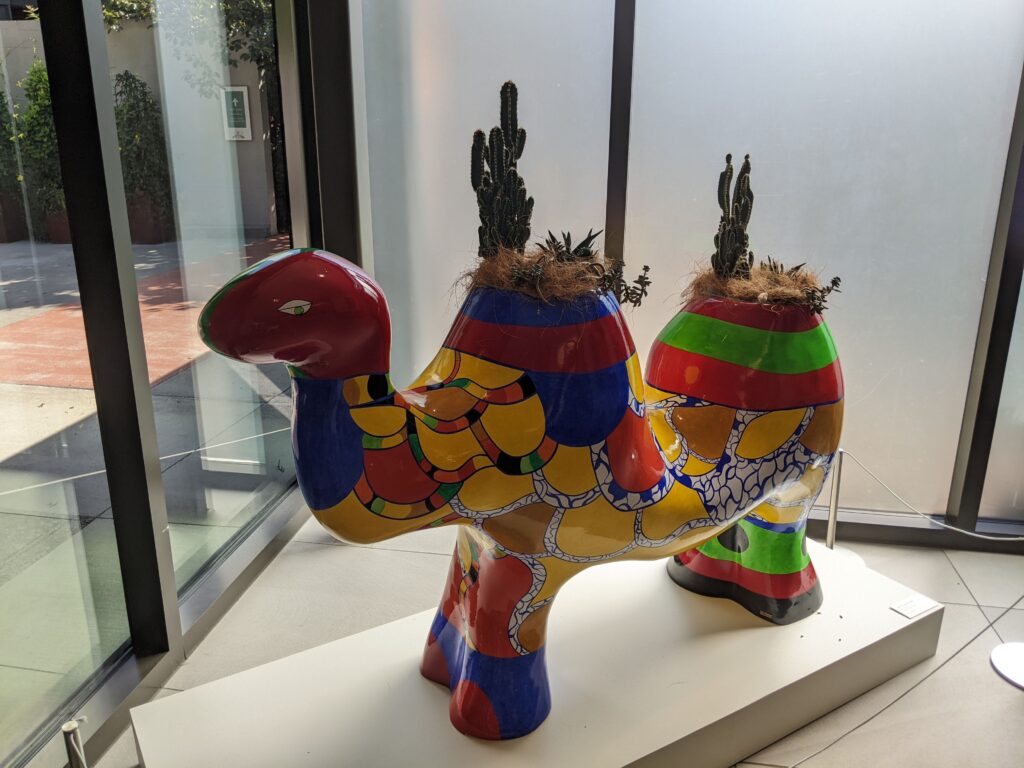
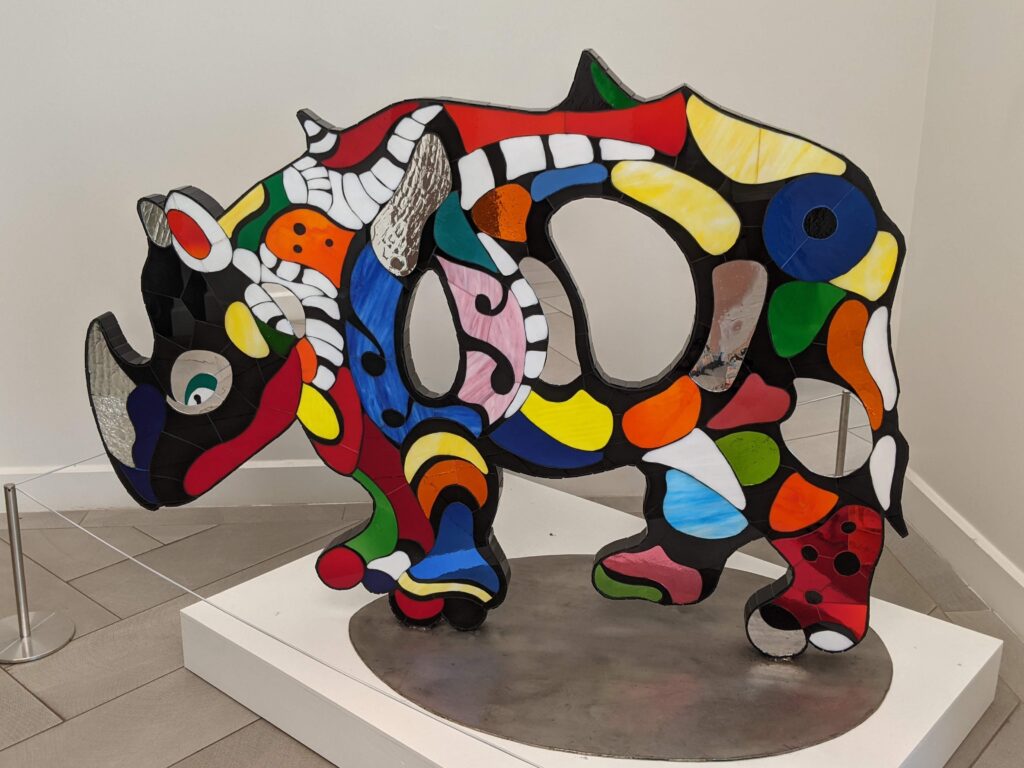
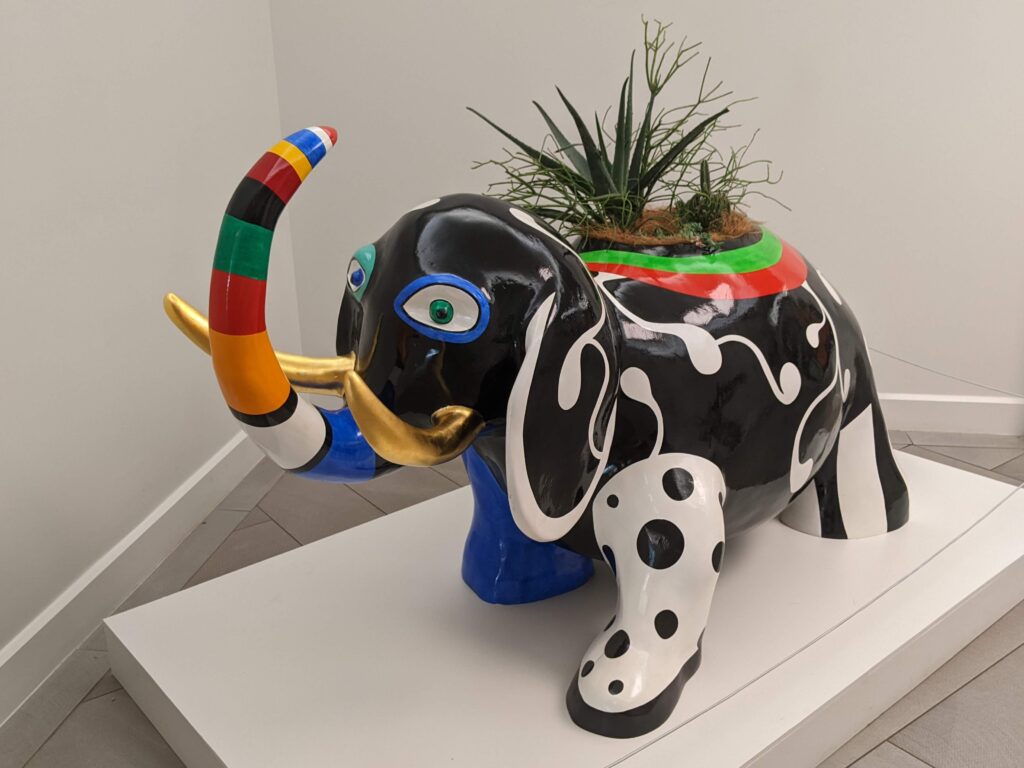
Every summer, the Atlanta Botanical Garden features one particular artist with installations around the property, and it’s always interesting to see the art in the context of the garden environment. This year, the featured artist is Niki de Saint Phalle. Her works on display are full of energy, movement, whimsy, and joy.
The Niki Charitable Art Foundation has this to say:
Born Catherine Marie-Agnes Fal de Saint Phalle in 1930, she was known to family simply as “Niki.” She was, by every measure, a rebel. Raised in an upper-class French-American family with rigid expectations, she eloped at 18 with her childhood friend to escape their control.
In 1953, she suffered a nervous breakdown, and it was during her hospitalization that friends encouraged her to try painting as a path toward healing. That small act of creative recovery changed everything. Though she had once dreamed of acting, Saint Phalle chose art – and art, in turn, chose her. With no formal training, she forged her own path, associating freely with the era’s most experimental artists, writers and composers.
Her art was never quiet. She used bold color, raw emotion and fearless scale to push back against a minimalist art world that had little room for joy, or for women.
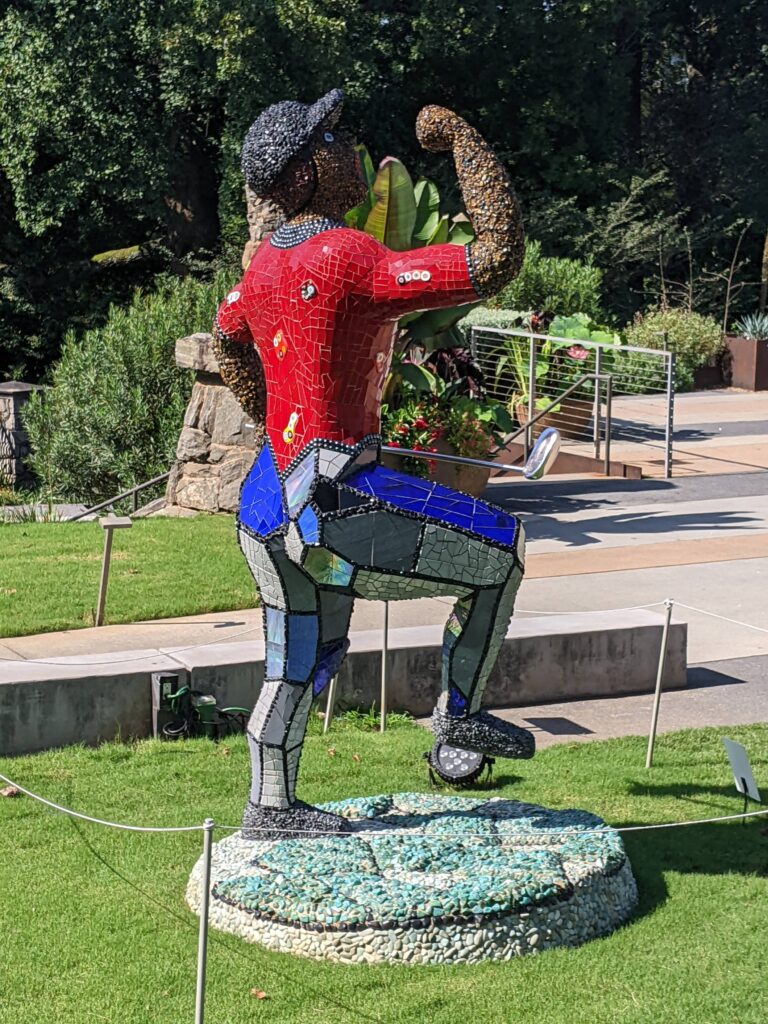
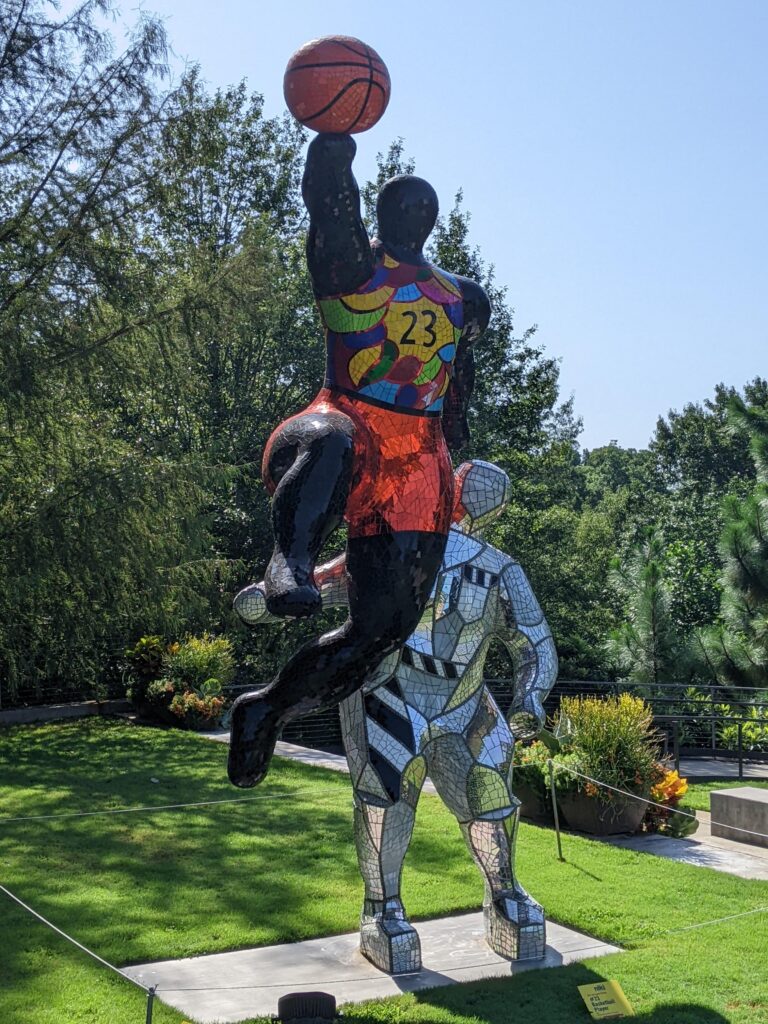
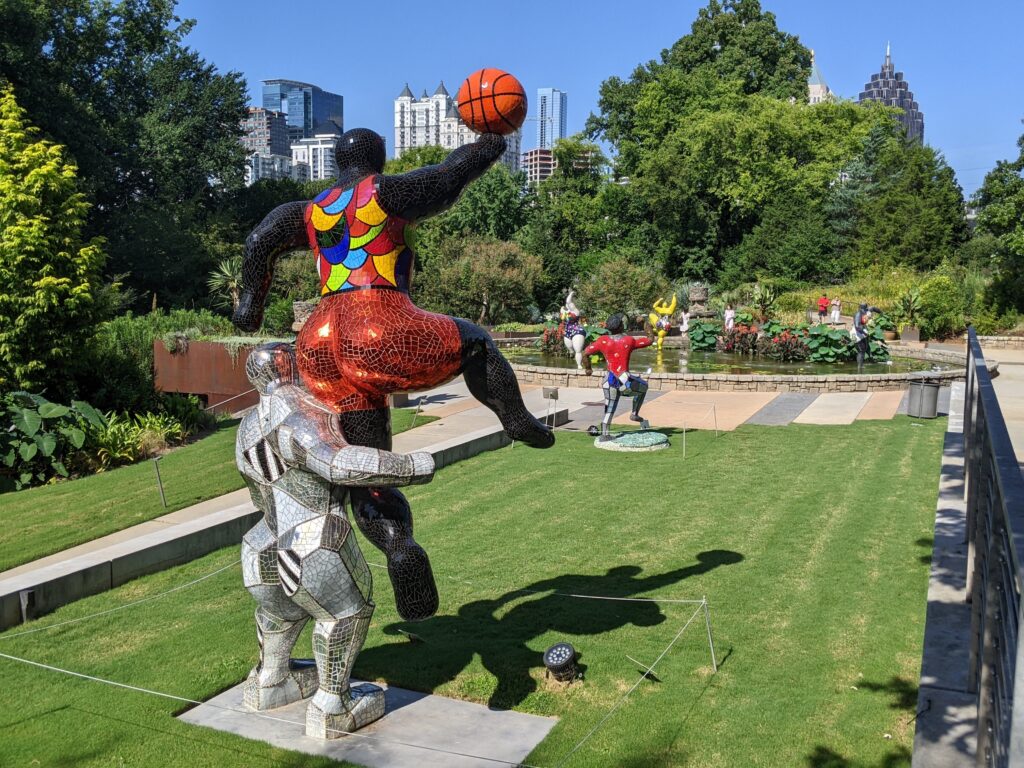
She became best known for her “Nanas” – voluptuous, exuberant figures of women rendered in fiberglass, resin, mosaic glass and mirror that seemed to dance rather than stand still. Animals, mythical creatures, totems and sports heroes populated her world as well. One of her greatest life’s works, the Tarot Garden in Tuscany, is a sculptural landscape inspired by tarot cards – a surreal, walk-through universe she spent decades building.
Saint Phalle, who died in 2002, believed that connecting with the natural world was essential to the human spirit, and she created sculpture gardens and outdoor exhibitions across the world to prove it. But here, among the blooms and canopy of the Atlanta Botanical Garden, her work lives on, as joyful as ever.
I was really looking forward to seeing this summer’s installation, and it did not disappoint. I found myself inspecting one sculpture and then spying another across the way and rushing over to it to inspect that one. I originally thought that I would just post a few photos of some representative works of art, but you know what? No. I decided to post every photograph, and I’m pretty sure that I took a picture of every piece of Niki’s art that was on display. Each work of art gave me a sense of wonder and, indeed, a sense of joy.
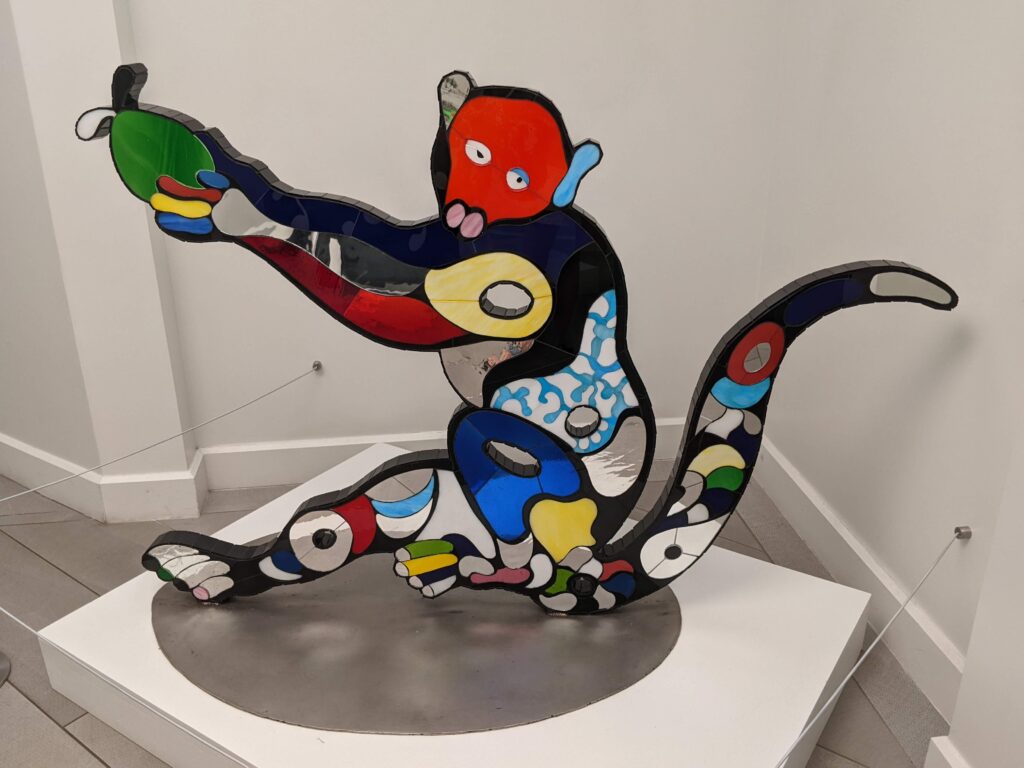
Les BaigneursLe Temple IdealLe Temple IdealLouis Armstrong and Miles Davis in front of the Longleaf Restaurant in the gardenLouis ArmstrongLe BancLe Grand DiableLes Trois Graces FontaineGolf Player (can you guess who this is?)#23 Basketball Player (can you guess who this is?)View of #23 Basketball Player with Golf Player, Les Trois Graces Fontaine, and the Midtown Atlanta skyline beyondThree sculptures, each titled Chair (Homme)The ProphetGrand Step TotemLarge Yelling Man TotemKingfisher Totem and Cat Head TotemBird Head TotemSealOiseau AmoureuxLe Banc des GenerationsGrand Chameau VaseGrenouilleRhinoceros PlatGrand Elephant VaseSinge a la PommeNoah’s AnimalsArbre Serpents
“I used to think there was a need to provoke, to attack religion, and the generals. And then I understood that there is nothing more shocking than joy.”
When I went to the Abbott family reunion, I took advantage of the fact that I was flying into Baltimore and arrived early so I could spend the afternoon at the National Aquarium. I love going to aquariums. The animals are always fun to see, of course, but it’s also interesting to see how the exhibits are designed and how the building architecture is organized to support the visitors’ experience.
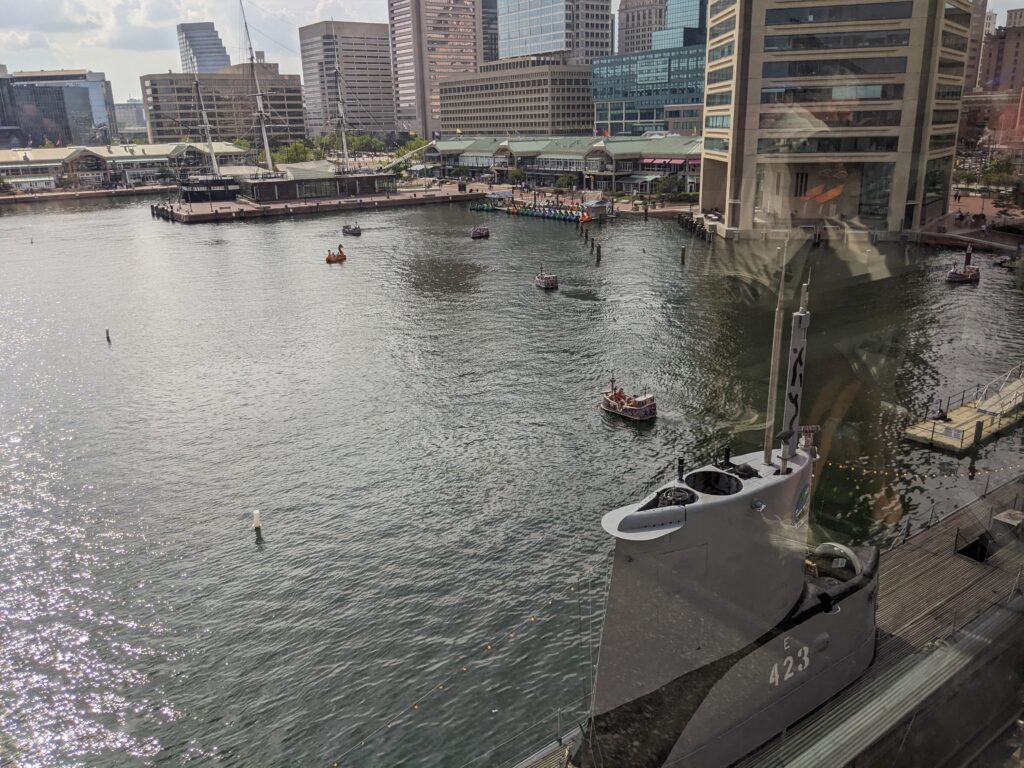
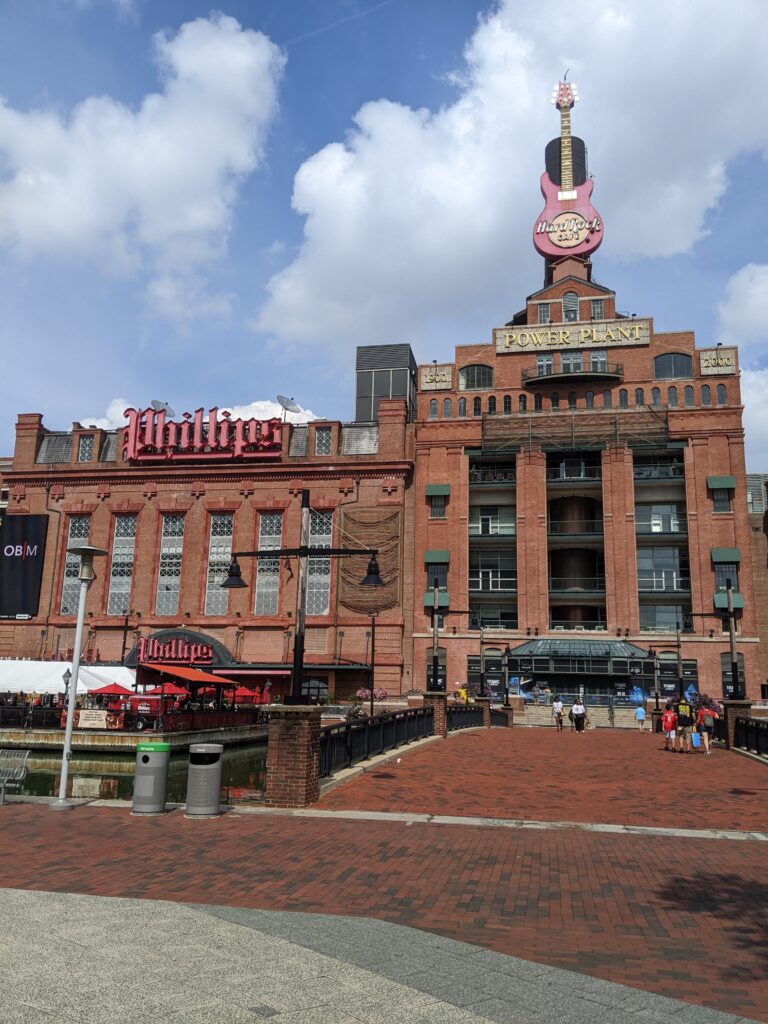
The National Aquarium is located on two piers in the Baltimore inner harbor. The aquarium is in a very touristy part of the city, and neighboring attractions include an immersive Titanic exhibit, a WWII submarine that you can tour, paddle boats for rent, and city parks to rest your weary feet. Plus lots of restaurants and bars, of course.
A view of the inner harbor with paddle boats, well, paddling aroundThe submarine on tourAdaptive reuse of an historic building into restaurants on the inner harbor
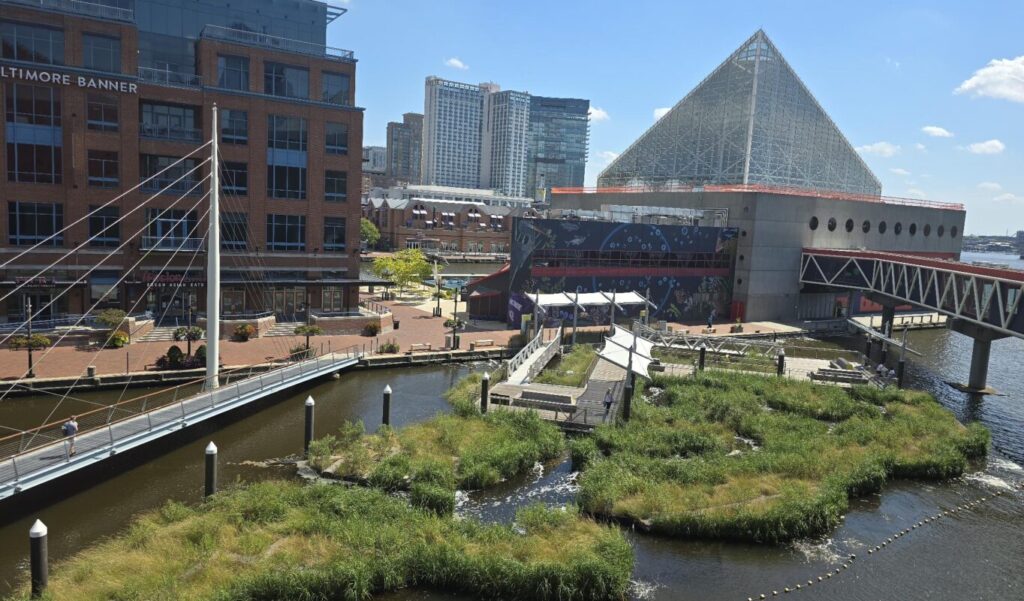
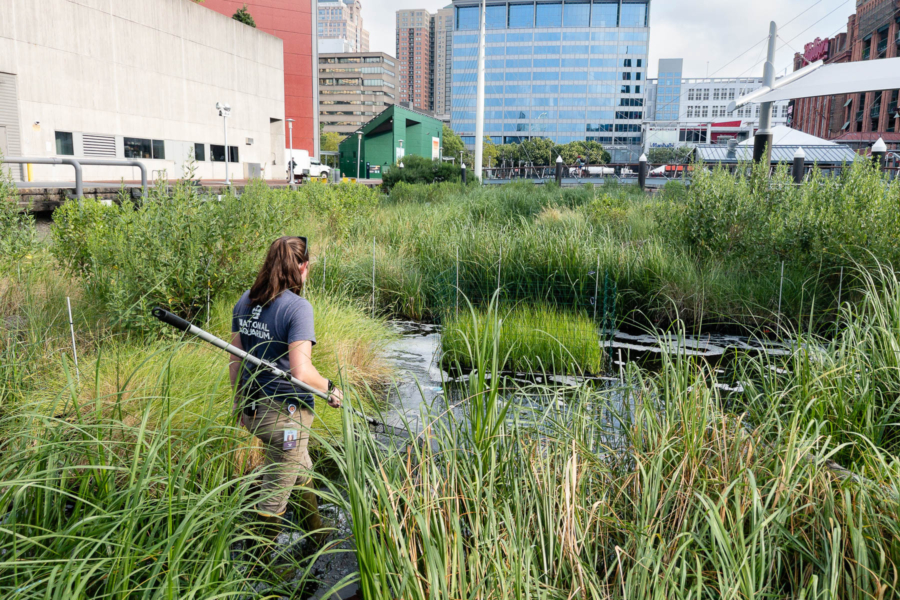
The area between the two piers of the aquarium is the Harbor Wetland, a recreated salt marsh exhibit constructed directly in the harbor. It recreates a marsh environment like those that existed in Baltimore hundreds of years ago. This new salt marsh is so successful, native species have already moved it and made it their home.
A view of the constructed wetlands exhibit – the pyramid building beyond is the other wing of the aquariumUp close and personal with the wetlands exhibit
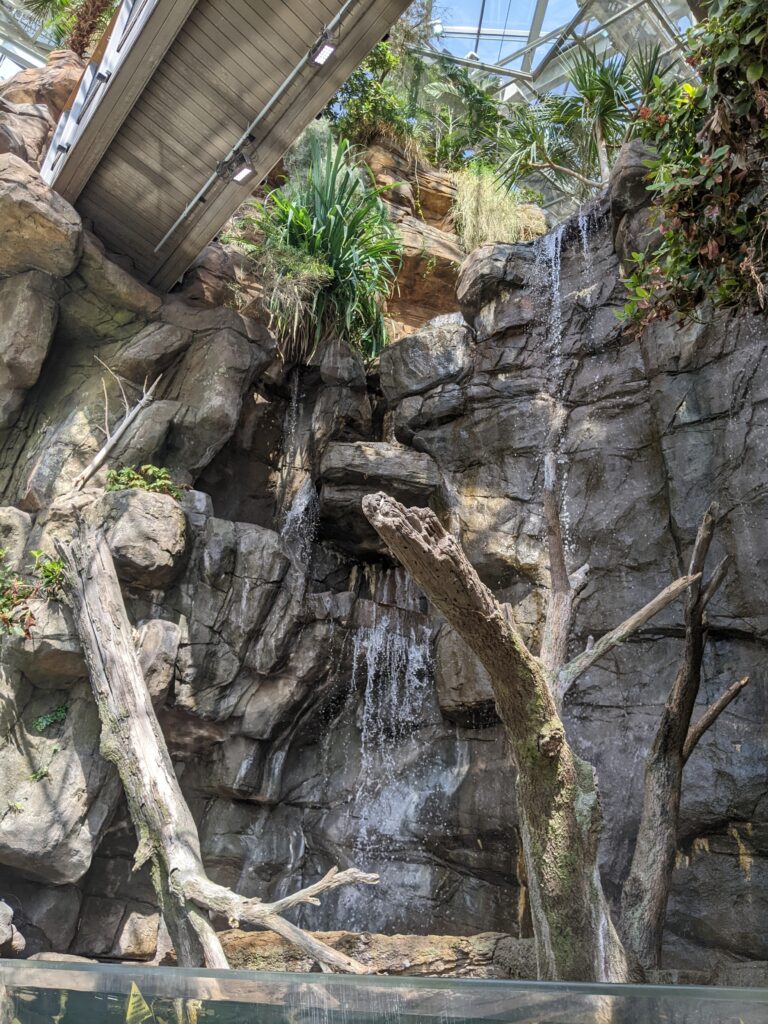
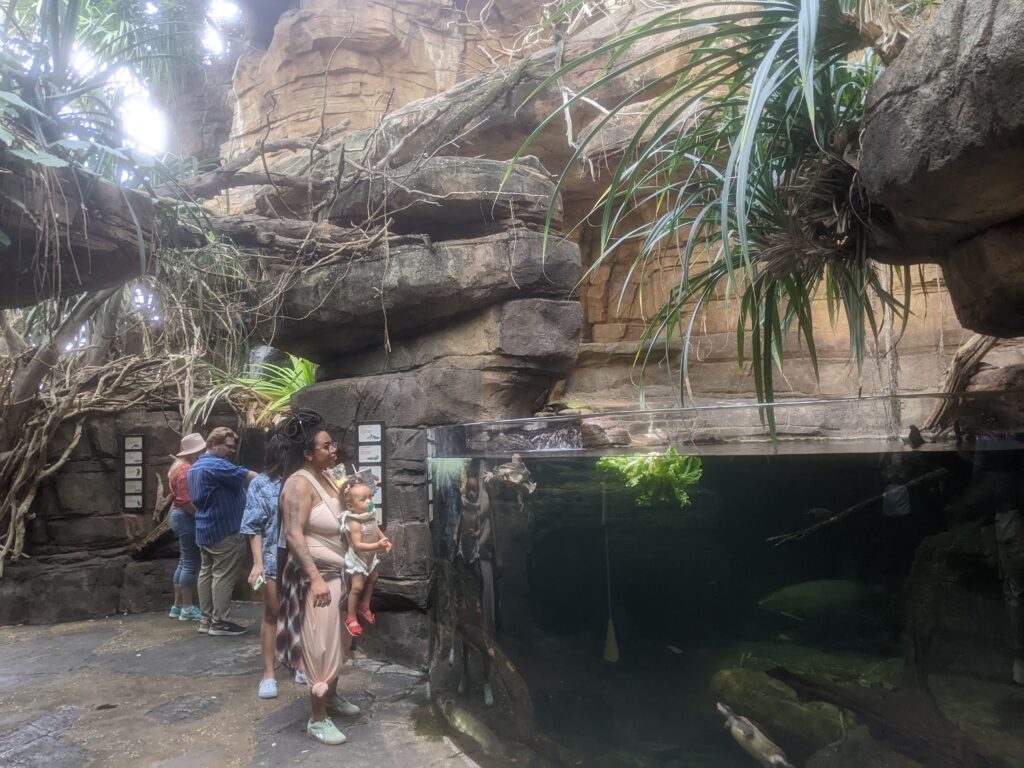
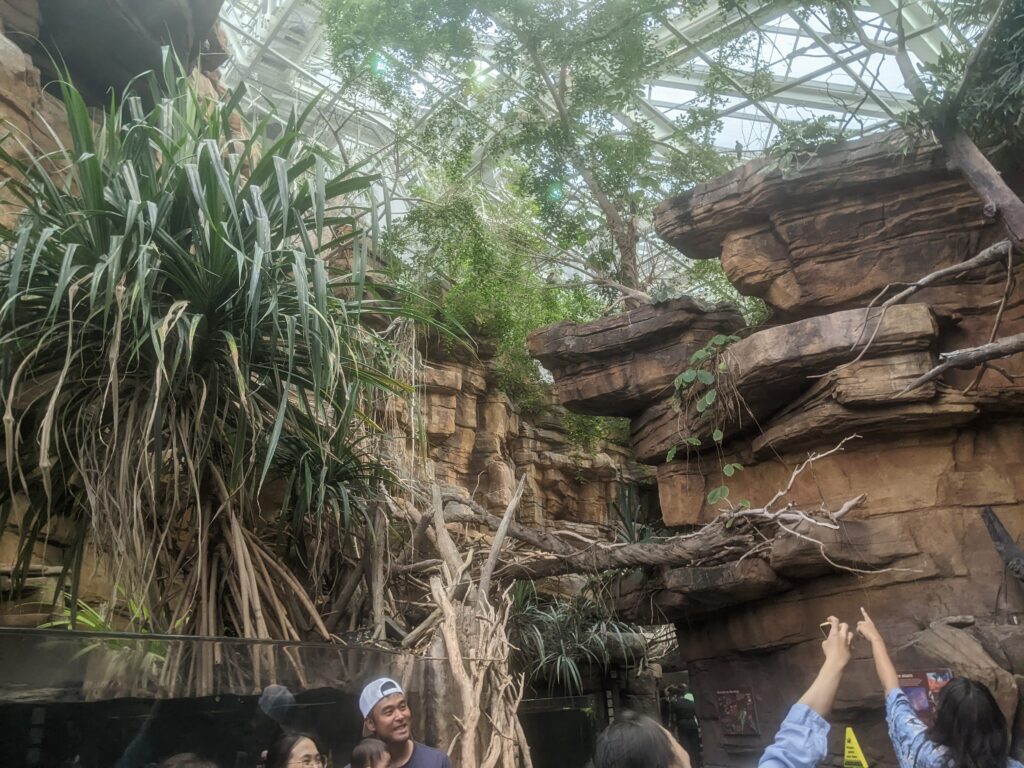
The main entry to the National Aquarium leads you into the Australia: Wild Extremes exhibit. This exhibit is enclosed with glass walls and a glass roof, so it is very light and bright, a real contrast to most aquarium exhibits which don’t have any windows. The exhibit includes crocodiles, turtles, fish, birds, and other reptiles.
The main entryThe Australia exhibitAnother view of the Australia exhibit
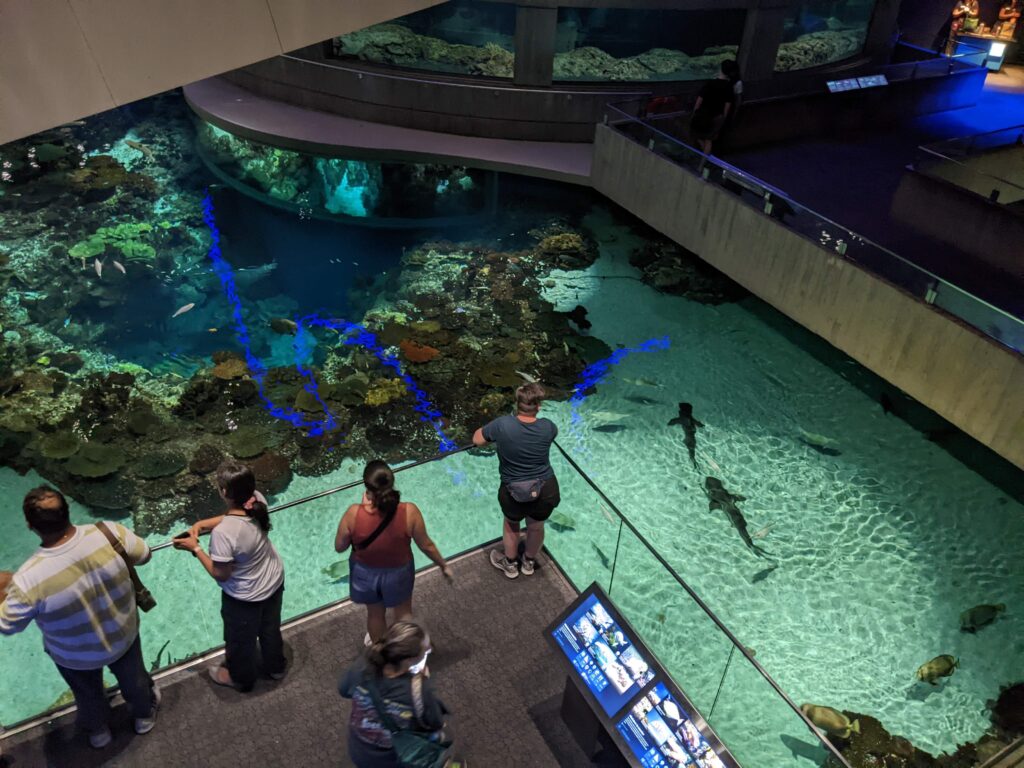
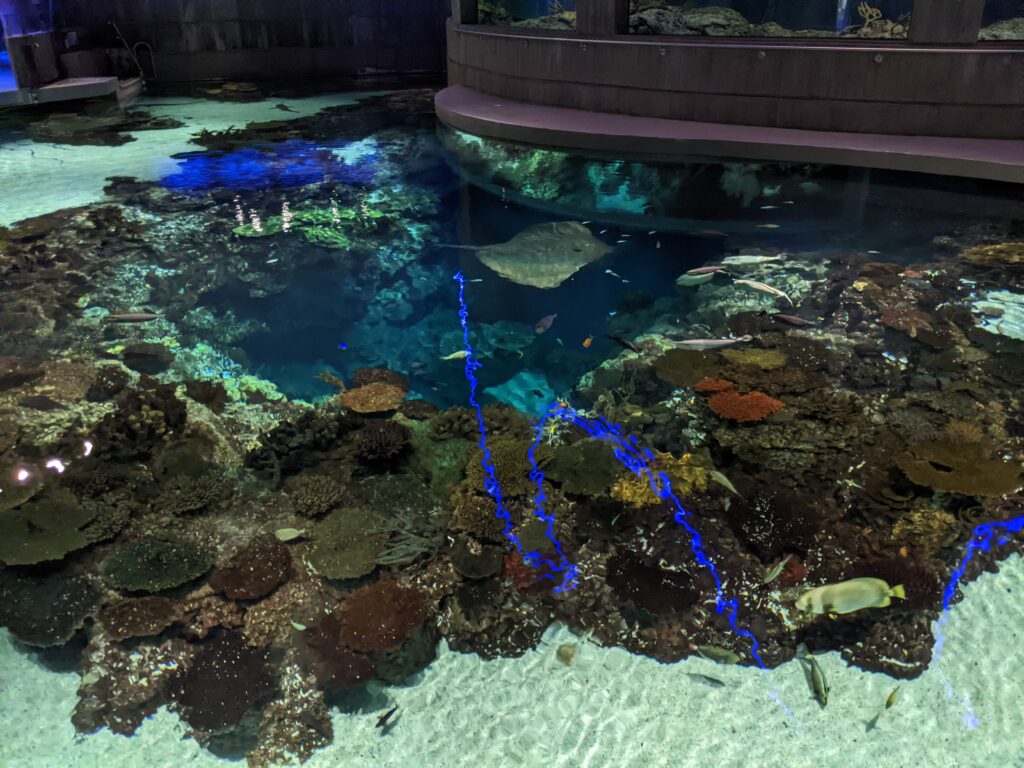
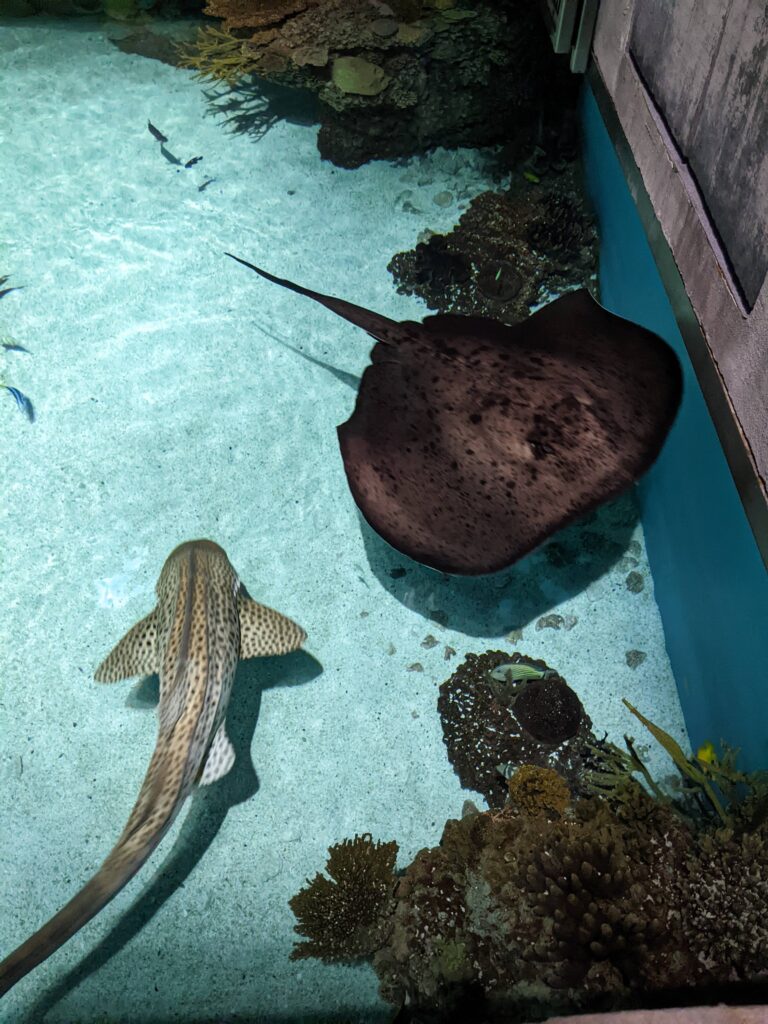
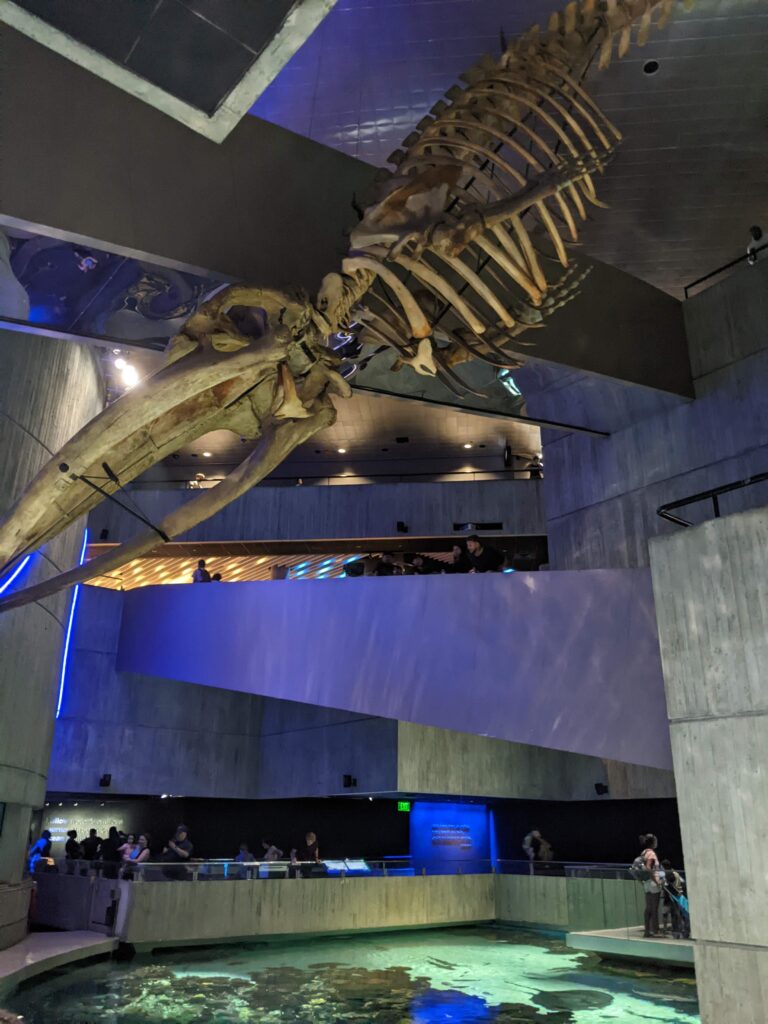
The central atrium was the most surprising space to me. It’s 4 or 5 stories tall with ramps criss-crossing the space as you go up, so you can view the pools and tanks from various levels. The coolest thing, though, was the size of some of the animals in the shallow pool on the bottom level. The rays were huge! I’m guessing 4 to 5 feet across. There were also several sharks and plenty of fish swimming around.
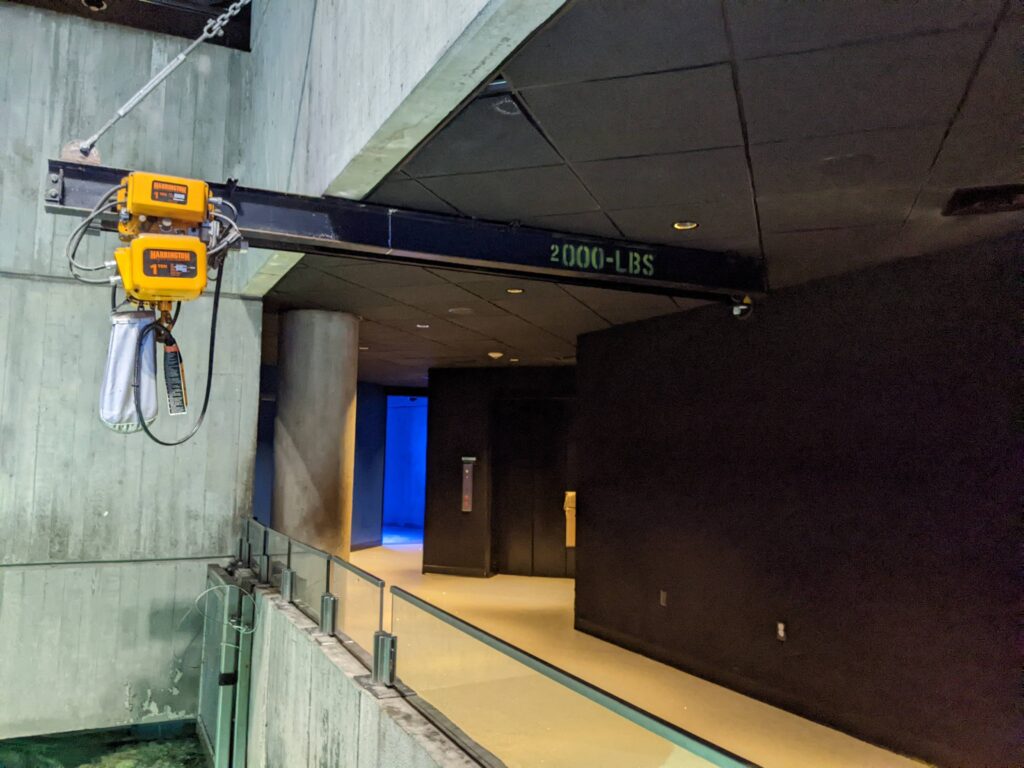
In the main atrium, you enter on the ground floor and work your way up the buildingThe exhibit pool (the water is reflecting decorative blue lights above)A giant ray and a sharkAnd this is how they move those giant animals into and out of the poolA whale skeleton hangs at the top of the atrium
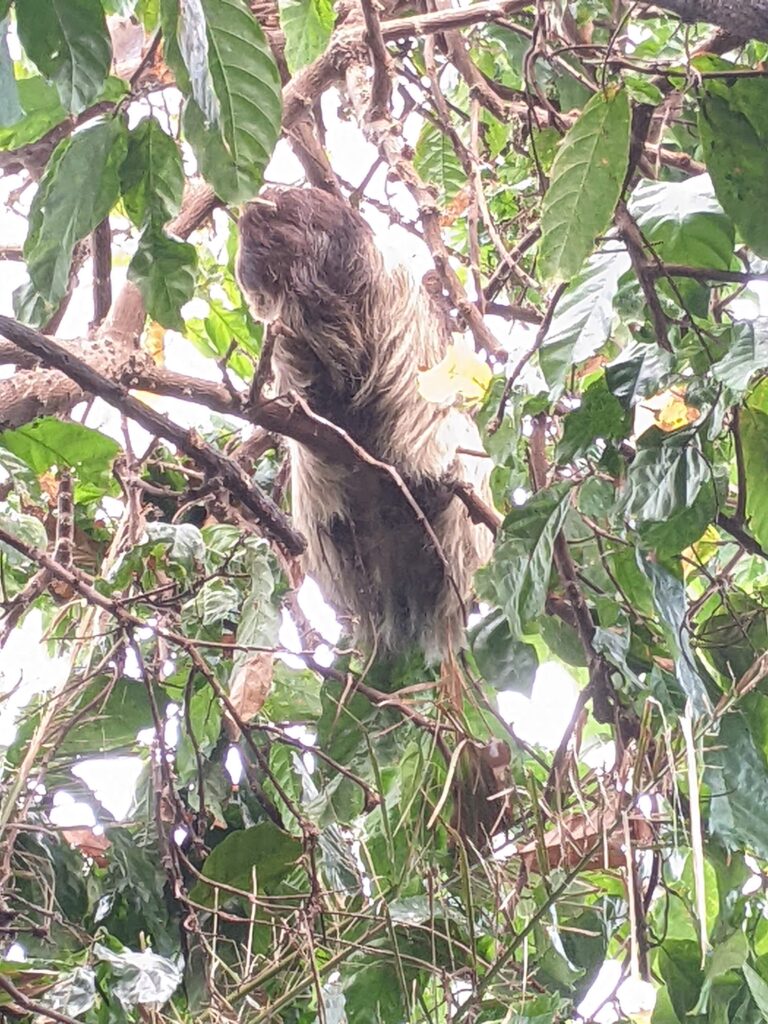
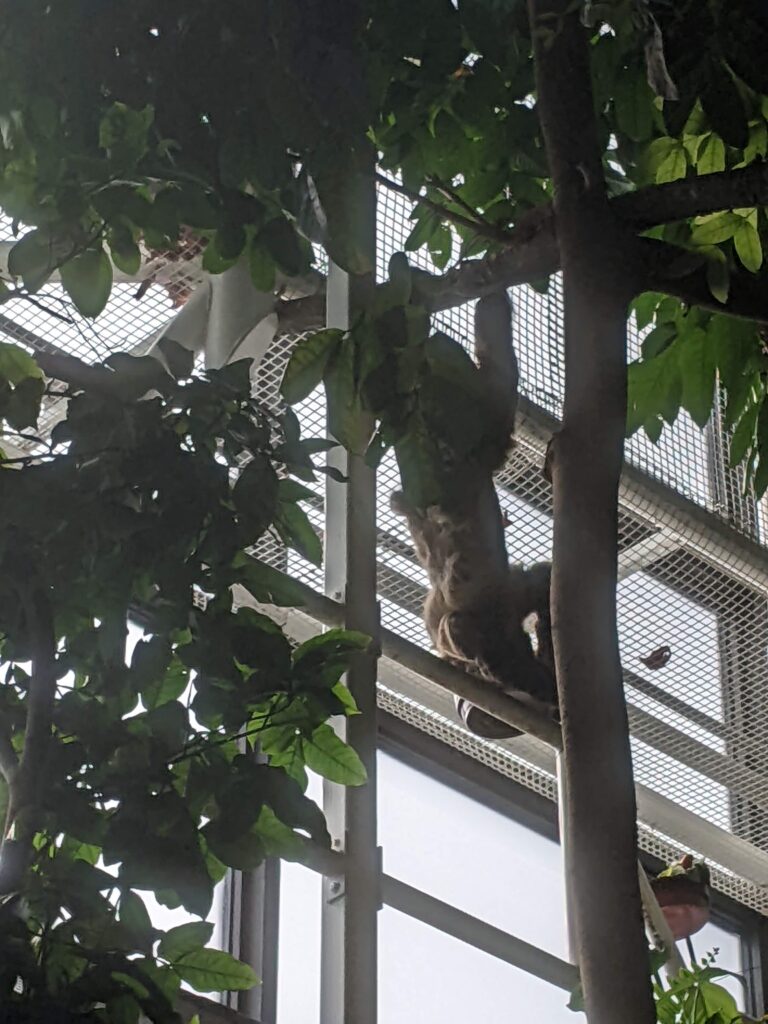
My second favorite exhibit was the Upland Tropical Rain Forest. This is another area that is surrounded by glass, so it has lots of sunlight. Plus, the environment is maintained at 80 degrees and humid, so I was sweating in about 30 seconds. However, it was all worth it because I saw sloths in person! We’ve twice been to Panama where sloths are native, but we never saw them in the wild. I was so excited to see two different sloths literally hanging out in this big room. In addition to the sloths, there are 27 other animal species and 160 plant species in this exhibit. It was super cool.
My first personal encounter with a sloth, if you can call it “an encounter” – I looked up and saw it hanging in the treesThis second sloth was hanging upside down and eating fruit from the feeding tray of the local tropical birds who were, apparently, asleep, otherwise they would have been losing their minds that someone else was eating their food (according to the docent in the room)
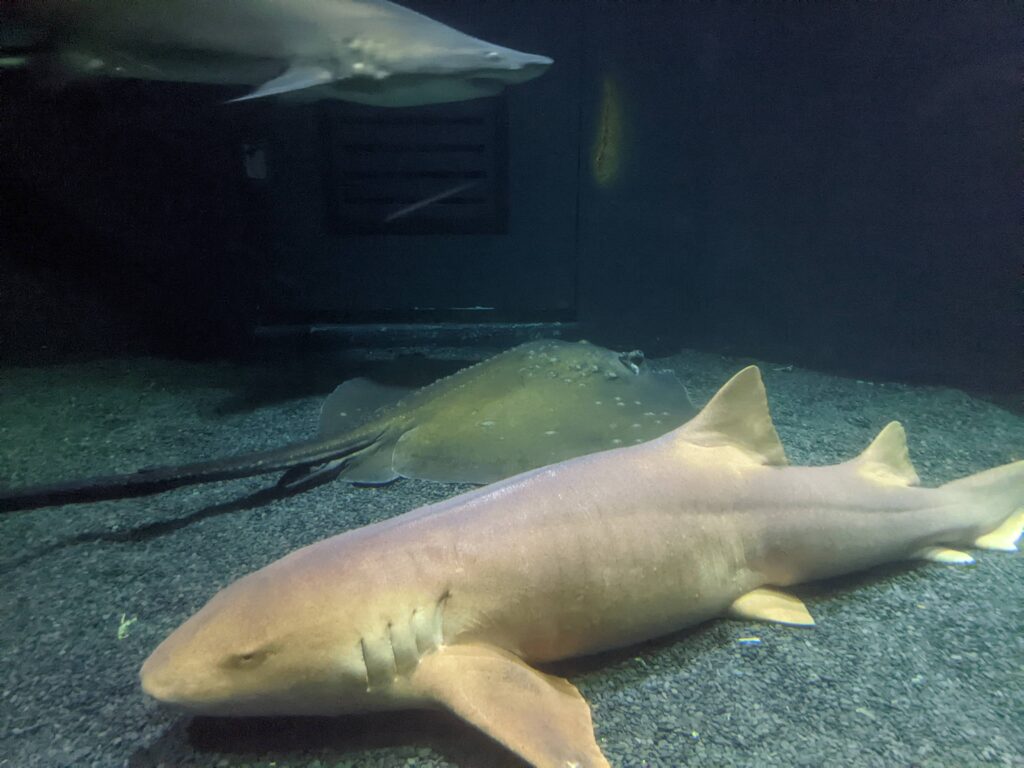
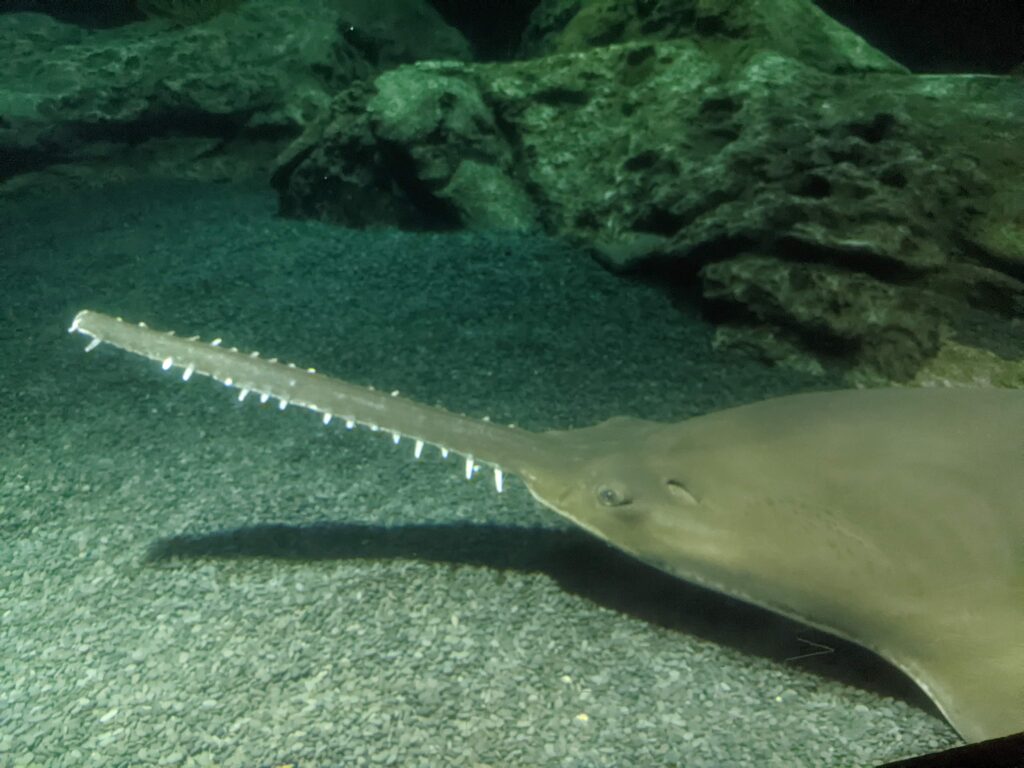
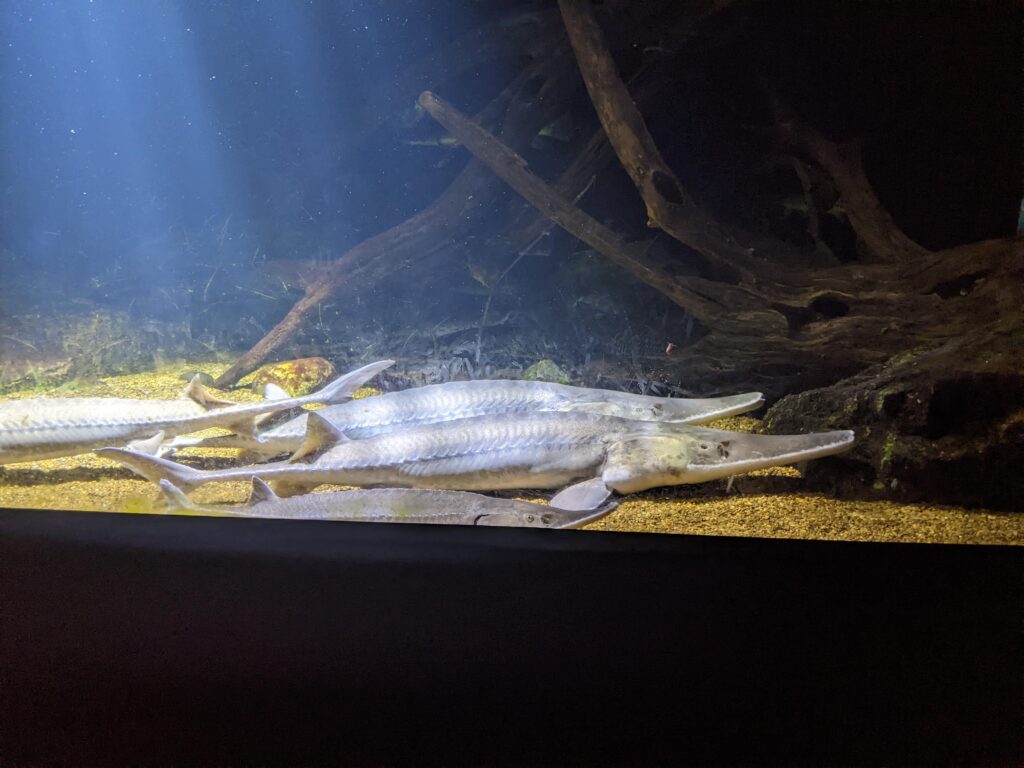
The Shark Alley exhibit holds 7 species of shark. I also saw a largetooth sawfish which is a species of ray and not a shark. I learned that there are 5 types of sawfish in the world and all are either endangered or critically endangered.
One of several sharks in Shark Alley – this one was resting on the bottom of the tankA sawfish – which is not a shark!
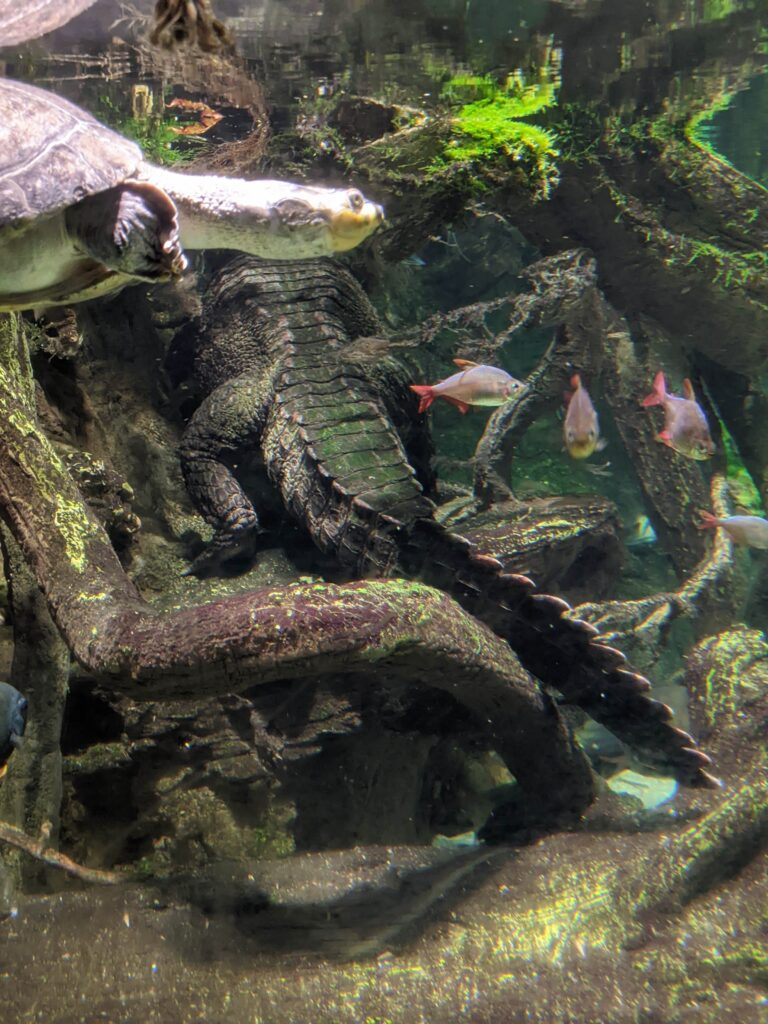
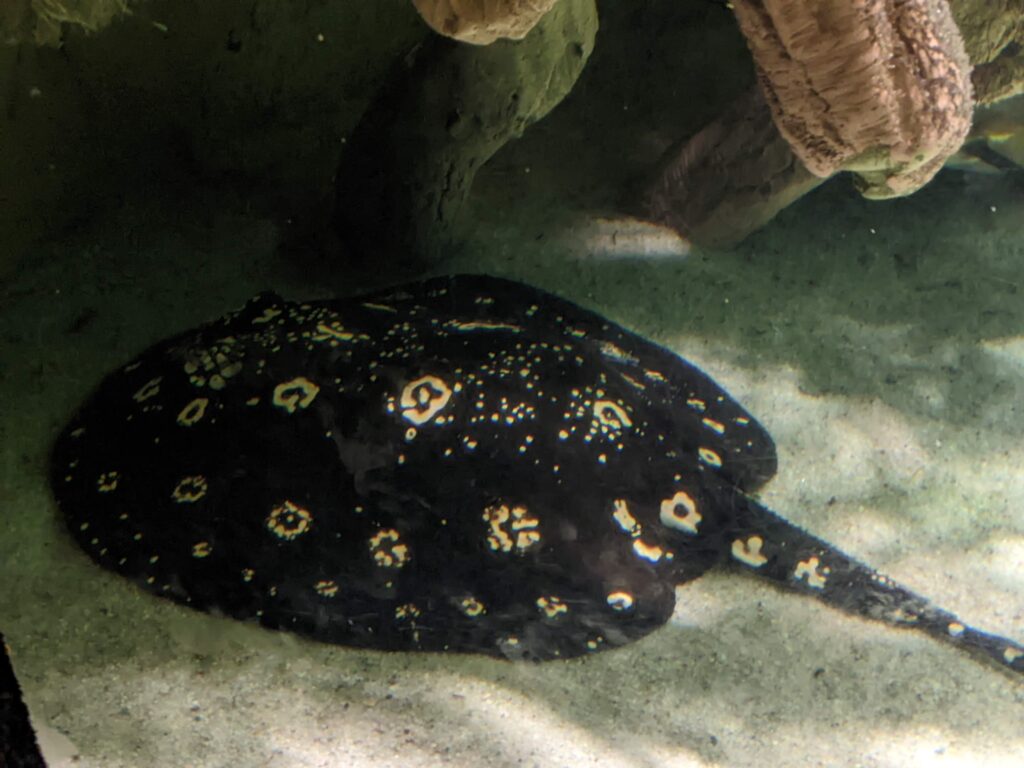
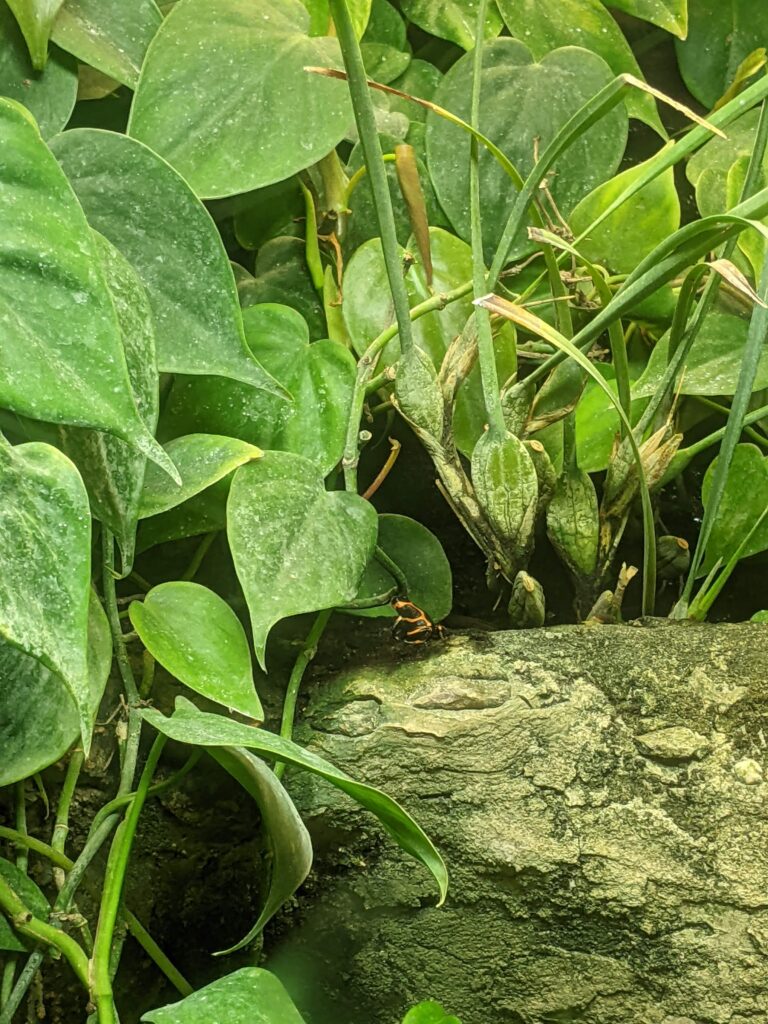
The Amazon River Forest exhibit contains over 50 species of animals including ripsaw catfish, turtles, tree frogs, and river stingrays.
Ripsaw catfishA turtle and a caimanA river stingrayA tree frogA tiny black and yellow tree frog sitting on a logMore tree frogs
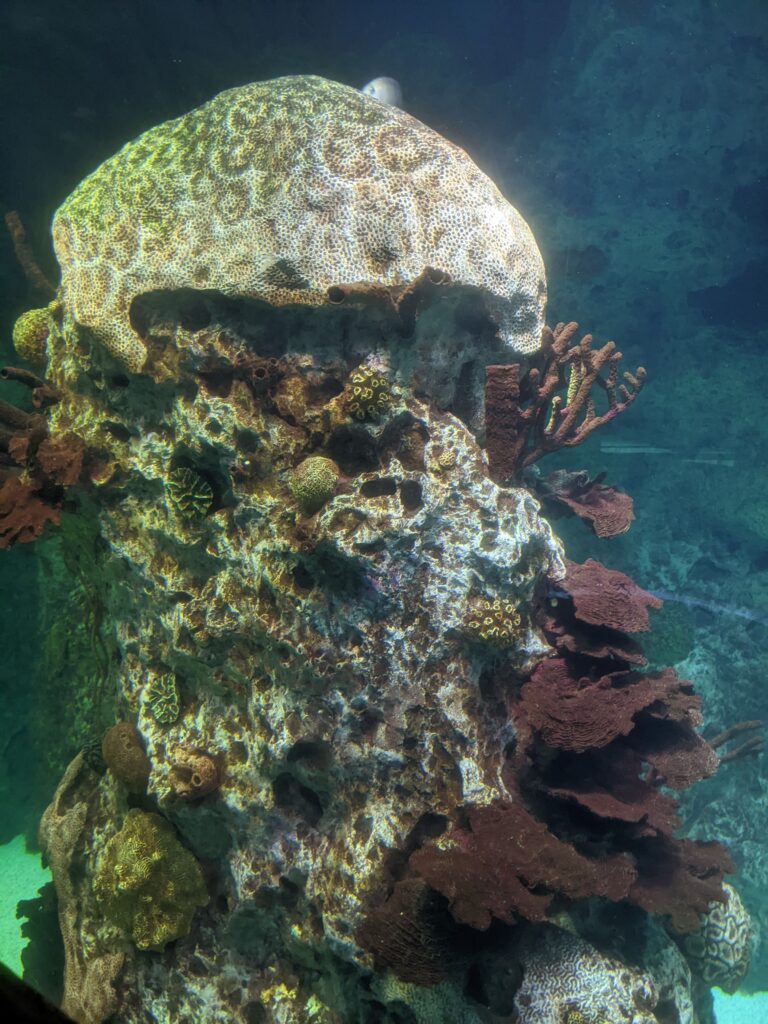
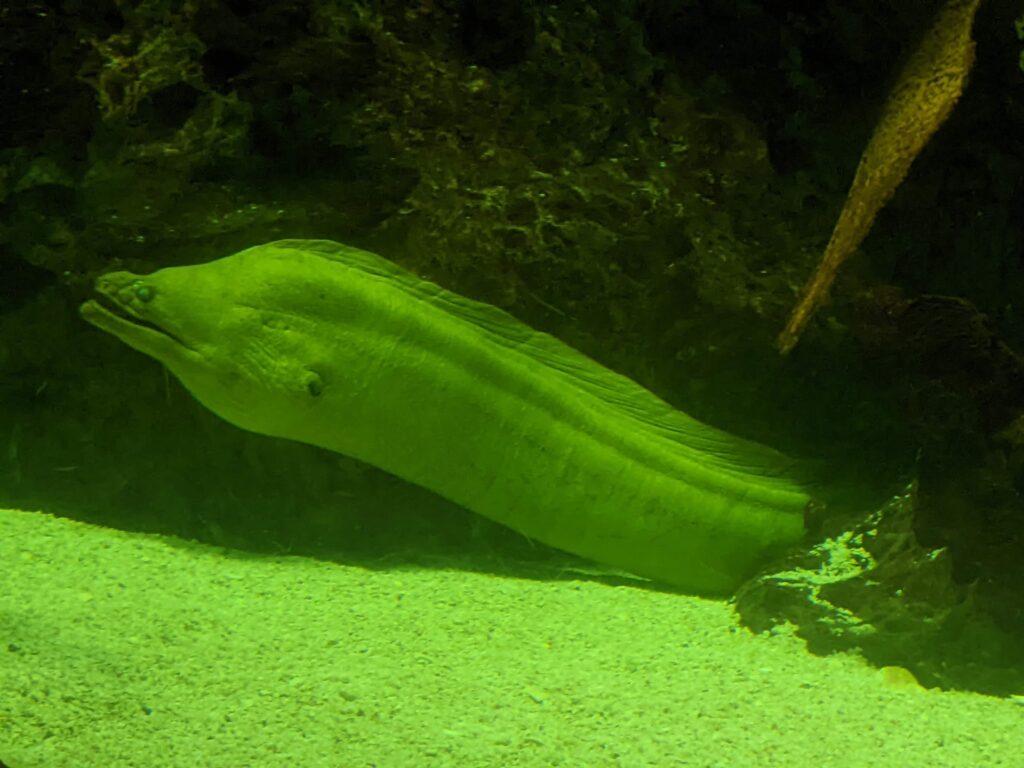
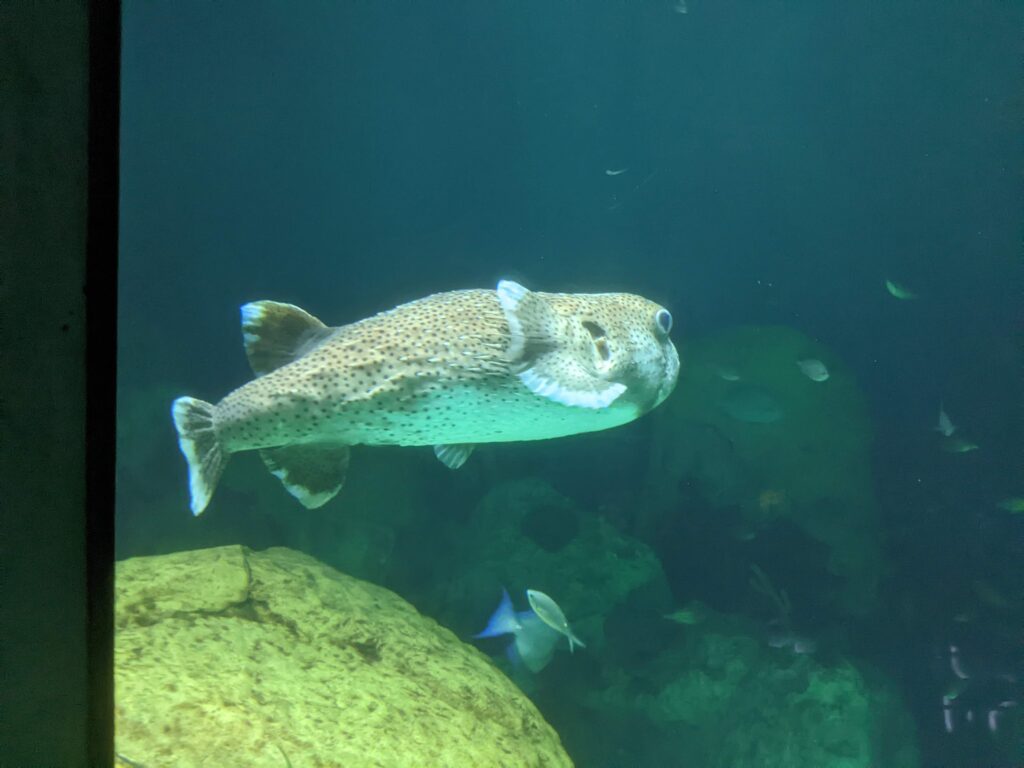
The Atlantic Coral Reef area has over 1,000 animals. I saw moray eels, porcupine fish, sea turtles, and so many fish.
Several types of coral – and by the way, coral are animals, not plantsI think moray eels look like grumpy old menA porcupinefish
The Dolphin Discovery is a huge pool with 6 bottlenose dolphins. I think they give performances throughout the day, but I didn’t catch one. I did see them swimming around in their pool, though.
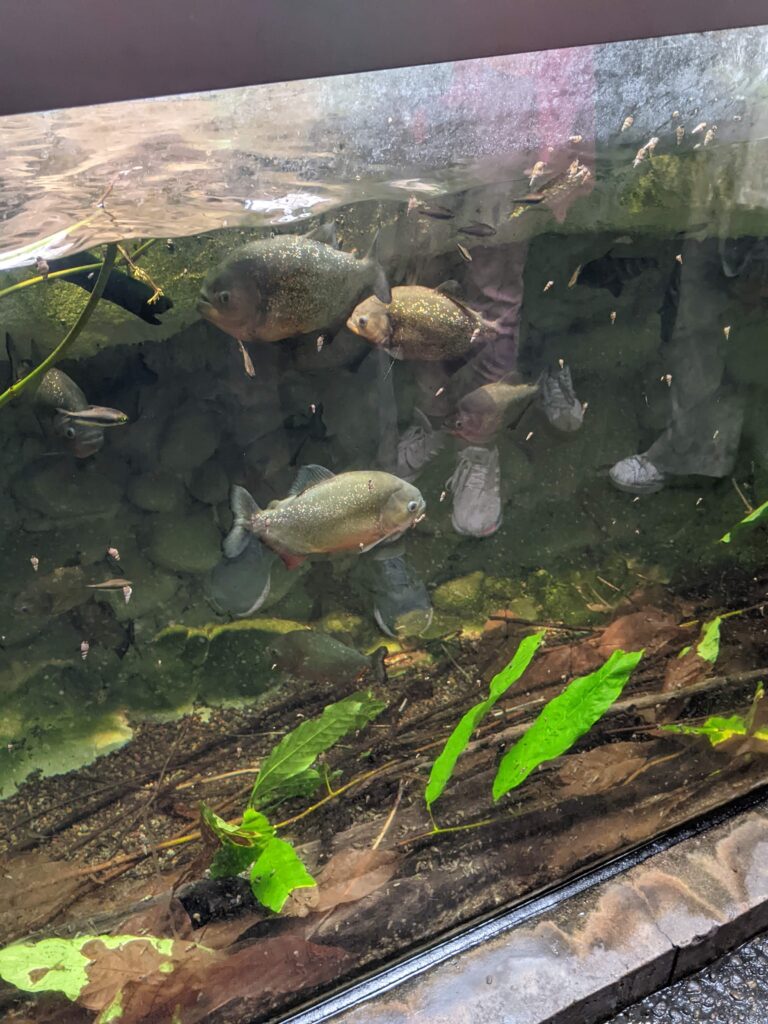
Here are some other animals that I spied during my visit:
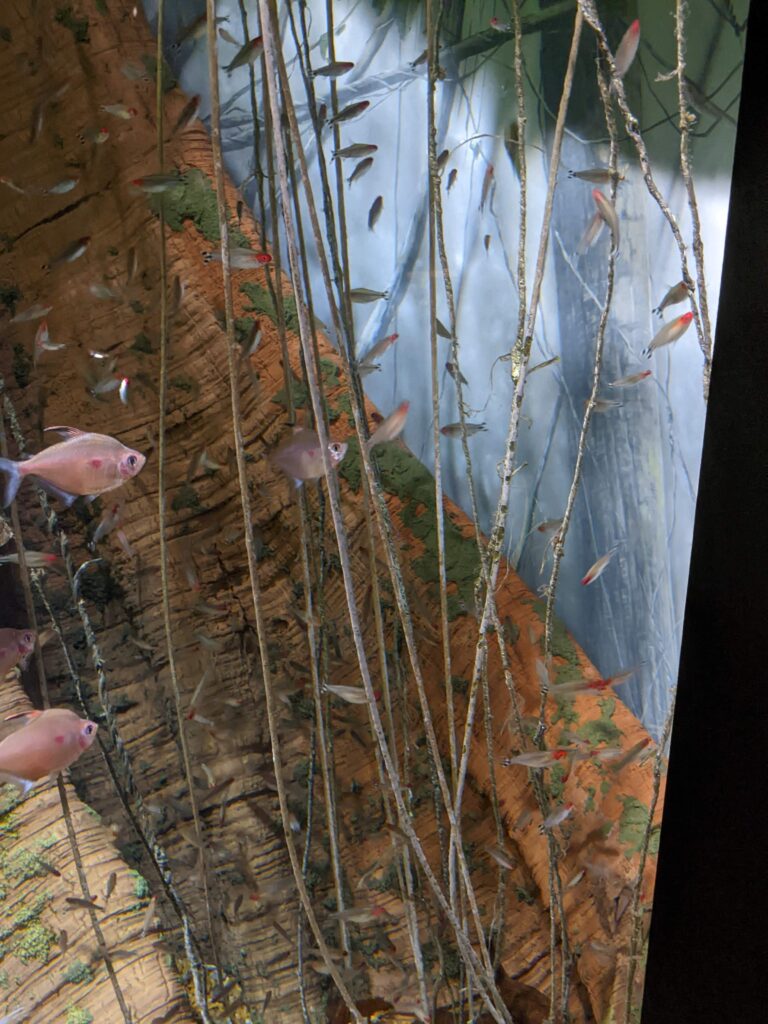
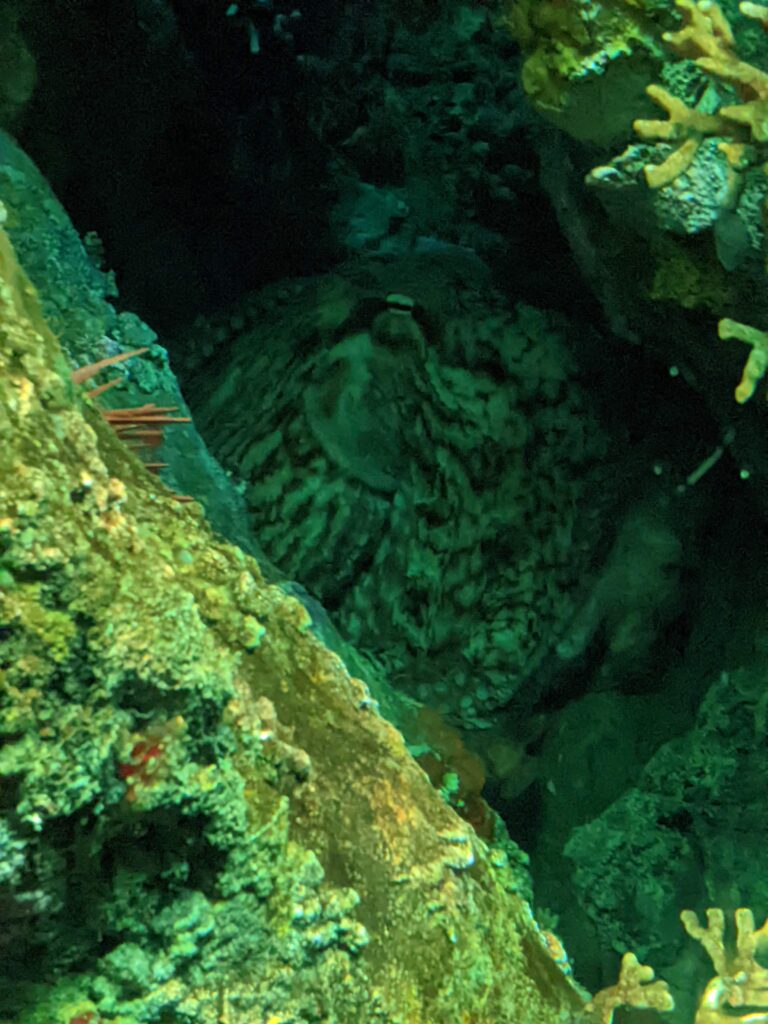
PiranhasLittle fishiesBig fishiesI feel like this is called a pipe fish – if that’s not the correct name, it should be the correct nameAnemoneAn octopus
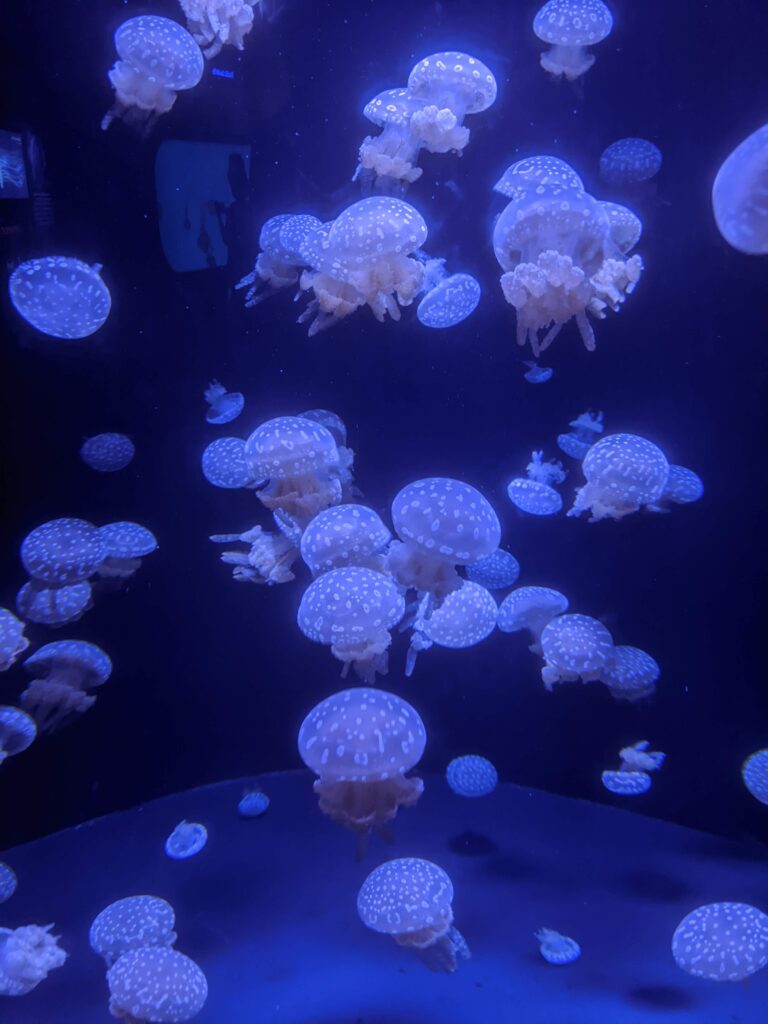
And finally, my favorite type of exhibit is always the jellies. At the National Aquarium, this was originally intended to be a temporary exhibit, but Jellies Invasion became a permanent part of the Aquarium due to its popularity. It contains 8 different species and over 300 animals in total. Species include the blue blubber jelly, upside down jelly, pacific sea nettle, and japanese sea nettle. I can always sit and lose track of time watching jellies float around in their tanks. They are mesmerizing and so peaceful to watch. My heart rate slows down, and every part of me relaxes. It’s such a calming experience, so I’ll close with that for today.
Upside down jellies – and here they are weirdly right side upPacific Sea Nettles, or perhaps Atlanta Bay Nettles – they look a lot alike to meMy zen view